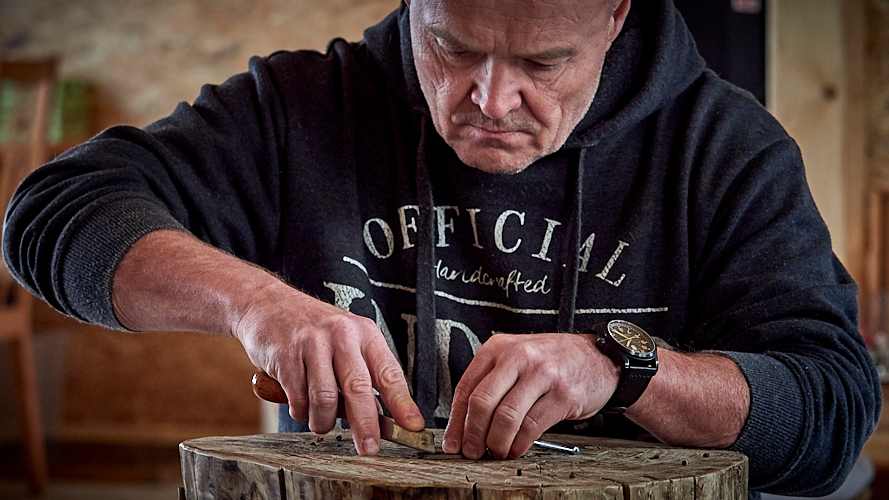
How to Recognise a Hand-Stitched Dog Collar
How to Recognise a Hand-Stitched Dog Collar
Quick answer:
A real hand-stitched leather collar usually shows slightly irregular stitches, thicker waxed thread, a hand-sewn pattern visible on both sides, and clean finishing without loose ends. Those details matter because proper saddle stitching is stronger, more resistant to tearing and more reliable in daily use.
Why “hand-stitched” should mean something
These days, “handmade” gets thrown around like confetti. Sometimes it means real craftsmanship. Sometimes it only means someone touched the collar before it went into a box.
A properly hand-stitched collar usually gives itself away in the details:
- the stitches look natural, not factory-perfect
- the thread is thicker and more present
- the seam looks honest from both sides
- the finishing is clean and tight
👉 Good craftsmanship rarely screams. It usually proves itself quietly.
What real hand stitching looks like
If you want to spot the real thing, look closely at the seam. True hand stitching often has a little life in it. Not mess, not sloppiness — just signs that it was built by a human hand, not stamped out in a hurry.
- Slightly irregular stitches – natural, not machine-perfect
- Thicker waxed thread – proper saddler’s thread has more body
- Pattern visible on both sides – hand stitching shows through properly
- No loose thread ends – clean finishing matters
Why it matters in real life
This is not just about looks. It is about what happens when the collar gets used properly — on walks, under pulling, in bad weather, and in all the little chaos dogs bring for free.
- better strength under load
- more resistance to tearing
- better long-term shape
- more confidence on stronger dogs
A collar can look beautiful on day one and still disappoint later. Good stitching is one of the things that separates pretty gear from gear that actually works.
Machine stitching vs hand stitching
Machine stitching can look very neat. Sometimes almost suspiciously neat. But visual perfection alone does not guarantee durability.
Hand stitching has a different character. It often looks a little more alive, and that is usually a good sign. The point is not to look messy. The point is to look real — and hold together when life gets less elegant.
- machine stitching often looks more uniform
- hand stitching often looks more natural
- real value hides in the construction, not in the sales line
Who should care most about hand stitching?
- owners of strong pullers
- dogs with muscular necks
- people who want one proper collar instead of replacing average ones
- anyone who values durability over decoration
👉 The stronger the dog, the less sense weak stitching makes.
What to check before buying
- look closely at the stitch line
- check if the thread looks thick and waxed
- inspect both sides of the collar
- look at how the seam is finished
- do not confuse decorative stitching with structural stitching
Final takeaway
A real hand-stitched collar usually does not need a big speech. If the workmanship is honest, the signs are there. And once the collar gets tested in real life, those little details stop being little very quickly.
FAQ
How can I recognise hand stitching on a dog collar?
Look for slightly irregular stitches, thicker waxed thread, stitching visible on both sides and clean finishing without loose ends.
Why is hand stitching stronger?
Because proper saddle stitching handles load better and resists tearing more reliably.
Should the stitches look perfectly identical?
No. A small amount of variation is often a good sign of real hand work.
What thread is usually used?
Thicker waxed saddler’s thread.
Why do loose ends matter?
Because clean finishing usually means more careful and more reliable construction.
Does hand stitching help the collar keep shape?
Yes, that is one of the big long-term advantages.
Is machine stitching always worse?
No, but machine-perfect appearance alone does not prove better durability.
Is hand stitching worth it for strong dogs?
Absolutely. Stronger dogs benefit from better construction the most.
What should I inspect first?
The seam, the thread and the finishing.
Best quick rule?
Zoom in on the details before trusting the label.