Right Collar Width for a Strong Dog
Short answer:
For a strong dog, a wider and firmer collar is usually the better choice because it spreads pressure more evenly and stays more stable on the neck. If the collar is too narrow, too soft, or too light for the dog’s build, you often feel the problem within seconds: twisting, uneven pressure, and less control.
What is the right collar width for a strong dog?
The right collar width for a strong dog is usually the widest option that still fits the dog’s neck shape, movement, and everyday use comfortably. For many powerful dogs, especially compact muscular breeds, extra width helps more than people expect. It is not just about looks. It is about what happens when the dog surges forward, braces into the leash, or whips around after a scent in half a second.
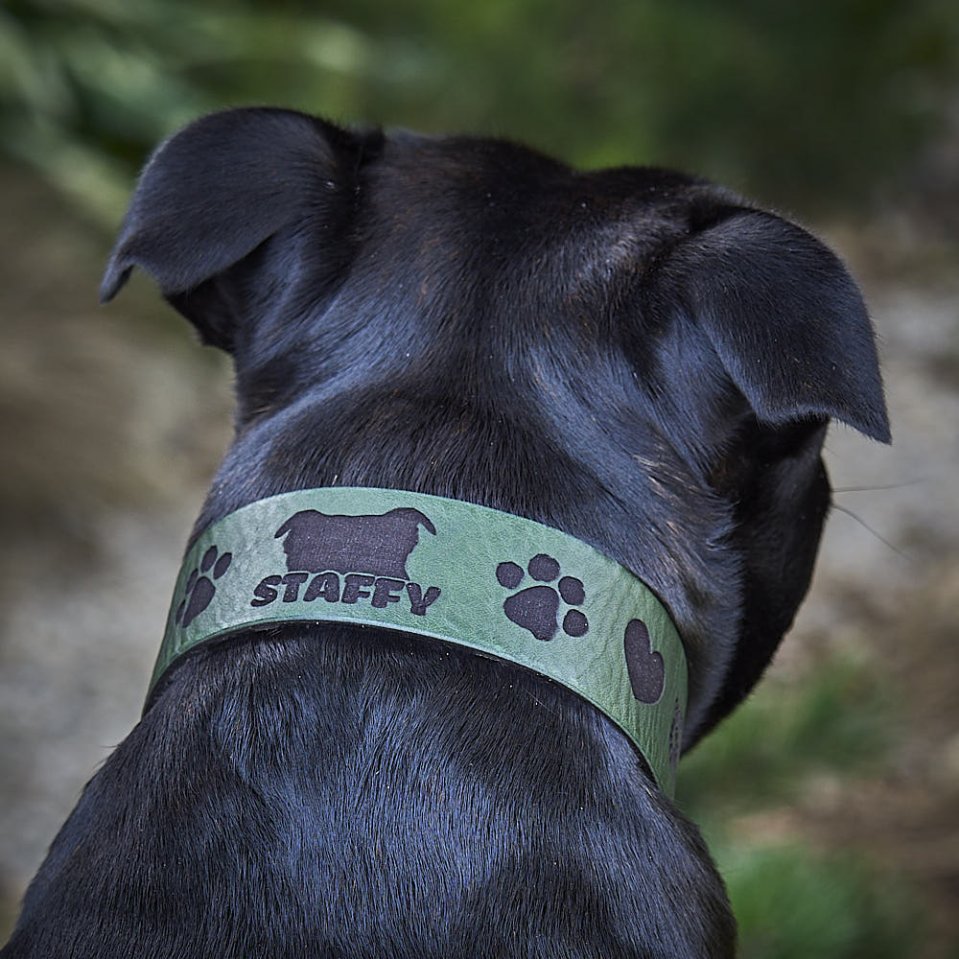
A collar that is too narrow concentrates pressure into one line. A wider collar spreads that force over a larger area, which often makes handling steadier and clearer for both dog and human. That is why width matters so much in real-life walking, not just in product photos.
If you are deciding whether you need only a better-built classic collar or whether your dog may need a different control setup, it helps to also read when the pull hits hard: what actually holds. Width solves a lot, but not every problem starts with width alone.
Why does collar width matter so much with strong dogs?
Because strong dogs do not pull politely. They lean, launch, brace, and suddenly load the collar with real force.
In practice, the difference shows fast. A narrow collar can rotate 90 degrees, bite into one line of the neck, and make the leash feel jumpy. A wider collar usually stays flatter, feels calmer in the hand, and keeps the line of pressure more stable. Five-second test: if the collar spins, cuts in, or looks tiny on a thick neck, it is probably too narrow for the job.
How do you know a collar is too narrow?
You usually see it before you measure it. The collar looks lost on the dog, shifts too easily, or disappears into the neck when the dog leans into it.
Another sign is how it behaves under load. If the dog steps forward and the collar immediately twists, rides up oddly, or creates one sharp pressure point, that is not just an aesthetic issue. It is a handling issue. It means less stability, less clarity, and often a rougher feel for the dog. Pretty on a shelf, annoying in real life. That is the difference that matters.
Decision flow: what should you choose?
- If your dog is strong but walks in a fairly straightforward way, choose a wider, firm classic collar.
- If your dog braces hard, backs out, or loads the leash with stop-start pressure, consider whether a half check like the Craze half check collar makes more sense.
- If you are unsure, solve width and construction first. Many “bad collar” problems are really width, stability, or build problems.
- If your dog is narrow-headed like a sighthound, a different shape may matter more than raw width alone, which is where a piece like the Greyhounds collar Gem Piece Swarovski belongs.
When is a classic wide collar enough?
A classic collar is often enough when the dog is powerful but not actively trying to reverse out of gear or constantly hit the leash with explosive stop-start motion.
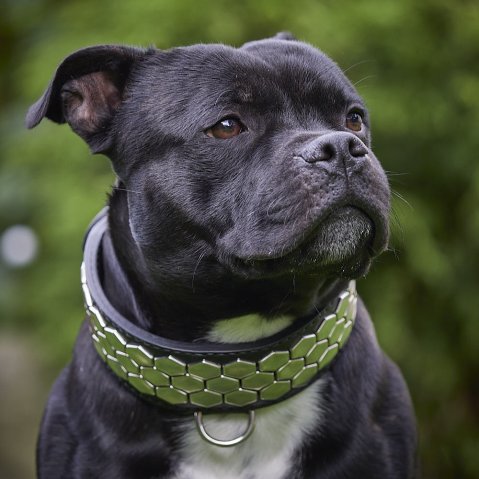
That is where a solid classic design can shine. A structured option like the Hexagon classic collar or the Frenchie Flair collar makes sense when you want a stable everyday collar with more body, more visual balance on a strong neck, and better pressure spread than a skinny fashion piece pretending to be working gear.
When is width not the only issue?
Sometimes people blame width when the real problem is the whole construction. Weak leather, soft padding with no structure, light hardware, or stretched holes can ruin a collar even if the width looks decent.
If durability is part of your decision, continue with how long does a dog collar last and Leather vs Nylon Dog Collar: what really lasts longer?. A strong dog can expose bad gear quickly. One sharp pull and the fairy tale is over.
Common mistakes
- Choosing by looks only. A narrow elegant collar may look sharp in a photo, but under real pulling it can twist, bite in, and lose stability fast.
- Ignoring the dog’s build. A thick-necked compact dog usually needs more visual and structural width than a lighter dog of the same neck measurement.
- Confusing show gear with daily control gear. A refined presentation piece such as the Chic Exhibit show set has a different purpose than an everyday handling collar.
Expert view
From a practical gear perspective, collar width is one of the first filters for a strong dog. Not because wider automatically means harsher or better, but because stronger dogs expose instability fast. When a dog drives through the chest and loads the leash, weak gear tells on itself immediately. It twists, folds, shifts, and starts acting busy instead of solid.
If you want a broader view of what works for this type of build, the article strong leather collar for Staffordshire connects width with structure, strength, and real use.
Who is this solution right for?
- Dogs with thick necks and real pulling power
- Owners who feel the collar twisting as soon as the dog surges
- People who want steadier pressure spread and cleaner handling
- Those comparing a firm classic collar against a half check setup
Final summary
For a strong dog, the right collar width is usually the widest firm option that still matches the dog’s neck shape and purpose. A collar that is too narrow often reveals itself fast: twisting, line pressure, unstable handling. Start with width, then judge construction, material, and whether you really need a different type of control. A good collar should not only look right on the dog. It should stay honest when the dog decides to test physics.
Frequently asked questions
Is a wider collar better for a dog that pulls?
Usually yes. A wider collar often spreads pressure better and stays more stable on the neck.
Can a collar be too wide?
Yes. If it blocks movement, rubs awkwardly, or does not match the dog’s neck shape, it can be too wide.
How do I know the collar is too narrow?
If it twists fast, cuts into one line, or looks tiny on a powerful neck, it is probably too narrow.
Should I choose a classic collar or a half check?
If your dog is strong but straightforward, a firm classic collar may be enough. If the dog braces hard or backs out, a half check can make more sense.
Does leather width matter more than leather type?
Both matter, but width is one of the first things you feel in daily handling. Bad width shows up quickly.
Featured Dogs