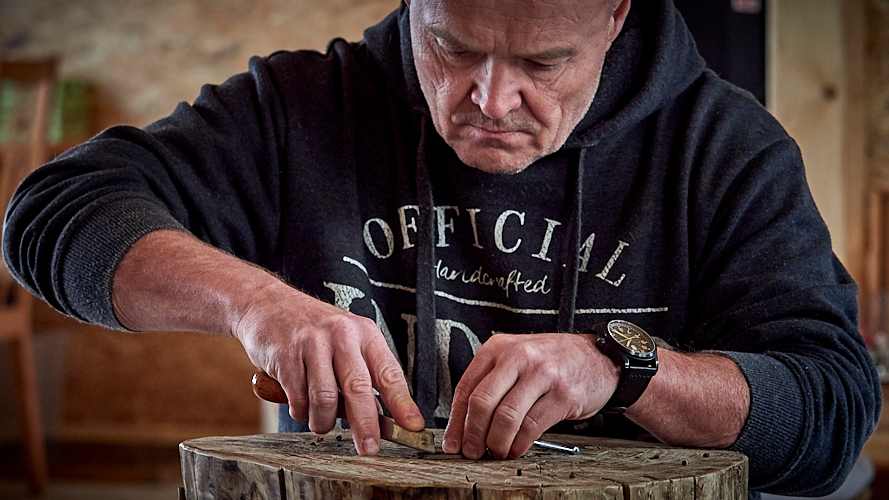
How to Spot a Truly Hand-Stitched Dog Collar
How to Spot a Truly Hand-Stitched Dog Collar
Quick answer:
A genuinely hand-stitched leather collar usually reveals itself through the details: stitches that are not robot-perfect, thicker waxed thread, a proper hand-sewn look on both sides and finishing without loose ends. Those details matter because they usually mean better strength, better shape retention and more confidence in daily use.
Not every “handmade” claim deserves trust
These days, handmade gets used so freely that sometimes it sounds more like decoration than useful information. That is exactly why knowing what to check matters.
Real hand stitching tends to leave clues:
- the stitch line has a natural human rhythm
- the thread has more body and presence
- the seam looks properly built from both sides
- the finish looks clean instead of rushed
👉 Honest craftsmanship usually proves itself in the small things, not in loud marketing.
What a real hand-sewn collar usually looks like
If you want to tell the difference, start with the seam. A properly hand-stitched collar often looks a little more alive. Not messy. Not careless. Just real.
- Slight stitch variation – a natural sign of hand work
- Thicker waxed thread – proper saddler’s thread stands out
- Visible seam on both sides – the structure reads properly front and back
- No loose thread ends – clean finishing matters more than people think
Why should any of this matter?
Because a collar is not tested by looking good on a screen. It is tested on a dog, under movement, pulling, weather and repeated use.
- better strength under pressure
- more resistance to damage
- more stable long-term shape
- more trust on stronger dogs
A collar can look polished and still disappoint later. Good stitching is often one of the clearest signs that the build is meant to last.
Hand stitching and machine stitching are not the same story
Machine stitching often wins on visual perfection. Straight rhythm, even lines, very clean first impression. But looking precise is not the same as being more dependable in real life.
Hand stitching usually has more character. That slight character is often the point — it shows that the seam was built with function in mind, not just with a polished surface in mind.
- machine stitching often looks more uniform
- hand stitching often looks more natural
- the real difference is in the build, not in the label
Who benefits most from hand stitching?
- strong dogs that pull hard
- muscular breeds
- owners who want one proper collar instead of average replacements
- people who care about durability more than decorative claims
👉 The harder the collar has to work, the more real stitching starts to matter.
What to inspect before buying
- study the stitch line closely
- check the thickness of the thread
- look at both sides of the collar
- inspect how the seam ends
- separate decorative details from structural stitching
Final takeaway
A truly hand-stitched collar usually does not need to over-explain itself. If the workmanship is honest, the signs are there. And once daily use starts testing the collar properly, those small details matter a lot more than most people expect.
FAQ
What are the main signs of a hand-stitched collar?
Slight stitch variation, thicker waxed thread, a proper seam on both sides and clean finishing.
Why is hand stitching considered stronger?
Because it handles pressure and daily wear more reliably.
Should handmade stitches look perfectly identical?
No. Small variation is normal and often reassuring.
What thread is usually used?
Thicker waxed saddler’s thread.
Why do loose thread ends matter?
Because they may suggest weaker finishing and less careful construction.
Does hand stitching help the collar keep shape?
Yes, that is one of the key long-term benefits.
Is machine stitching always worse?
No, but appearance alone does not prove durability.
Is hand stitching mainly important for strong dogs?
It helps all dogs, but stronger ones benefit the most.
What should I check first?
The seam, the thread and the finishing quality.
Best simple advice?
Look at the details before trusting the wording.