How Wide Should a Collar Be for a Strong Dog?
Quick answer:
For a strong dog, collar width is not a cosmetic detail. A broader, well-built collar usually spreads pressure more evenly, stays put better, and gives you steadier handling when your dog slams into the leash with full-body commitment. If the collar is too narrow, you can often spot the problem almost immediately.
How wide should a collar be for a strong dog?
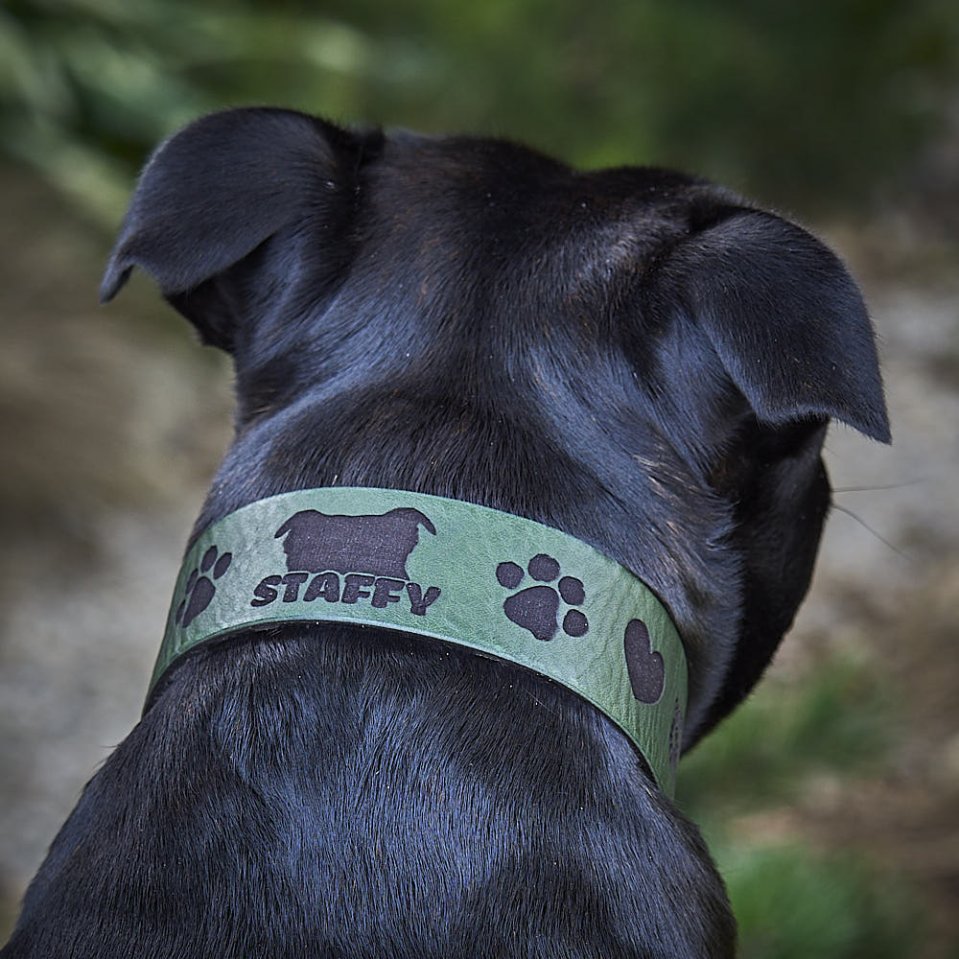
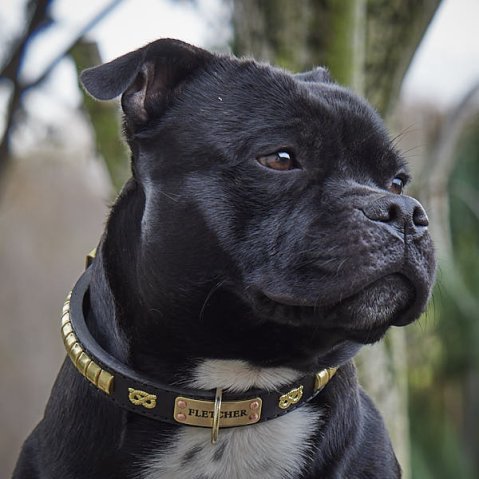
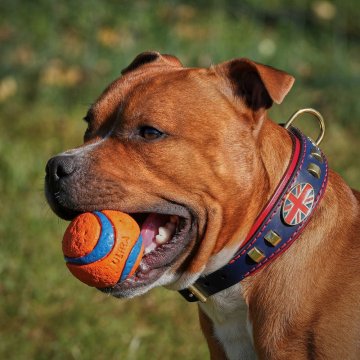
A strong dog usually does best in a collar that has enough width to stay balanced on the neck under load, without getting clumsy or restrictive. In plain terms: not a skinny strip trying to act brave on a thick, powerful neck. If your dog pulls hard through the chest, spins after movement, or hits the leash like a spring-loaded missile, width is part of the solution.
When the collar is too narrow, all the force goes into a smaller line. That often means more twisting, more pressure in one spot, and a less predictable feel in the hand. A wider collar tends to sit flatter and behave with less nonsense. That matters when your dog goes from casual sniffing to “I have made a decision” in one second flat.
If you are stuck between “I need a better classic collar” and “I may need a different setup altogether,” start here and then continue with when the pull strikes: what truly holds under pressure. Width fixes many headaches, but not every headache starts there.
What does a collar that is too narrow look like in real life?
It does not just look smaller. It behaves badly. It shifts too much, bites into one narrow line when the dog leans, and can rotate before you have even taken five proper steps.
This is the five-second test: the dog powers forward, the collar turns off line, and suddenly the leash feels choppy instead of controlled. That is your clue. The issue is not only appearance. It is function. A collar that looks sleek on the screen can turn into a fussy little problem the second real pressure arrives.
Why does extra width help?
Because stronger dogs expose weaknesses faster. A wider collar often spreads force across more surface area, which can make the contact feel more stable and less sharp.
You notice it especially when the dog surges or braces. With a better-width collar, the movement tends to feel cleaner. With a narrow one, the pressure can stack into one strip and the whole setup starts feeling twitchy. Looks neat in a product shot. Acts silly on the pavement. There is your contrast.
Decision block: which way should you go?
- If your dog is strong, compact, and mostly pulls forward, go with a firmer, broader classic collar first.
- If your dog throws sudden weight into the leash, slips backward, or needs more controlled closure, look at the Craze half check collar.
- If you are not sure, sort out width and structure before blaming the entire collar category.
- If your dog has a sighthound-style neck and head shape, shape-specific design matters too, which is where the Greyhounds collar Gem Piece Swarovski belongs.
When is a classic collar the right call?
A solid classic collar works well when the dog is powerful but not constantly trying to reverse out, wriggle free, or hammer the leash with chaotic stop-start pressure.
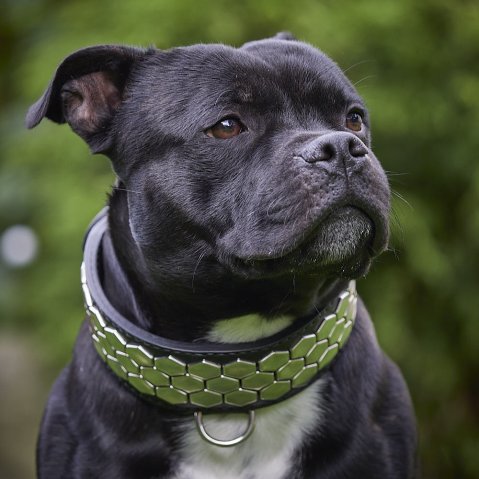
For that type of use, a structured classic piece like the Hexagon classic collar or the Frenchie Flair collar makes practical sense. You get more neck coverage, more stability, and a more convincing everyday setup than with a narrow collar chosen mainly because it photographs well.
When is the problem bigger than width?
Sometimes the width is reasonable, but the collar still underperforms because the build is weak. Soft structure, stretched holes, light hardware, or material that gives too easily can all turn a decent-looking collar into a disappointing one.
That is where it helps to move into the next question. Read how long should a dog collar last and Leather vs Nylon Dog Collar: what really lasts longer?. Strong dogs are honest critics. One real hit of pressure and they tell you the truth about your gear.
Common mistakes
- Buying for the photo, not the pull. Narrow can look sharp, but still behave terribly under real tension.
- Ignoring the dog’s frame. A thick-necked, muscular dog often needs more collar body than a lighter dog with the same measurement.
- Mixing up show presentation with daily handling. A refined piece like the Chic Exhibit show set has its place, but that place is not “daily anti-chaos control.”
Expert view
In practical use, width is one of the fastest filters for strong dogs because instability shows up immediately. When the dog loads the collar hard, weak gear becomes obvious. It folds, rotates, rides up, and starts fighting the job instead of doing it. A collar should not go floppy the moment your dog remembers it has horsepower.
If your focus is specifically on stout, powerful bull-type builds, continue with strong leather collar for Staffordshire for a closer look at structure, width, and daily use.
Who is this right for?
- Strong dogs with thick necks and real pulling force
- Owners who feel twisting and line pressure right away
- People comparing a broad classic collar with a half check option
- Anyone who wants steadier handling without fake “fashion gear” confidence
Final summary
The right width for a strong dog is usually the width that gives the collar enough body to stay stable, spread pressure, and keep handling consistent. Too narrow, and the problems show fast: twisting, sharp line pressure, messy leash feel. Start with width. Then judge structure, materials, and whether the dog actually needs a different collar type. A good collar should not only survive the photo. It should keep its head when your dog loses theirs.
Frequently asked questions
Is a wider collar more comfortable for a strong dog?
Often yes, because it can spread pressure more evenly and reduce sharp line pressure.
Can a collar be wide but still wrong?
Yes. If the build is weak or the shape does not suit the dog, width alone will not save it.
How fast can I tell a collar is too narrow?
Usually very fast. If it twists, bites in, or looks swallowed by the neck under load, it is likely too narrow.
Do I need a classic collar or a half check?
For straightforward pulling, a strong classic collar may be enough. For backing out or harder leash resistance, a half check may suit better.
Does collar width matter for bull-type dogs?
Yes. On strong, muscular builds, width often makes a noticeable difference in stability and handling.
Real Dogs