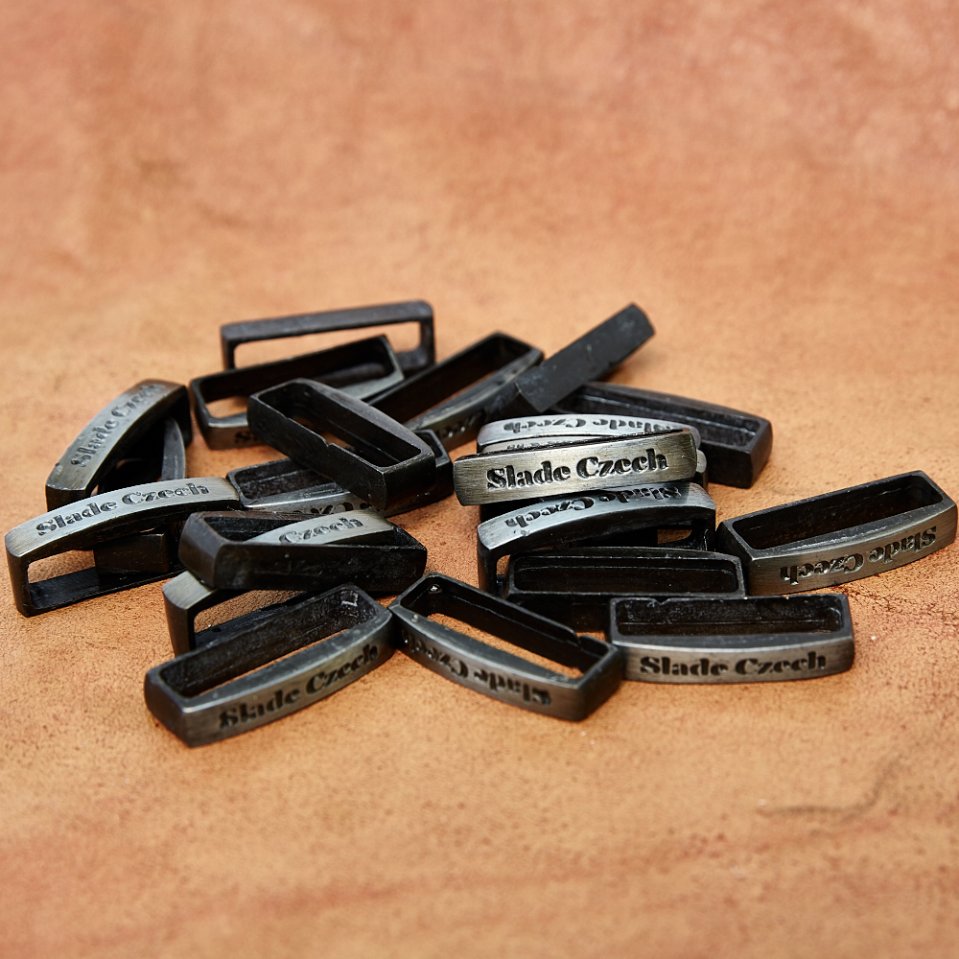
A Look Inside Manufacturing Of Slade Czech’s Hardware for Leather Collars
Quick answer:
Creating new hardware does not start with a machine, but with an idea. That idea gradually moves from a sketch to a digital design and 3D model, and finally into a finished casting with a final surface treatment. It is a slower road than grabbing the first universal component from a catalog, but that is exactly how hardware gets its own face and fits what we actually want to put out into the world.
How is new hardware for dog gear created from the first sketch to the finished piece?
New hardware comes to life in several steps: from a hand-drawn sketch to a digital redraw and 3D model, then on to casting, cleaning, and final surface finishing. It is not a one-coffee job. But when this process is not rushed, the result is a detail that not only looks right on the gear, but also makes sense in real everyday use.
Where does the whole design process for new hardware begin?
It starts in the most ordinary way possible: with an idea and a first sketch.
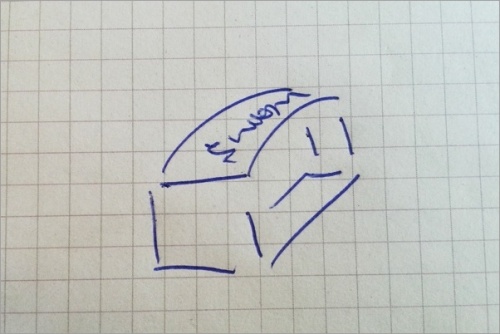
In our case, often with Adam, our head of production, who can sketch a pretty solid idea even on a piece of sandwich paper. And honestly, this is usually the point where you see whether the idea has spark or is just a nice thought headed for a drawer. That first line promises nothing yet, but it already shows the shape, the proportions, and whether this will become a proper detail or just another piece of soulless metal.
Why is a hand-drawn sketch not enough on its own?
Because a sketch is the starting point, not the final plan.
A hand-drawn concept has atmosphere, but production needs precision. So the lines are redrawn and transferred into digital form, where actual dimensions, proportions, and technical details can be worked out. That is the moment when the idea stops acting like a nice little concept and starts behaving like a real product.
What does a 3D model show that paper cannot?
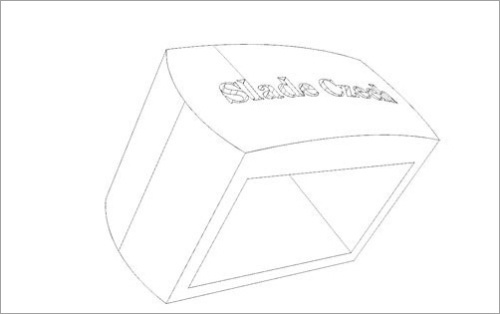
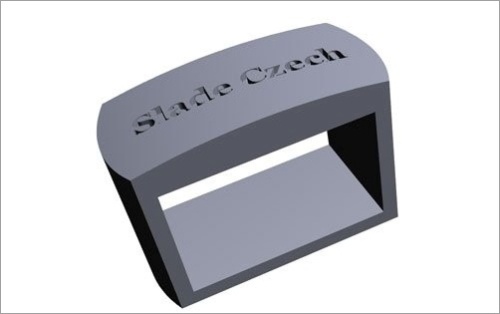
A 3D model shows whether the hardware will work beyond the page.
All at once on the screen, you can see the volume, the edges, the material thickness, and how the detail will feel in its real size. And this is exactly where it sometimes becomes obvious that something which looked fantastic in a drawing would end up too heavy, too bulky, or simply awkward in the final form. A computer can be brutally honest about that. Which is a good thing.
How does a digital design become an actual metal piece?
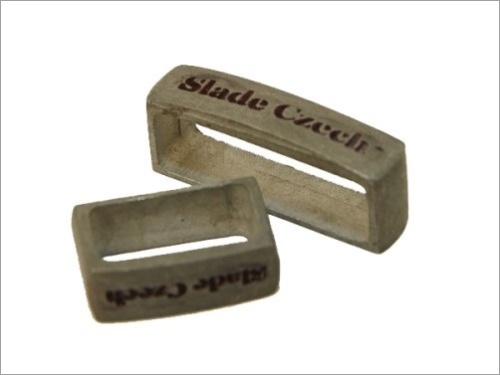
Through a mold and a casting.
Once the design is ready, special rubber molds are prepared for zinc castings. This is where the big shift happens: the design is no longer just a visual idea, but starts to have weight, surface, and real behavior in the hand. Suddenly you are not only thinking about how it looks, but how it feels when you pick it up between your fingers.
Why is a casting not yet a finished product?
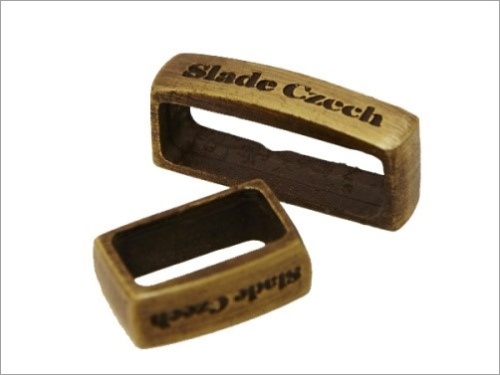
Because a raw casting is still only a semi-finished piece.
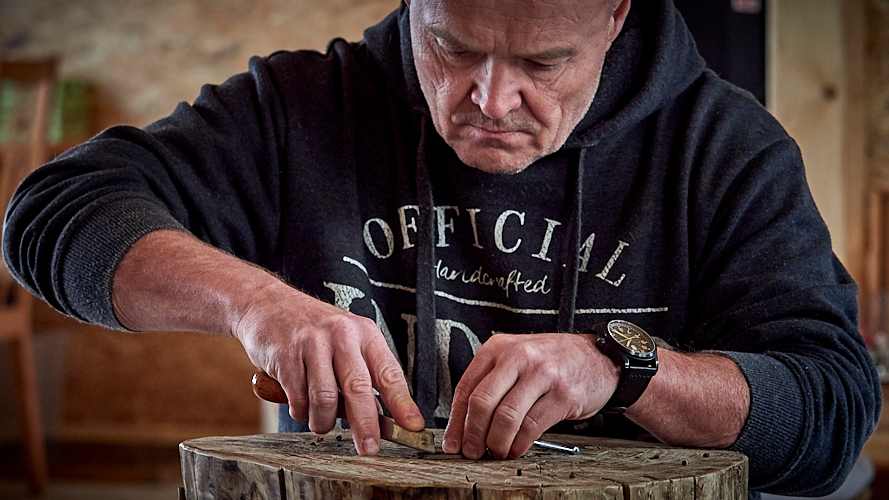
After casting, it needs to be cleaned, stripped of burrs, and refined so the surface is ready for real use. This step is less photogenic than the first sketch, but far more important. An edge left too sharp or a surface that is not fully finished will give itself away very quickly in everyday use. Neither dog nor human needs to write a review for that. You notice it right away.
When is new hardware truly finished?
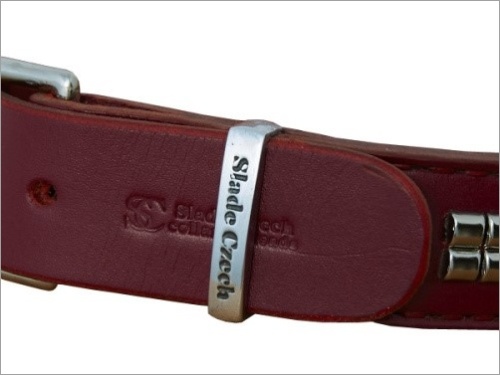
When it has a final shape, a clean surface, and stands up as a complete piece.
Only then does it make sense to say a new type of Slade Czech hardware has been born. Not when the first idea exists, but when that idea has turned into a refined detail that can justify its place on the gear. That is the whole point. We do not want just another piece of metal. We want an element with character that holds the look and function together.
Why design custom hardware in the first place?
Because custom hardware gives you more control over both the look and the outcome.
If you reach for a ready-made universal part, it is faster. But fast does not automatically mean right. A custom design lets you work out the proportions, expression, and character of the detail so it fits a specific piece of gear instead of looking like a foreign body clipped on at the last moment. A small detail? Only until you take a closer look.
What matters most when designing new hardware
- A strong starting sketch – without it, the direction is hard to catch and the idea can fall apart before it even gets going.
- Precise digital processing – this helps uncover problems in proportion and smooth out things that looked better by hand than they do in reality.
- A solid 3D design – it reveals volume, thickness, and the overall feel, so you are not dealing only with appearance, but with reality too.
- A properly prepared casting – this is exactly where you find out whether the design works as a real material object.
- A fully finished surface – without it, even a good design would feel incomplete, and everyday use would expose that pretty fast.
Common mistakes
A common mistake is underestimating the design phase itself and treating the first sketch as if it were already the finished thing. But an idea that looks good on paper can feel clumsy or unbalanced once it is translated into real size.
Another frequent slip is pushing too hard for speed. When careful digital refinement or 3D model checks are skipped, the problems just move further down the line into production, where they tend to get more expensive and more annoying. That is exactly the kind of shortcut that likes to dress up as a time saver, then starts biting your ankles later.
It is also a mistake to treat the casting as a finished product. It is not. A raw piece without cleanup and final surface finishing is like work left half-done on the bench. It only functions halfway, and in the detail, it shows immediately.
A lot of people in general also underestimate how much the surface and edges matter. In everyday life, these little things are exactly what separate a well-made detail from something that starts looking tired before it has really had a chance to work.
And then there is the classic real-world issue: something looks striking in a photo, but feels completely different in the hand. That does not apply only to collars and leads. It applies to hardware too. A photo forgives a lot. Daily use forgives almost nothing.
Expert perspective
In practice, it often becomes clear that hardware makes a bigger difference to gear than people first want to admit. It is not just decoration. It is the detail that holds the whole piece together visually and functionally.
A common problem is that these kinds of components are treated like a finished off-the-shelf thing that only needs to be stitched or riveted on. But with long-term experience making gear for dogs, one thing keeps proving itself over and over again: a well-designed detail never happens by accident. It has to fit in proportion, material, and expression.
At first glance, it may look like a tiny thing, but in daily use it makes a huge difference whether the hardware is properly finished from the first design all the way to the final treatment. Anyone who has ever held a good piece and a bad piece side by side knows that the difference is not theoretical. You see it straight away.
There is another thing that keeps proving true with details like this: the more honest and careful the preparation at the start, the fewer compromises need putting out at the end. Old workshop truth. Still true every single time.
Who this is useful for
- For people who want to understand why custom hardware does not appear with a snap of the fingers and why a good detail needs time.
- For dog owners who care not only about gear, but also about the components behind it, not just the color and the first impression.
- For those who want to know what stands behind a product before it ever reaches a collar or a lead.
- For anyone who prefers a custom path over standard catalog parts with no real character.
- For people who know that quality gear is not only about leather and stitching, but also about the metal details carrying their share of the work.
Final summary
Making new hardware takes longer, but that is exactly why it makes sense. Nothing gets brushed aside between the first idea and the finished piece. Every step has its job: the sketch finds direction, the digital design sharpens precision, the 3D model reveals reality, and the casting shows whether everything holds together beyond the screen.
When the whole process is done properly, the result is not just a nice-looking detail, but a real part of the gear with its own expression, not something there just to fill space. And that is how it should be. Good hardware does not begin in a catalog. It begins with an idea worth carrying all the way to the final edge.
Frequently asked questions
How long does it take to design new hardware?
That depends on how complex the design is, but it is not a one-day job. If it is going to be done properly, it needs time for the sketch, digital processing, the 3D model, and the actual production.
Who designs new hardware at Slade Czech?
The first ideas often come from Adam, our head of production. From there, the design continues through redrawing, modeling, and technical refinement until the idea becomes a real piece.
Why is the design transferred into digital form?
Because a hand-drawn sketch on its own is not enough for precise production. The digital version helps keep dimensions, proportions, and details under control so nothing important slips away on the way.
What are the castings for new hardware made from?
In the process described here, zinc castings are prepared in special rubber molds. Only after that do cleanup and final surface finishing come into play.
Is a raw casting already finished hardware?
No. A raw casting still needs to be cleaned, stripped of burrs, and properly finished, otherwise it is just a half-done piece without final quality.
Why make custom hardware instead of using ready-made parts?
Because a custom design gives you more control over shape, character, and the overall feel. A catalog part may be quick, but it often lacks the thing that makes a product truly its own.
Real Dogs