Autumn Care for Dog Paws 🐾
Quick answer:
In autumn, dog paws take the biggest hit from moisture, road salt, gravel, mud, and cold ground that dries out and irritates the skin. The best fix is a simple routine: rinse them after walks, dry them properly, check between the pads, and use a protective balm when needed. If you do not slack off on care, those paws can handle both city streets and muddy trails without pointless cracking or grumpy hopping.
How should you care for your dog’s paws in autumn so they do not crack or hurt?
Autumn paw care comes down to a few simple steps: regular cleaning after walks, thorough drying, checking the space between the pads, sensible trimming of excess hair, and protection with a balm or wax. When this becomes part of the normal routine, paws handle salt, dampness, and tiny stones much better, and your dog is less likely to act like today’s walk was a spectacularly bad idea after the first few steps.
Why are dog paws under more stress in autumn than at other times of year?
Because within a few days, everything starts hitting them at once.
Autumn brings wet pavements, chilly mornings, mud, gravel, and in the city, often the first salt treatments too. The skin on the pads ends up taking a beating much like shoes you would drag through puddles, salt, and stones without a second of care. Your dog will not file a long review, but the signals are usually clear: slowing down, licking their paws more often, or fussing over every step once they get home.
How do you clean paws after a walk without turning it into a wrestling match at home?
Keep it short, calm, and the same every time.
When you get back, lukewarm water, a soft towel, and a quick check between the pads are usually enough. This is exactly the kind of small detail that seems harmless until your dog starts bringing home salt, fine gravel, and half the trail. When cleaning becomes a regular ritual instead of an improvised hallway chase scene, most dogs get used to it surprisingly fast. A calm voice, the same sequence, and maybe a quick scratch or a treat at the end can work wonders.
Why is a quick wipe with a towel not enough?
Because the surface may look dry while the real problem stays tucked away inside.
A towel gets the mud off the outside, but salt, fine grit, or a tiny pebble can easily stay lodged between the pads. Then comes the classic scene: the dog is lying around at home, but every few minutes they are licking one paw or refusing to let you check it properly. That space between the toes is often where comfort and trouble part ways. A one-minute check can reveal more than a long stretch of watching them on the walk.
Does balm or wax really help against cracks and salt?
Yes, when it is used sensibly and consistently.
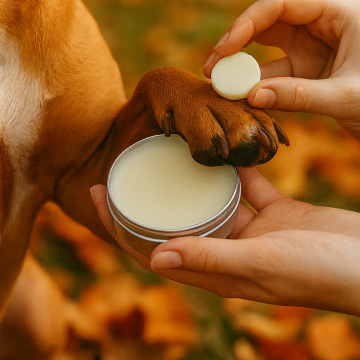
A protective balm or wax creates a light barrier on the paw that helps limit contact with dampness, road salt, and grime. Before the walk it protects, and after the walk it can support recovery. It is not some magic wand that fixes everything for you, but as prevention it works very well. A thin layer is plenty. Overdo it and let the dog launch straight across a smooth floor, and your living room may briefly start looking like a skating rink.
When should you apply balm before a walk, and when should you use it after?
Ideally both, but each use does a different job.
Before going out, balm helps shield the paws from outside irritation. After the walk, it helps soothe and nourish skin that has already taken a hit. For dogs that spend a lot of time in the city, on gravel, or on wet routes no matter what the weather is doing, that combination makes the most sense. There is no need to turn it into a lab experiment. Consistency matters more than complexity. One minute of care each day usually beats a big rescue mission once a week.
Is it worth trimming the hair between the paw pads?
Yes, a light trim usually helps more than it hurts.
In autumn, the hair between the pads loves to trap moisture, mud, salt, and tiny bits of debris. When it gets too long, it can form clumps that press, rub, and keep all the mess exactly where you do not want it. You do not need to turn the paw into a grooming project. Just tidy up what sticks out and gets in the way. The bonus is obvious: easier cleaning, better contact for balm, and far less of the park getting dragged into your house.
How can you tell when paws are not just tired, but irritated?
You can tell from both the look of them and the way your dog behaves.
Common warning signs include red paw pads, small cracks, frequent licking, reluctance to put weight down, or limping. Some dogs are subtle and simply spend more time fussing over one paw after coming back inside. Others make the point very clearly and start protesting after a few metres on the next walk. Dogs do not act like product reviewers, but in this department their honesty is almost brutally efficient.
When is home care enough, and when is it time to call the vet?
If the irritation is mild and improves quickly, home care is usually enough.
But if you see deeper cracks, strong redness, swelling, obvious soreness, or clear limping, that is not the time to play hero. A few quieter days, gentle cleaning, and a healing balm may help, but if things are not improving or start getting worse, it is time for the vet. Paw problems can escalate faster than most people expect. Today it is irritation, tomorrow it is inflammation, and suddenly even a simple walk becomes a sport for the battle-hardened.
Are home remedies enough, or are products made specifically for dogs better?
For the basics, water, a towel, and careful eyes are enough, but a proper dog product does make a difference.
Balms and waxes made for dogs are designed with the reality in mind: dogs lick their paws, run through wet conditions, and do not wait politely for everything to dry perfectly. Human creams may contain ingredients that are not a great idea for regular canine use. In practice, the best approach is usually the simple one: clean, dry, check, and protect. No grand magic. Just care that gives your dog’s paws a fair shot at working normally even when the pavement looks like an autumn obstacle course.
Practical tips that really help dog paws in autumn
- Rinse paws with lukewarm water after every city walk – road salt and fine grit dry out the skin and can irritate it faster than most people expect.
- Dry the space between the pads too – damp skin between the toes holds onto dirt and is a common place for stinging and rubbing to start.
- Check for tiny stones and stuck debris – a dog may seem fine for a few minutes, then start obsessing over one paw after getting home.
- Apply balm in a thin layer – more product does not mean more protection, just a better chance of turning your floor into a slip hazard.
- Trim overgrown hair between the pads – less trapped mud, fewer clumps, less pointless discomfort while walking.
- Watch for behaviour changes – if your dog slows down, licks their paws, or hesitates to head out like usual, they are often telling you quite a lot.
Common mistakes
One of the most common mistakes is treating paws like they will take care of themselves and only paying attention once the dog starts limping or licking them obsessively. By then, you are often no longer doing prevention. You are catching up with a problem that already got moving.
Another very common slip is wiping paws quickly with a towel and skipping the rinse. On the surface it looks done, but salt or fine gravel can still stay between the pads and keep irritating the skin. Outside everything seems fine, then indoors the dog starts hopping around on three legs and the message is loud and clear.
Another mistake is using human creams just because they are within easy reach. What works for a person is not automatically a smart move for a dog that regularly licks their paws and leaves the product sitting on the skin in a completely different way.
People also often underestimate the hair between the pads. When it is left unchecked, it collects moisture, grime, and sometimes even tiny icy bits. The dog does not become reluctant to walk because they are being dramatic. It is because something is pressing and bothering them with every step.
Another problem is doing paw care randomly. One thorough session, then nothing for ages. But regular care is what keeps paws in good condition. For an active dog, autumn paw maintenance is not some occasional weekend hobby. It is part of everyday life.
Expert perspective
In practice, it often turns out that owners pay attention to the neck, coat, food, and exercise, while paws get pushed close to the bottom of the list. And yet they are the part carrying the whole operation. Every kerb, every puddle, every gravel path, every sharp stop on the pavement.
A common issue is that problems do not start dramatically. First a bit of licking, then mild redness, then a small crack. And suddenly the dog that normally heads out without a second thought starts acting like skipping today’s walk might actually be an excellent plan.
At first glance, it can look like a small detail, but in daily life routine makes a huge difference. Real-world experience is pretty simple here: dogs whose paws are rinsed, dried, and protected regularly tend to have noticeably fewer problems in autumn than dogs whose paws only get attention once something is already wrong.
And one more thing from the field: dogs rarely start limping out of nowhere without earlier signs. Usually it begins with a whisper. More attention to one paw, more fussing once they are home, more caution on cold surfaces. The people who catch those little clues early tend to have a much calmer season.
Who this approach is right for
- For dogs that walk city streets often, where salt, dirt, and sharp little bits tend to linger on the pavement.
- For active companions that love mud, woodland tracks, and behave as if weather is a minor administrative detail for humans.
- For puppies that are only just getting used to paw care and need a calm, regular routine.
- For dogs with more sensitive skin that reacts faster to dampness and cold than others do.
- For owners who do not want to start dealing with the issue only once the dog begins limping or protesting every touch.
- For anyone who is tired of bringing home mud, salt, and avoidable trouble after every autumn walk.
Final summary
Autumn paw care is not some grand science, but it is definitely not a detail worth brushing off. The biggest difference comes from regular rinsing, proper drying, checking between the pads, and using a protective balm when the weather throws moisture, salt, or rough surfaces into the mix. The moment your dog starts paying more attention to their paws, slowing down, or licking them more than usual, it is smart to notice before a small issue turns into a bigger one. Style is great, but without healthy paws, nobody gets very far.
Frequently asked questions
How often should I wash my dog’s paws in autumn?
After every walk if you are dealing with city streets, road salt, or wet mess. On cleaner routes, a quick check can sometimes be enough, but when the paws are full of mud and salt, there is really no shortcut.
Is it enough to just wipe the paws after a walk?
Sometimes yes, but often no. A towel handles the surface, but salt and tiny bits of debris can stay between the pads, and that is where a lot of trouble starts.
Can I use regular hand cream?
Better not. Dogs lick their paws, and human creams are not made with that kind of everyday use in mind, either for the skin or for what ends up in the mouth.
Should I apply balm before a walk or after it?
Before the walk it protects, after the walk it helps soothe and restore the skin. For dogs that often walk on salted or rough ground, both usually make the most sense.
How do I know if my dog’s paws actually hurt?
You can usually spot it pretty quickly. Licking, paw flicking, cautious walking, reluctance to go out, or limping are not attitude problems. They are a clear sign that something is off.
Is it worth trimming the hair between the pads even on a short-haired dog?
Yes, if it grows enough to trap dirt or moisture. It does not need to be dramatic to start causing trouble exactly where the dog feels it with every step.
When should I take my dog to the vet for paw problems?
If you see deeper cracks, swelling, strong redness, soreness, or limping, it is time. Mild irritation may respond to rest and gentle care for a few days, but worsening symptoms are a job for a professional.