Dog Harness vs Collar – What’s Better for Your Dog?
The choice between a collar and a harness depends mainly on your dog’s behavior, body structure, and the situation you’ll be using the gear in. A collar offers natural, precise communication between dog and handler and is often ideal for calm dogs. A harness spreads pulling force across the chest and can be a better option for strong pullers or dogs with a sensitive neck.
Is a harness or a collar better for a dog?
There isn’t one universal answer for every dog. A collar is simple and allows clear, gentle communication through the leash, while a harness distributes pulling force over a larger area. The right choice depends on your dog’s temperament, training approach, and the activities you do together.
How a collar works on everyday walks
A collar is the classic way to guide a dog on leash—and it’s been used for centuries for a reason. Its biggest strength is simplicity and direct communication. A light leash tension gives a clear signal and allows accurate handling without unnecessary pulling.
For a dog that already understands leash manners, a collar is often the most natural choice. It doesn’t restrict shoulder movement, doesn’t cover the chest, and most dogs barely notice it.
Why many experienced handlers still prefer collars
- allows precise, subtle communication
- doesn’t restrict natural movement
- quick and simple to put on and use
- can be worn long-term with ID tags
Design matters, though. A narrow collar can create high pressure on a small area of the neck when a dog pulls. For stronger breeds, wider collars are often used to spread pressure and improve comfort. The right collar width can make a big difference in how comfortable it feels.
When a harness makes sense
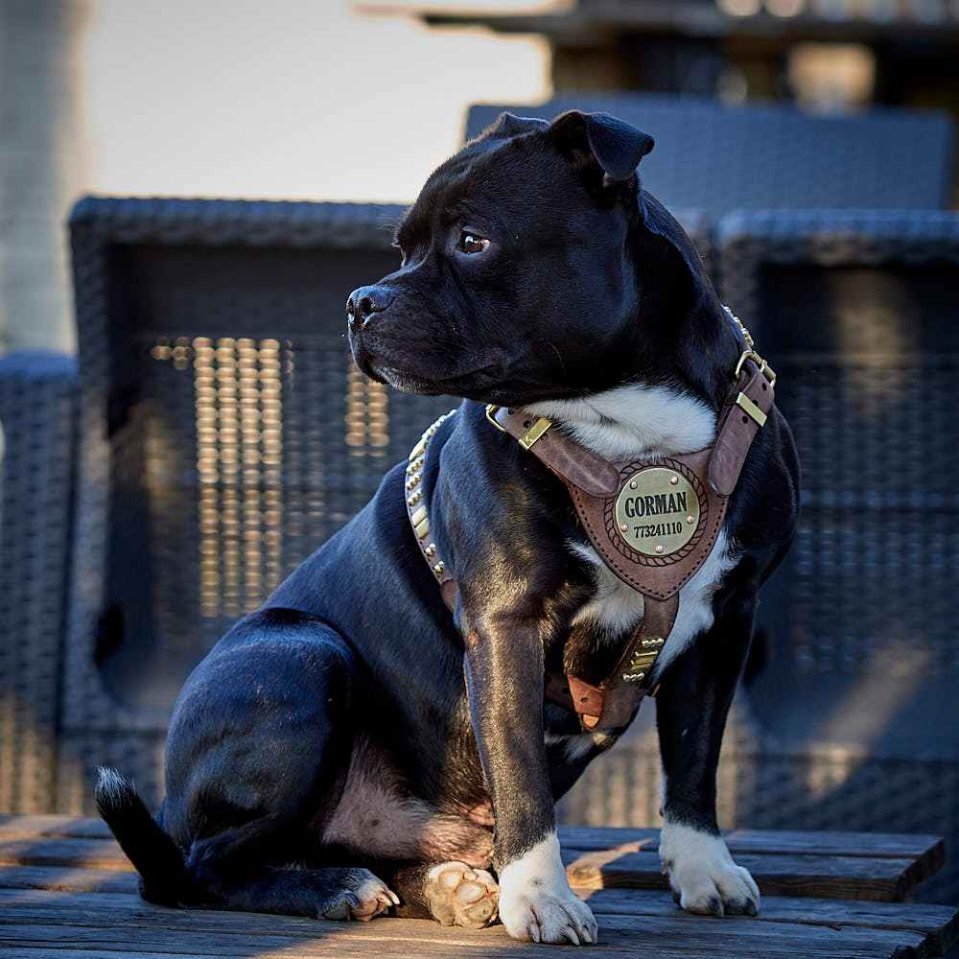
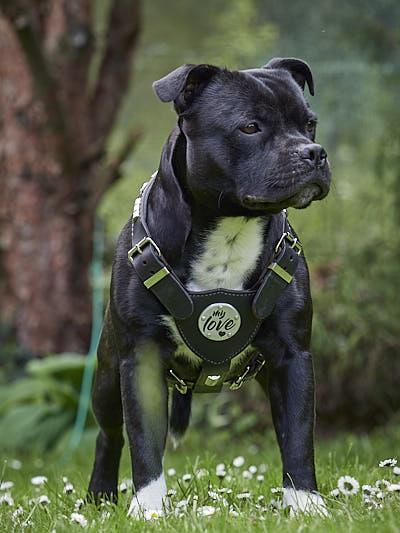
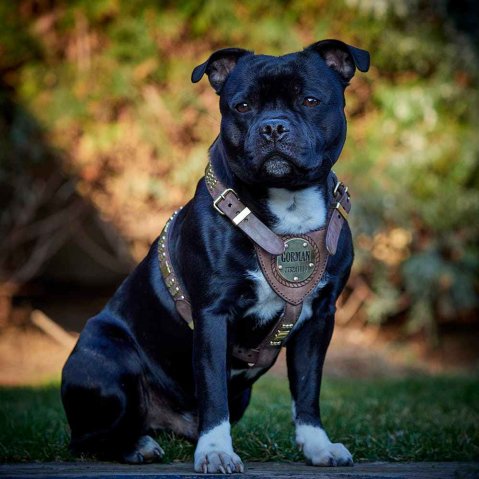
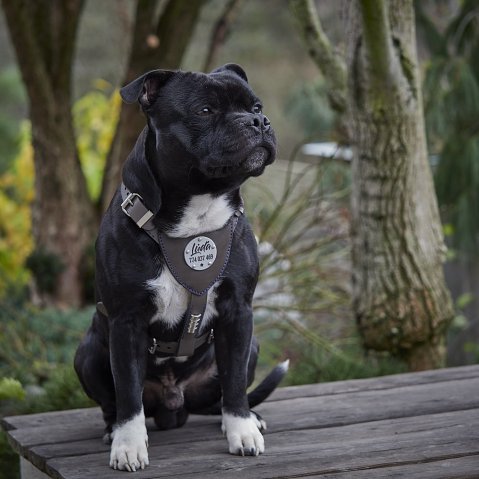
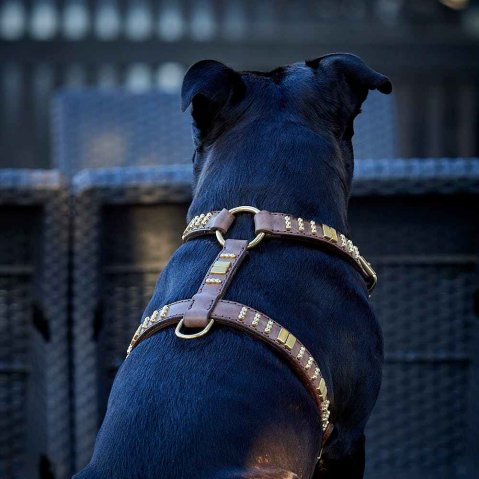
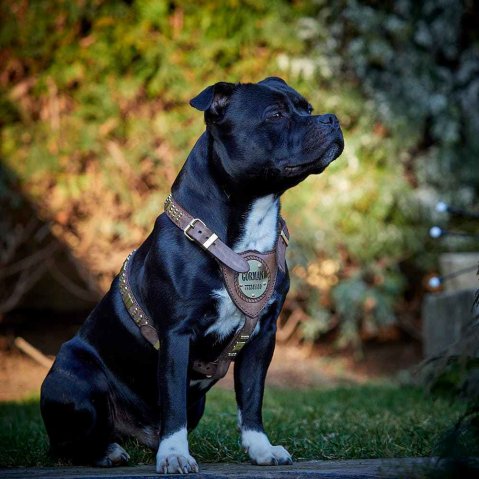
Harnesses have become extremely popular in recent years. Their main advantage is that they distribute pulling force across the chest and shoulders, so there’s no direct pressure on the neck.
This can be especially useful if your dog tends to lunge forward suddenly, or if they have health concerns involving the neck, cervical spine, or trachea.
Situations where a harness can be a practical choice
- a puppy learning leash skills
- a dog with neck-related health issues
- sports activities or long hikes
- a strong dog where you need more physical control
One important thing to know: pressure on the chest can trigger a natural pulling reflex in some dogs. They brace and pull into the pressure—this is the same principle used with sled dogs. For certain individuals, a harness can therefore increase pulling rather than reduce it.
Fit and construction matter more than the type
Whether you choose a collar or a harness, quality and correct sizing are critical. Poorly chosen gear can be uncomfortable or restrictive no matter what type it is.
A poorly fitted harness can limit shoulder movement or alter a dog’s natural gait. Likewise, a collar that’s too narrow can create uncomfortable pressure on the neck.
Well-designed equipment works with your dog’s body naturally and won’t cause problems with long-term use.
Common mistakes to avoid when choosing a collar or harness
Choosing by looks instead of function
Some owners pick gear mainly for appearance. Style is a nice bonus, but comfort and function always come first.
Wrong size
A harness that’s too loose can shift around and rub the coat. Too tight and it restricts movement. The same applies to collars: it should be secure but still comfortable.
Low-quality materials
Cheap materials can be stiff, uncomfortable, and wear out quickly. Quality leather and durable structural materials soften over time, adapt to the dog, and can last for years.
The Slade Czech practical perspective
This isn’t a take pulled from catalogs or marketing brochures. It comes from hands-on experience.
Author: Slade Czech team. We’ve been making handmade leather gear for dogs since 2004. Over the years, thousands of collars and leashes have passed through our workshop and have been tested in real life—daily walks, training sessions, and active dogs living full-speed lives.
One simple truth keeps coming back: gear alone doesn’t train a dog. What matters most is communication between dog and handler, proper training, and choosing the right size and construction for the individual dog.
A well-fitted collar and a well-made harness can both work brilliantly—when they match your dog and the situation.
Who each option is suitable for (and who it isn’t)
A collar is often ideal for:
- dogs that walk calmly on leash
- handlers who work with gentle, precise communication
- everyday walks
- dogs that wear ID tags regularly
A harness may be a better fit for:
- puppies in the learning phase
- dogs with sensitive necks
- sports activities and longer hikes
- situations where more physical control is needed
Many owners end up using both depending on the context: a collar for everyday walking and identification, and a harness for training, sports, or longer adventures.
FAQ
Is a harness always safer than a collar?
Not always. A harness distributes force across the chest, which can be helpful for some dogs, but it can also encourage pulling in others. For a well-trained, calm dog, a collar can be just as safe and more natural.
Can a collar damage a dog’s neck?
A properly sized collar with appropriate width typically won’t harm a dog’s neck. Issues are more likely with collars that are too narrow, poorly fitted, or used with constant heavy pulling.
Is a harness good for a puppy?
Yes. Harnesses are often used for puppies learning leash skills because they help distribute force and reduce the risk of sudden jerks on the neck.
Can I use both a collar and a harness?
Yes. Many owners use a collar for everyday walks and ID tags, and a harness for sport, hiking, or specific training situations.
Real Dogs