How Wide Should a Dog Collar Be? Pick the Right Width for Your Dog’s Build

Short answer:
The right collar width is the width that stays calm on the neck, does not cut into one narrow line, and suits your dog’s build and job. Small dogs usually need a lighter proportion. Stronger dogs usually need more width, more structure, and less “looks nice, works badly” nonsense.
How wide should your dog’s collar actually be?
The honest answer is simple: wide enough to stay stable, but not so bulky that it overwhelms the dog. Collar width is not just visual styling. It affects how the collar sits, how it reacts when the leash tightens, and how clearly you can handle the dog when things stop being calm.
You can spot a bad width fast. The dog steps into the lead, the collar rolls, and all the pressure suddenly lands in one strip. That five-second test tells you a lot. If the collar turns instead of holding its shape, the problem may not be the material or the buckle. It may be the width.
If you are trying to figure out where width ends and real holding power begins, it makes sense to continue with what truly holds under pressure when a dog pulls. A collar can be wide and still useless if the build is weak.
Why is collar width such a practical issue?
Because a collar that fits the dog’s build handles better, feels steadier, and spreads force more cleanly.
A wider collar usually sits flatter on the neck and stays more readable when the dog drives into the leash. A very narrow collar can still be fine on a lighter dog, but on a thick-necked or hard-pulling dog, it often becomes twitchy. It shifts, rotates, and starts feeling sharper than it needs to.
This is where photo logic falls apart. Slim collars can look sleek. In motion, though, sleek can turn into sloppy. Nice silhouette, poor job.
What width makes sense for small dogs?
Small dogs generally need a narrower collar, but that does not mean the collar should be flimsy.
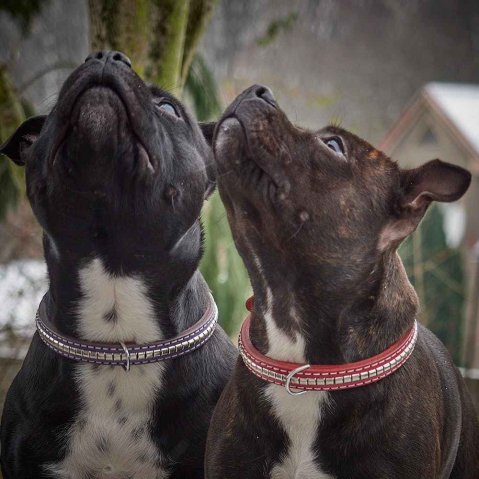
The goal is proportion and clean placement. A collar should not drown the dog’s neck, but it also should not be so thin and soft that it folds or wanders around. Even for smaller dogs, there is a difference between light and weak. You want light. You do not want a collar that behaves like a shoelace with ambition.
So yes, go narrower for smaller dogs, but keep enough structure that the collar still reads as equipment, not decoration.
What about medium, muscular, and stronger dogs?
This is where more width often starts making obvious sense.
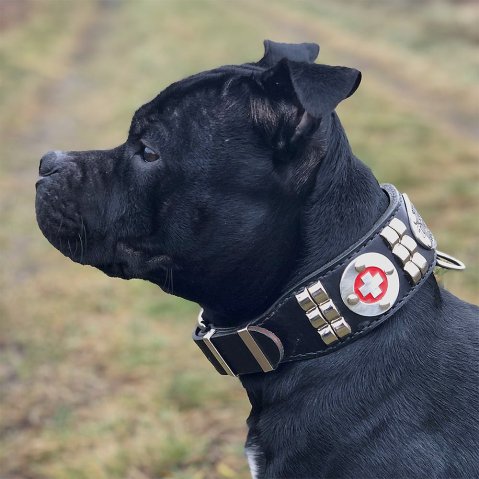
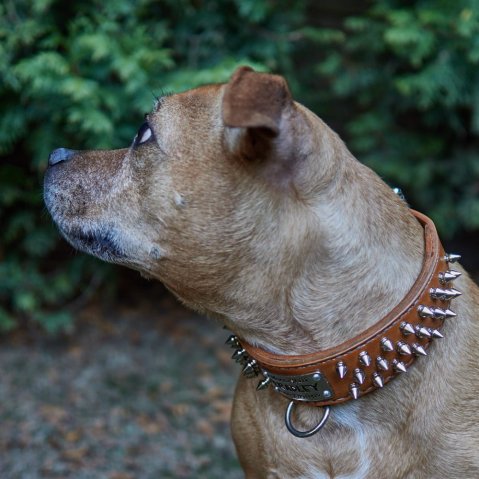
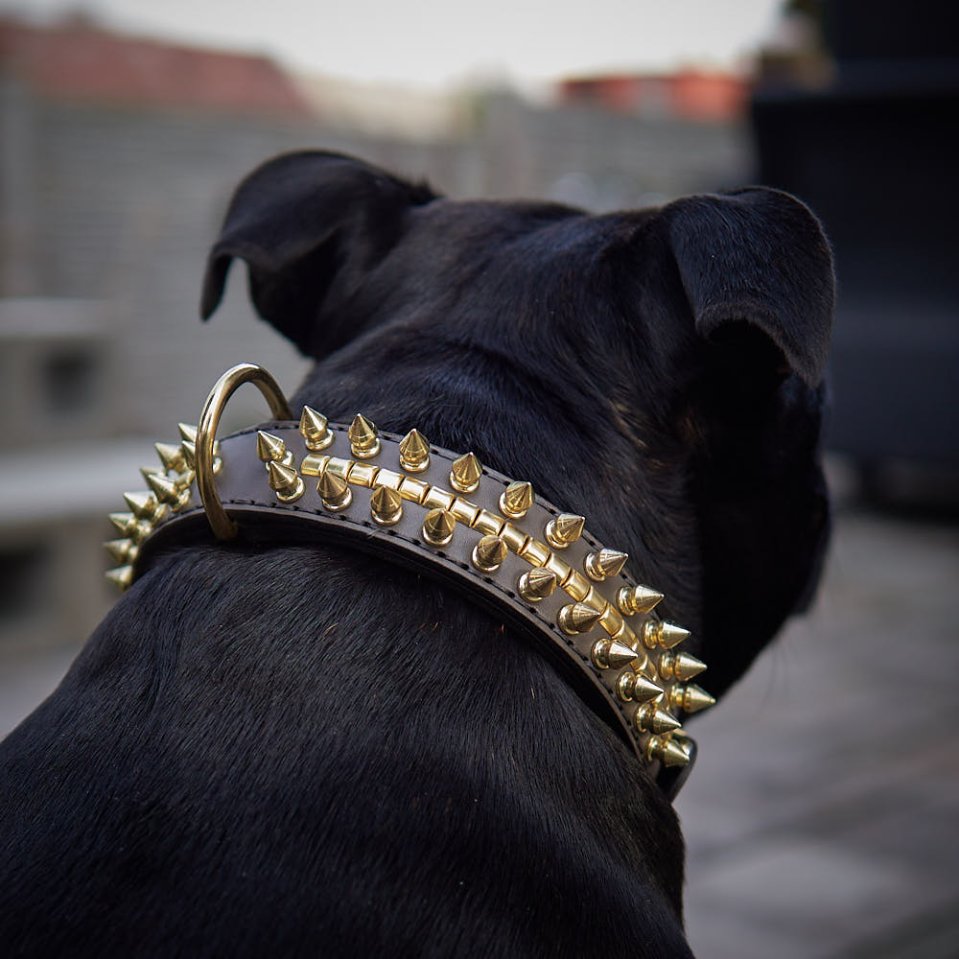
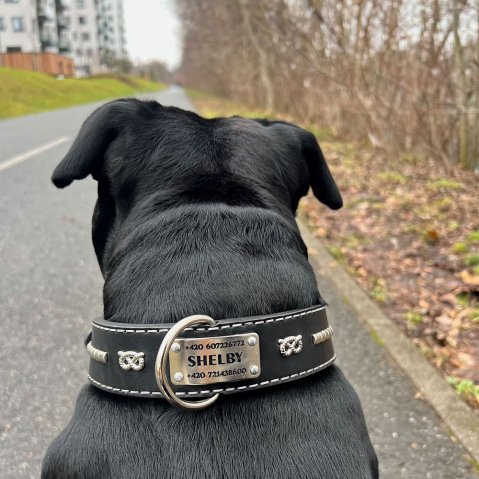
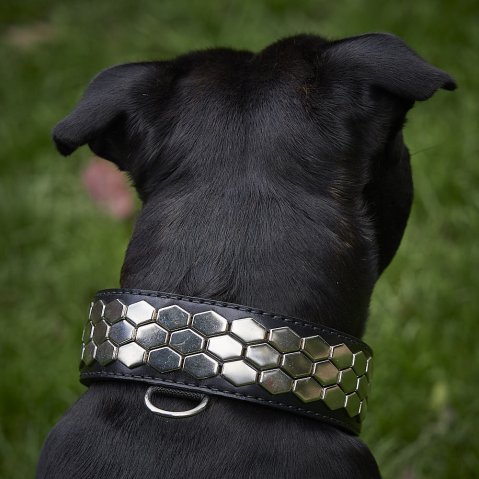
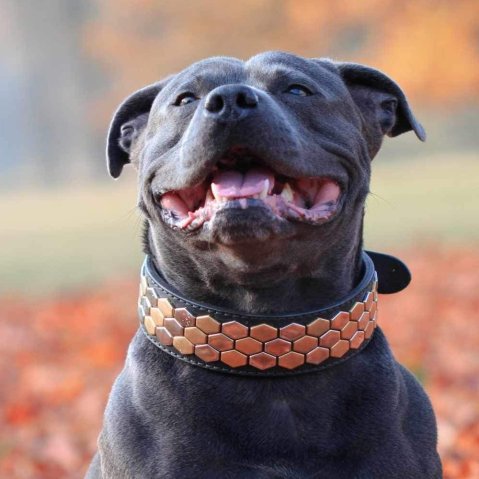
Dogs with more neck strength, more chest drive, and more full-body commitment on leash usually do better in collars that have a broader footprint. The wider collar stays steadier, pressure is not dumped into one thin track, and your handling gets less jumpy. That matters on everyday walks, not just on paper.
For dogs in that zone, a classic leather option like the King’s Colours classic collar fits well when you want a firm everyday collar with a stronger neck presence. If you want something in a clean classic style with the same practical logic, the Django classic collar is another solid match.
When is the real issue width, not collar type?
More often than people think.
Owners sometimes jump straight to a different collar system when the current collar is simply too narrow for the dog they are handling. If the collar twists, bites into one pressure line, or feels unstable the moment the dog leans forward, fix width and construction first.
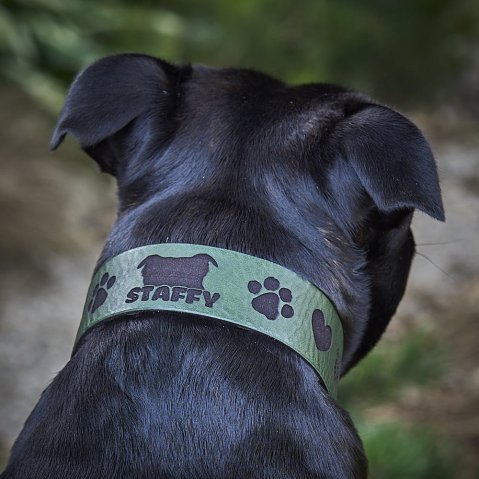
That is especially true for compact, strong dogs. If you are dealing with that kind of build, read how to pick the perfect collar for a Staffordshire Bull Terrier. The same principles apply to plenty of muscular breeds: neck shape matters, structure matters, and width matters more than most people expect.
Decision flow
- If your dog is small, light, and easy on leash: a narrower collar usually works, as long as it still has shape and proper build.
- If your dog is medium or stronger and sometimes hits the leash hard: choose a wider, firmer collar for cleaner handling and better pressure spread.
- If your dog slips backward, braces, or needs more control in motion: width alone may not solve it. That is where the Bucephalus half check collar becomes the smarter tool.
- If you need gear for the show ring: width follows presentation and handling style, not the same rules as an everyday walking collar. That is the lane for the Bowline show set and Hangman’s Knot show set.
- If you still cannot decide: sort out width, fit, and construction first, then decide whether you even need another collar type.
When does a half check beat a wider classic collar?
When the challenge is not only pressure, but also control and security.
A wider classic collar is often the best everyday answer. But if the dog likes to back out, throws body weight into the lead, or needs clearer communication while moving, a half check may be a better fit. Not because it is harsher. Because it is more specific.
Does a wider collar help protect the neck?
In many cases, yes.
More width usually means more contact area, which helps prevent that “all the force in one line” effect. But width by itself is not magic. Bad sizing, weak materials, and soft structure can cancel out the benefit. If neck safety is your main question, go deeper with our wide collar and safe neck article.
Common mistakes
The biggest mistake is shopping by appearance only. A narrow collar can look refined, minimal, and clean. Then the dog lunges once, and the collar turns into a pressure cord. That is not a style issue. That is a handling issue.
The other mistake is assuming wider is always better. Put an oversized, overbuilt collar on a tiny dog and you create the opposite problem. Too much bulk, poor proportion, awkward movement. Good width is about fit, not ego.
People also mix up show gear with walking gear. Show sets are about line, elegance, and controlled presentation. Daily collars are about real life. Those jobs overlap a little, but not enough to pretend they are the same thing.
Expert view
The best collar width is the one that stays honest when the dog moves. You do not judge it when the dog is standing still for a nice photo. You judge it when the dog surges forward, leans into the leash, or cuts sideways. That is when wrong width shows itself.
A collar that works stays stable, readable, and useful. A collar that does not work starts arguing immediately. It rolls, pinches, drifts, and turns clean handling into mess. Pretty leather is not enough. The collar has to do its job when the dog does something stupid at full commitment.
Who this is most useful for
- Owners of stocky or muscular dogs: collar width changes handling quality fast.
- Dogs that lunge or brace against the leash: stability matters the second pressure appears.
- Handlers choosing between classic, half check, and show gear: width is part of the decision, not an afterthought.
- Anyone replacing a collar that twists or marks too sharply: the fix may be width before anything else.
Final summary
The right collar width depends on your dog’s size, neck shape, strength, and purpose. Small dogs need proportion. Stronger dogs usually need more width and more structure. If the collar twists, cuts into one line, or feels unstable when the leash tightens, it is probably the wrong width. A collar should not just look clean on the dog. It should stay clean when the dog acts like a lunatic for three seconds.
Frequently asked questions
Is a wider collar better for every dog?
No. It often helps medium and strong dogs, but it can be too bulky for very small dogs. The right answer is proportion plus structure.
How can I tell if my dog’s collar is too narrow?
If it rolls, digs into one pressure line, or becomes unstable when your dog pulls, it is probably too narrow for that build.
Can a classic collar still work for a strong dog?
Yes. If the width, construction, and fit are right, a classic collar can work extremely well for strong dogs.
When should I look at a half check collar?
When your dog backs out, braces hard, or needs more secure handling than a standard collar provides.
Should I use a show set as an everyday collar?
No. Show gear serves a different job. It is built for presentation and ring handling, not the same daily demands as a walking collar.
Real Dogs