Why the Netherlands Loves Staffordshire Bull Terriers – and the Collars They Wear
Short answer:
The Netherlands is one of the strongest markets for stylish, well-made dog gear because dog owners there value quality, clean design, and products that hold up in real daily life. Staffordshire Bull Terriers fit naturally into that culture, and a good leather collar is often seen as part function, part identity, and part pride.
Why do Staffordshire Bull Terriers and quality dog collars stand out so much in the Netherlands?
The Netherlands stands out because dogs are deeply woven into everyday life, and Staffordshire Bull Terriers fit that rhythm unusually well. Dutch owners tend to notice the difference between a basic collar and one that is handmade, durable, and built to look sharp without trying too hard. That mix of practicality and taste is exactly where a good leather collar stops being just gear and starts making sense.
Why do dogs feel so visible in Dutch cities?
Because they are. In Dutch cities, dogs are not tucked away for the weekend or brought out only for a quick loop around the block.
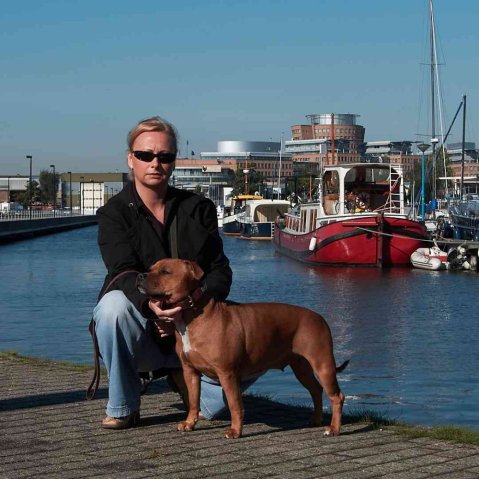
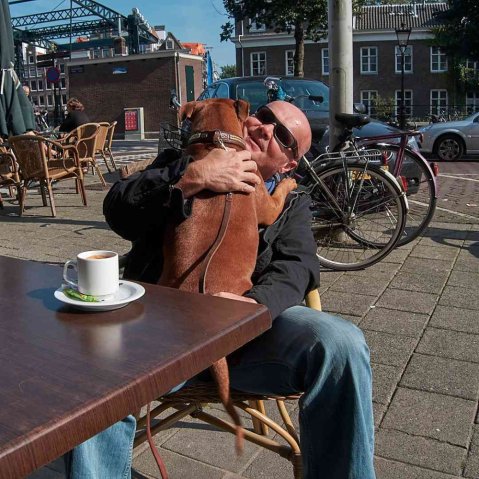
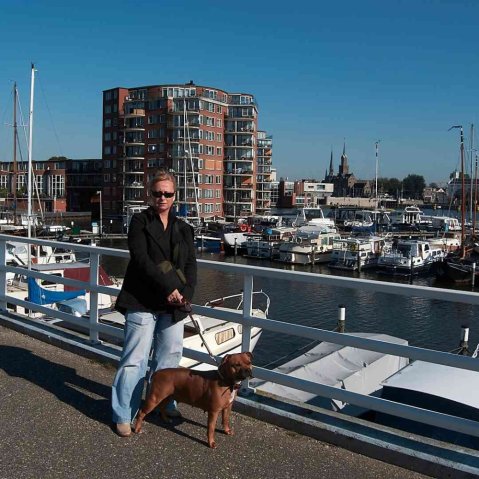
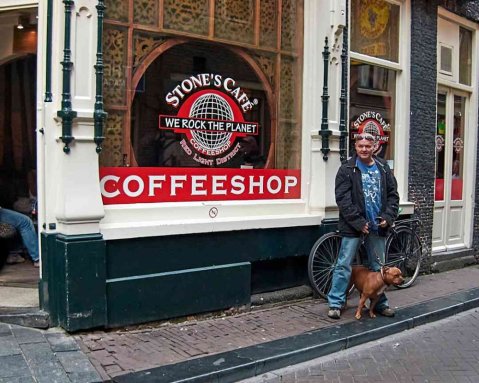
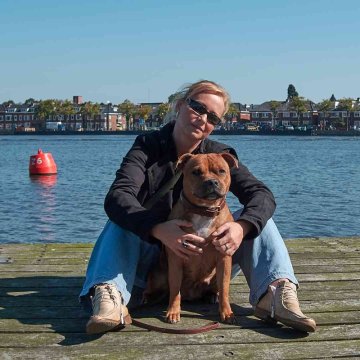
You see them by canal railings, outside cafés, in parks, on pavements, next to bikes, and under tables while their people finish coffee. Once a dog becomes part of the daily route, the gear on its neck stops being an afterthought. It has to work, hold up, and still look right when the dog is seen half the day. That is where flimsy supermarket stuff starts to feel a bit out of its depth.
Why does the Staffordshire Bull Terrier fit Dutch city life so well?
The Staffordshire Bull Terrier works well in Dutch cities because it is compact, strong, people-focused, and comfortable being close to its owner.
That matters in real life. A staffy is sturdy enough for busy streets, small enough for tighter urban spaces, and usually very tuned in to what is happening around its person. In a city where dogs walk past bikes, trams, terraces, and canal paths, that balance is gold. Short legs, broad grin, solid attitude. The dog looks like it belongs there, because it often does.
Why do Dutch owners care so much about what their dog wears?
Because in the Netherlands, dog gear is expected to be part practical tool and part everyday design object.
Dutch taste usually leans toward things that are honest, well made, and built to last. Not flashy for the sake of it. Not plastic pretending to be premium. A collar has to sit right on the dog, survive daily use, and still look good when the dog is parked beside a chair on a terrace or striding through the city like it owns the postcode.
What kind of dog collar style works best in the Netherlands?
The styles that work best are clean, strong, durable, and visually distinctive without becoming loud or fussy.
That usually means quality leather, solid hardware, and a design that has character but still feels wearable every day. In practice, owners often want a collar that looks just as right on a canal walk as it does on a muddy weekend outing. That is the sweet spot. Pretty on a product photo is easy. Looking right after months of real use is where the game changes.
Why are handmade leather dog collars a natural fit for this market?
Handmade leather collars make sense in this market because they match the Dutch preference for materials that feel real, useful, and built with intention.
Leather has weight, texture, and presence. It ages with the dog instead of falling apart after one hard season. A well-made collar also tends to sit more naturally on the neck than cheap stiff gear with questionable padding and even more questionable hardware. Dogs may not write reviews, but they are brutally honest in motion. If something rubs, pinches, twists, or annoys, they let you know fast.
Why is the collar more than just a practical item for many staffy owners?
For many staffy owners, the collar becomes part of the dog’s identity, not just a strap for attaching a lead.
That is especially true with a breed that has so much presence packed into a relatively compact body. Owners notice the expression, the chest, the stance, the way the dog carries itself. The collar frames all of that. A good one supports the dog’s look without turning it into costume. There is a fine line there, and dogs with character expose bad decisions quickly.
Why does the Netherlands matter so much to Slade Czech?
The Netherlands matters to Slade Czech because it is one of the biggest countries we ship to, and we have many loyal, satisfied customers there.
That is not a throwaway line. Over time, we have seen a strong and steady stream of Dutch orders, and just as important, returning customers. People come back when a collar survives real life, still looks the part, and feels like it was made by someone who understands dogs beyond a studio photo. In that sense, the Dutch market is not just active for us. It is one of our strongest and most proven destinations.
How can you tell when a collar is chosen for real life and not just for show?
You can usually tell by how the dog moves, how the collar sits, and whether the owner keeps reaching to fix it.
A good collar settles into the routine. It does not keep rotating, riding up, sagging oddly, or making the dog scratch at the neck five minutes into the walk. A poor choice often looks impressive in the box and slightly confused on the dog. In city life, that gets noticed quickly. Especially with staffies, which are not exactly shy about letting the world see how they carry themselves.
Do Dutch dog owners really invest more in quality?
Yes, many of them do, especially when the product offers lasting value instead of cheap short-term appeal.
That does not mean they buy blindly or chase luxury labels for sport. It means they tend to appreciate good materials, smart construction, and products that feel made properly. In dog gear, that mindset shows up clearly. When an owner sees the difference between an ordinary collar and a handmade piece of leather built to last, the cheaper option often starts to look expensive in all the wrong ways.
What makes a dog collar actually work in everyday city life?
A dog collar works in everyday city life when it stays comfortable on the neck, handles repeated daily use, and looks right without becoming awkward or overbuilt. The best collars disappear into the routine. That is the goal. If the dog keeps noticing it, something is usually off.
- A collar that sits properly on the neck helps the dog move naturally and keeps daily walks from turning into constant readjustment.
- Strong, well-set hardware matters because city life means repeated clipping on and off, lead tension, and plenty of stop-start movement.
- Real leather earns its keep over time because it ages with use instead of turning tired and flimsy after one rough season.
- A balanced width matters more than people think, especially on stronger dogs where narrow collars can create concentrated pressure in all the wrong places.
- Design still matters because owners live with the collar every day, not just during a product photo moment.
Common Mistakes
One of the most common mistakes is choosing only by appearance. The collar looks sharp on screen, the hardware shines, the colour pops, and everything seems sorted. Then the dog starts walking, the collar shifts oddly, the neck movement looks restricted, and the whole setup suddenly feels like style won the argument while function left the room.
Another frequent mistake is going too narrow on a strong neck. On a staffy or other muscular dog, a narrow collar can put pressure into a smaller area than necessary. That may not look dramatic at first glance, but on a dog that pulls, lunges, or powers forward with enthusiasm, it can become an unnecessary problem very quickly.
Going too bulky is a mistake too. Some collars try so hard to look substantial that they end up feeling like armour. The dog does not need a small neck shield just because the design looked tough online. In daily use, too much weight or thickness can make the collar feel clumsy rather than solid.
A common real-world mistake is ignoring how often the collar will actually be worn. Some owners buy for the wow effect, but the dog needs something that works on normal Tuesdays, not just on special occasions. If it only feels right for a photo and not for a morning walk in drizzle, traffic, and mild chaos, that is not a great sign.
And then there is hardware. Cheap or badly chosen metal parts can turn a decent-looking collar into a nuisance. We have all seen the setup where the dog takes three steps, the lead clip knocks against everything, and the whole thing sounds like a drawer of loose tools. Not exactly elegant.
Expert Perspective
In practice, it often becomes obvious very quickly which collars were designed by people who know dogs and which ones were designed mainly to look convincing on a screen. The difference shows up in movement, balance, and how the dog reacts once the walk starts.
Across long-term work with dog gear, one thing keeps repeating itself: strong dogs do not forgive bad proportions. A collar can look beautiful on a table and still feel wrong the second a muscular dog starts turning, pulling, leaning into the lead, or charging toward something interesting. That is why width, material, flexibility, and hardware balance matter more than marketing phrases ever will.
A frequent issue is that owners underestimate how honest dogs are about equipment. They do not explain it politely, but the signs are there. Head shaking, scratching, stiff neck movement, repeated pauses, awkward pulling angles, or that subtle look of irritation after a few minutes outside. The dog is giving feedback. Just not in spreadsheet form.
We also see, again and again, that owners who live with their dogs actively tend to notice craftsmanship more. Not because it sounds fancy, but because daily use exposes everything. Stitching, edges, hardware setting, leather quality, how the collar softens with time, how it behaves in motion. Those details stop being details once the collar goes from package to pavement.
And that is one reason the Dutch market makes so much sense to us. Owners there often recognise what handmade work feels like. They notice the difference between a generic strap and a collar that was built to be worn, seen, and lived in. You do not get repeat customers from a country like that by bluffing. The dog would expose you first.
Who This Is For
- For staffy owners who want a collar that feels right in daily city life, not just in product photos.
- For dogs that wear their collar often and need something built for repeated real use, not occasional display duty.
- For owners who care about strong materials, clean design, and gear that ages well instead of giving up early.
- For people who have already learned that cheap collars can look fine for a week and tired for the rest of the year.
- For stronger dogs whose necks need better balance than a skinny strap with shiny ambition.
- For buyers who want dog gear with character, but without tipping into costume or gimmick.
- For customers who value handmade work and can spot the difference once the collar is in hand.
- For anyone choosing a collar as part of the dog’s overall look, while still expecting it to function properly on an actual walk.
Final Summary
The Netherlands stands out because it combines strong dog culture, everyday urban life, and an eye for things that are made properly. Staffordshire Bull Terriers fit naturally into that world, and good leather collars do too. For Slade Czech, this is not theory from a distance but a market shaped by many satisfied customers and years of steady demand. When a country keeps coming back for handmade collars, it usually means one thing: quality was noticed, and it held up once it left the workshop.
Frequently Asked Questions
Are Staffordshire Bull Terriers popular in the Netherlands?
Yes, they are seen quite often, especially in cities. Their size, strength, and social nature make them a good fit for active urban life.
Why do Dutch dog owners often choose higher-quality collars?
Because many of them value durability, clean design, and products that feel honestly made. Cheap gear may save money at first, but it often loses the argument once daily use begins.
Do handmade leather dog collars make sense for everyday use?
They do, as long as they are built well. A proper leather collar can handle daily wear, soften nicely over time, and still keep its shape and presence.
Why is the collar important for a staffy’s overall look?
A staffy has a lot of character in a compact frame, so the collar becomes very visible. It shapes the dog’s outline and can either complement that presence or work against it.
Is the Netherlands an important market for Slade Czech?
Yes, very much so. We have many satisfied Dutch customers, plenty of returning orders, and the Netherlands is one of the biggest destinations we ship to.
What makes a dog collar look good and still work in real life?
The best collars balance appearance with function. They sit properly, feel right in motion, use solid materials, and do not become a nuisance halfway through a normal walk.
Can a collar look good online and still be wrong for the dog?
Absolutely. That happens more often than people think. A polished photo can hide poor balance, awkward weight, or proportions that make no sense once the collar is actually on the neck.
Real Dogs