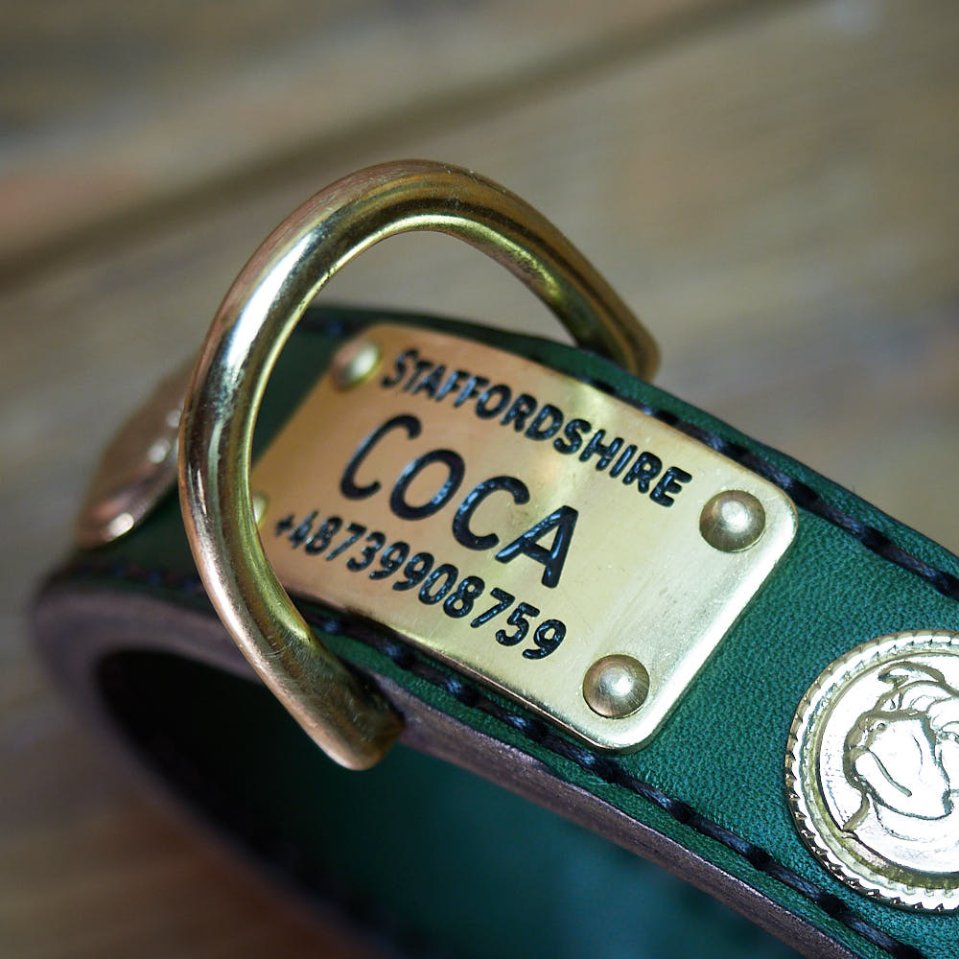
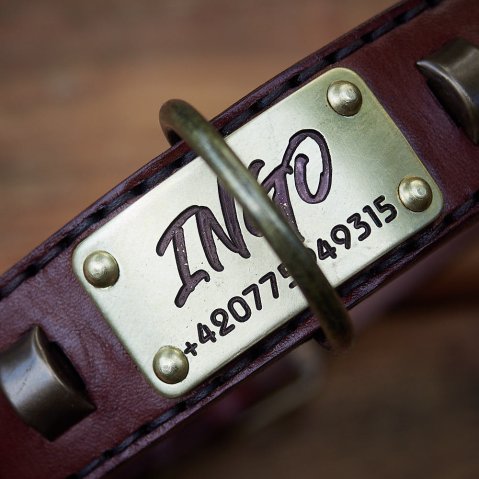
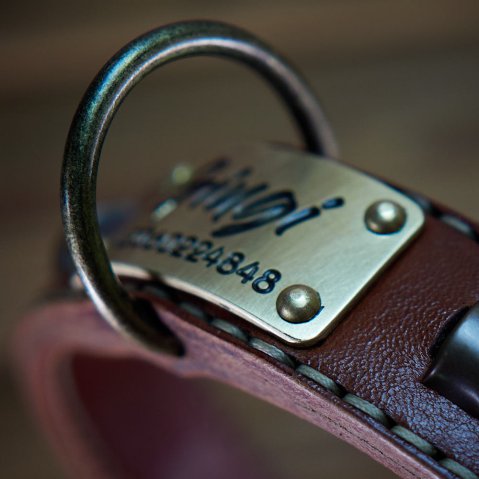
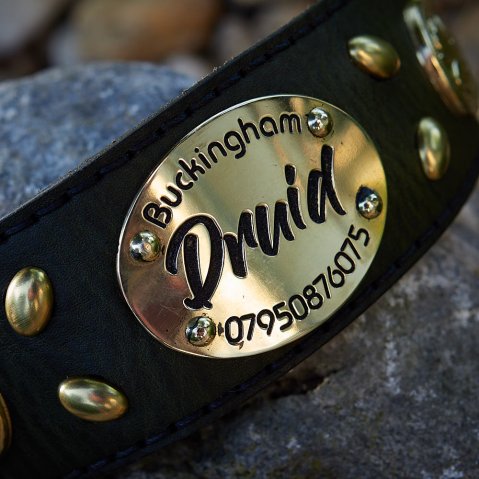
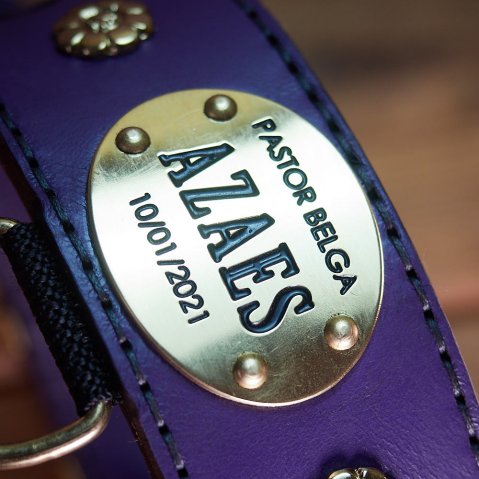
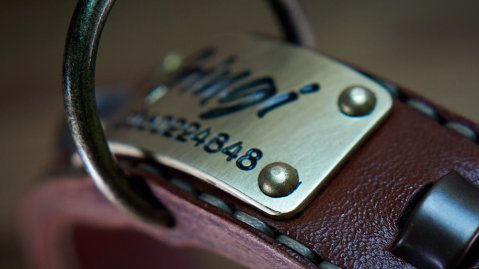
Label for Label: update your dog’s ID tag without collar chaos
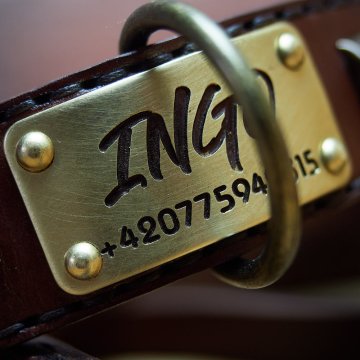
Short answer:
Label for Label is a practical service for changing the engraved plate on an existing dog collar when your phone number, address or dog’s details change. You send us the collar, we make and fit a new plate, then return the collar ready for everyday use. The new label must not be larger than the original, otherwise it may not fit the existing space.
How do you replace a dog collar ID plate without buying a whole new collar?
The easiest way to replace a fixed dog collar ID plate is to send the collar to the maker and have the plate changed professionally. With Label for Label, Slade Czech removes the old plate, prepares a new one with updated details and fits it back onto the collar so it sits cleanly, securely and without improvisation.
If you are updating contact details, start with the practical question first: does your dog need a new plate, a separate hanging tag, or an extra tracking holder? For quick visible identification, the full range of dog ID tags gives you more options; for a collar that already carries a fixed label, Label for Label keeps the original gear in the game.
When does Label for Label make sense?
Label for Label makes sense when the collar still works well, but the engraved information no longer does.
A changed phone number, a new address, a new owner name or a corrected dog name are all good reasons to replace the plate. The collar may still sit perfectly, the leather may still be strong, the stitching may still be holding firm — only the information has gone stale. That is when replacing just the plate is smarter than retiring the whole collar.
Why is the plate size important?
The new plate must not be larger than the original because the available space on the collar is limited by the old fitting points and the leather construction.
This is the detail people notice in five seconds: if the new plate is too big, it may collide with the edge of the collar, curve badly or fail to sit flat. A plate that looks great on the table can become awkward on a real collar. Leather has structure. It is not a magic carpet with extra room hidden under the buckle.
What happens when the wrong tag solution is used?
A weak or badly chosen identification solution can move, twist, rattle, catch on hardware or become unreadable exactly when it matters.
On a calm walk, almost anything looks fine. Then the dog sees a cat, hits the lead, the collar rotates, and suddenly the tag is sitting under the neck instead of where you expect it. If the plate is poorly fitted or the tag is too flimsy, the problem is not cosmetic. It is practical. Identification must still make sense when the dog is not posing for a photo.
Fixed plate or hanging dog tag?
A fixed plate is neat and stable on the collar, while a hanging dog tag is easier to change, move or combine with other gear.
If you want a clean collar line with the information mounted directly on the leather, a replacement plate is the logical route. If you prefer something separate, visible and easy to swap between collars, a Plate Dog Tag or Circle Dog Tag may be the better next step. Different job, different tool. Simple as that.
Decision flow: what should you choose?
- If your collar is still in strong condition but the contact details are wrong, choose Label for Label and keep the original collar working.
- If you want a separate visible ID tag that can move between collars, choose a classic dog tag such as the Military Dog Tag.
- If you want a softer, more decorative hanging tag, look at the Bell Dog Tag or Victory Dog Tag.
- If you want digital backup as well as visible ID, add an AirTag Wrap, but do not treat it as a replacement for readable contact details.
- If you are not sure, solve the basics first: readable information, correct size, secure attachment and a collar that does not twist like a lazy pancake under pressure.
Common mistakes
Choosing a larger plate because it “looks better”
A larger plate can look stronger in a product photo, but it may not fit the collar properly. If the original space is smaller, forcing a bigger label can disturb the line of the collar and make the fitting awkward.
Relying only on a microchip
A microchip is useful, but it needs a reader. A visible tag can speak before anyone gets to a vet or shelter. For the full logic behind this, read 5 reasons why your dog needs a tag even with a microchip.
Forgetting that dogs move, pull and invent drama
An ID plate is not tested when the dog stands still. It is tested when the dog shakes off rain, dives into grass or pulls forward with full enthusiasm. That is where weak fittings and badly placed tags start acting like tiny metal comedians.
Leaving outdated contact details on the collar
An old phone number is not “almost useful”. It is useless at the exact moment someone needs to call you. If your dog gets loose, the person who finds them should not have to become a detective with a wet lead in one hand.
Expert view
From a workshop point of view, replacing a plate is not just about engraving new text. The new label has to respect the old collar, the existing space, the leather thickness and the way the collar bends around the dog’s neck.
This is where the difference between “looks fine” and “works in practice” becomes very clear. A plate can shine beautifully in a flat photo, but if it fights the leather curve, sits too close to the edge or pulls the collar line out of shape, it has missed the point. Identification should be readable, stable and built into the collar like it belongs there.
If you want to understand why the material itself matters, the article Art that smells like brass goes deeper into the charm and function of metal details. And if you are thinking beyond tags and into full custom gear, personalised dog collars from Slade Czech explain how identification and collar design can work together without looking like a rushed afterthought.
Who is this solution for?
- For owners who changed phone number, address or surname and need the collar to speak correctly again.
- For dogs whose collar is still strong, clean and worth keeping.
- For people who prefer a fixed plate over a dangling tag.
- For practical owners who know that readable ID is not decoration; it is the dog’s emergency business card.
- For anyone who wants order in the chaos without buying a new collar just because one line of text went rogue.
What should you read or choose next?
If you are updating contact details because your dog is an escape artist with a personal agenda, read what to do when your dog gets lost. If you want to combine visible identification with tracking support, continue with how AirTag works for tracking pets. The smart setup is simple: visible ID first, tracking as backup, solid collar as the foundation.
Conclusion
Label for Label is for collars that still deserve the road, but need fresh information. It saves the collar, updates the details and keeps the identification clean, readable and properly fitted. The most important rule is simple: do not go bigger than the original plate unless you want the leather to argue back. A dog’s tag should not panic when life gets messy — it should speak clearly when the leash circus begins.
Frequently asked questions
Can I replace the ID plate on my existing dog collar?
Yes. With Label for Label, you send us the collar and we replace the old plate with a new engraved one.
Can the new plate be larger than the old one?
No. The new plate must not be larger than the original because it may not fit the existing space on the collar.
When should I update my dog’s ID plate?
Update it whenever your phone number, address, name or the dog’s details change.
Is a dog tag still useful if my dog has a microchip?
Yes. A visible tag can help someone contact you quickly without needing a chip reader.
Should I choose a fixed plate or a hanging dog tag?
Choose a fixed plate for a clean collar line. Choose a hanging tag if you want something easier to move between collars.
Can I use an AirTag instead of an ID tag?
An AirTag can help with tracking, but it should not replace readable contact details on the dog.
Featured Dogs