The History of Dog Collars: From Stone Age Ropes to Handmade Leather Classics
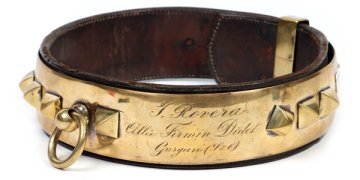
Dog collars have existed for thousands of years. What began as a simple rope used to control hunting dogs gradually evolved into protective equipment, symbols of status, and eventually the handcrafted leather collars we know today. The history of dog collars reflects the history of the relationship between humans and dogs.
If you're interested in how modern collars evolved into today's designs, it is also worth exploring how to choose the right collar for a Staffordshire Bull Terrier and why collar construction matters more than many owners realize.
When did dogs start wearing collars?
Archaeological evidence suggests that dogs were wearing some form of collar more than 8,000 years ago. Early humans needed a way to control hunting dogs, keep them nearby, and prevent them from wandering away during hunts.
The first collars were extremely simple. They were often made from rope, woven plant fibers, leather strips, or rawhide. Comfort was not the priority. Function came first.
Even then, the purpose was remarkably similar to today: maintaining control and communication between human and dog.
Dog collars in Ancient Egypt
The Ancient Egyptians were among the first civilizations to transform dog collars into something more than a practical tool.
Paintings and carvings show dogs wearing decorated leather collars. Some even included the dog's name.
For wealthy Egyptians, dogs were valued companions and hunting partners. Their collars often reflected their owner's social status.
This was one of the first moments in history when a collar became both functional and decorative.
Why were Egyptian collars important?
They introduced the idea that a collar could provide control while also expressing identity.
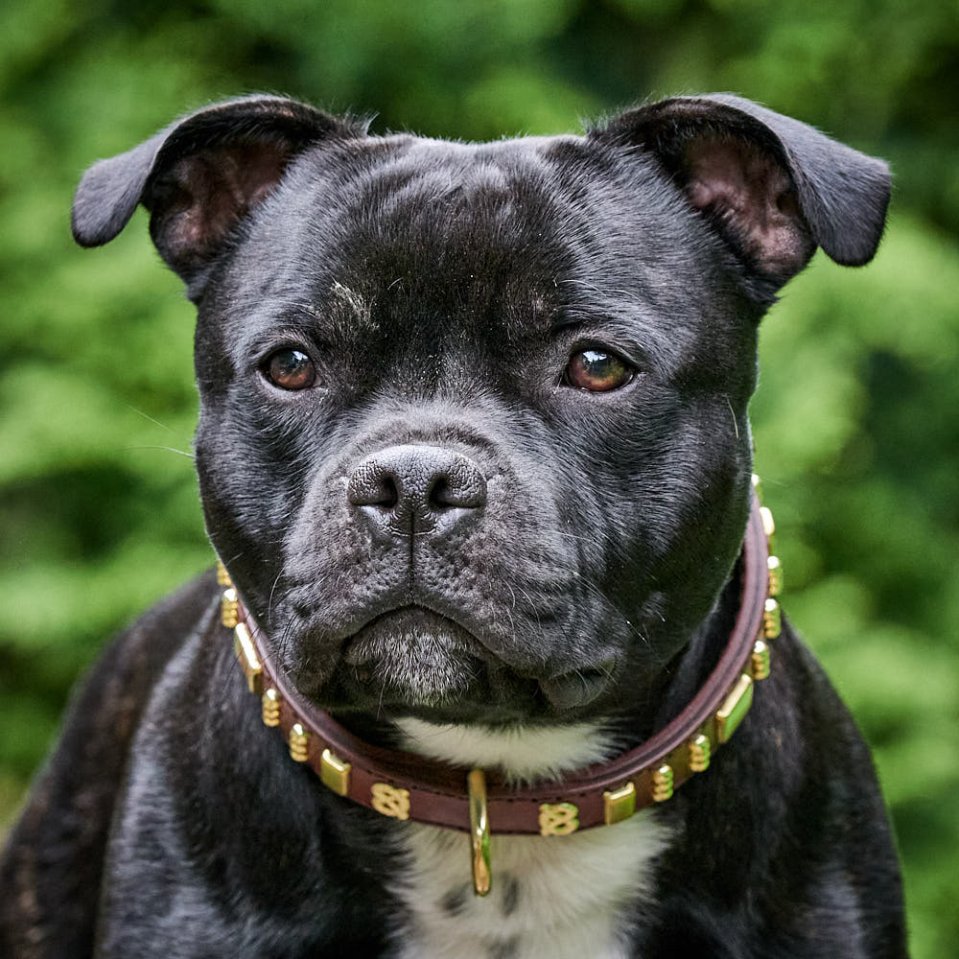
That concept remains alive today in handcrafted collars such as the Shiny Alpha Classic Collar, where practical construction meets traditional leather craftsmanship.
Collars in Ancient Greece and Rome
As dogs became more specialized, collars evolved as well.
Guard dogs protected homes and livestock. Hunting dogs worked alongside people. Shepherd dogs managed flocks.
Each role demanded reliable equipment.
Many Roman collars included metal fittings and inscriptions identifying ownership. Some carried warnings similar to modern "beware of dog" signs.
The idea behind today's Dog Warning Sign is surprisingly similar. People have been warning strangers about protective dogs for centuries.
When collars became armor
During the Middle Ages, some working dogs faced dangers far greater than a busy sidewalk.
Livestock guardian dogs often encountered wolves and predators. To protect them, owners developed wide leather collars reinforced with metal spikes.
The spikes prevented predators from biting the dog's throat.
This was not decoration.
It was survival equipment.
The lesson remains relevant today: a collar must first perform its job before it can focus on appearance.
Looks good on a wall. Works differently in real life.
Throughout history, there has always been a difference between equipment that looks impressive and equipment that works under pressure.
A collar may look beautiful in a photograph. The real test comes when a dog suddenly lunges toward a squirrel, hits the end of the leash, and puts all its weight into a single point of pressure.
That is where weak construction reveals itself.
Cheap hardware bends. Thin materials stretch. Poor stitching begins to fail.
The principle has not changed much since ancient times.
Decision guide: Which collar concept makes sense?
- Calm everyday dog: A traditional leather collar is usually sufficient.
- Strong dog that occasionally pulls: Wider collars distribute pressure more evenly.
- Dog that backs out or resists leash pressure: A half-check design may provide better control.
- Unsure what to choose: Focus on width, fit, and construction before decorative details.
If your dog tends to lean heavily into the leash, a properly fitted Dapper Half Check Collar follows principles that have been refined through centuries of practical dog handling.
Common mistakes
Choosing appearance over function
Many owners buy a collar because it looks attractive. Function should always come first.
Ignoring collar width
A collar that is too narrow can concentrate pressure into a small area.
Focusing only on decoration
Decoration matters, but construction determines how a collar performs during daily use.
Expert perspective
After thousands of years, one thing remains unchanged.
The best collars are not necessarily the most complicated. They are the ones that fit correctly, distribute pressure properly, and withstand years of real-life use.
This is one reason why leather has remained relevant throughout history. If you'd like to understand why, see Leather Ages Like Whiskey. Plastic Ages Like Trash.
Who is this information useful for?
- Dog owners interested in canine history
- People choosing their first collar
- Owners of strong breeds
- Dog sport enthusiasts
- Anyone curious about traditional leather craftsmanship
Final summary
The history of dog collars spans thousands of years, but the core purpose remains remarkably similar.
Control. Communication. Protection.
Materials and designs have evolved, yet every good collar still serves the same goal: helping humans and dogs navigate life together.
A good collar should survive more than a photo. It should survive real life.
Featured Dogs