Which Collar Actually Makes Sense for a Dog That Pulls?
Quick answer:
If your dog pulls on the leash, start with a wider, firmer collar rather than a thin or floppy one. A solid leather collar usually sits straighter on the neck, spreads force better, and gives you more predictable handling when your dog suddenly throws the whole front end into the lead.
Which collar actually makes sense for a dog that pulls?
For most pulling dogs, the smartest first move is a properly built, wider leather collar with real structure. Not a collar that looks sturdy from a distance. One that stays stable when the dog commits. Because that is the moment that matters. A calm walk tells you almost nothing. The truth comes out when the dog spots another dog, locks onto a smell, or launches forward like he has just remembered urgent business across the street.
At that point, weak gear starts talking. Thin collars twist. Soft collars collapse. Pressure goes into one narrow strip, the leash line shifts sideways, and instead of handling the dog, you are suddenly wrestling the setup. If you want to see what separates decorative gear from equipment that actually copes under strain, read what truly holds under pressure when the pull strikes.
When a dog pulls hard, the collar should not become part of the problem.
Why does width matter so much?
Because width changes how force lands. A wider collar spreads load over more of the neck, so the pressure is less sharp and the collar is less likely to cut into one line or roll out of place.
This is not theory for a whiteboard. You can spot the difference during a normal walk. A narrow collar often starts clean, then the dog leans in and the whole thing cocks sideways. A wider collar usually stays flatter and calmer. It does not solve pulling by magic, but it gives you a more stable platform to work from.
What is the real problem with thin or soft collars?
The real problem is that they often fail before they fully fail. They may not break straight away, but they start behaving badly under load. That matters. A collar that twists, folds, or pinches into one strip makes control rougher and less precise.
The five-second test is simple. Dog pulls. Collar turns. Leash ring shifts. Pressure lands off line. Now the walk feels messy. That is the moment many owners notice the issue is not just “my dog pulls,” but “my collar is giving me nothing useful when he does.” If you want a material-level comparison, leather vs nylon dog collar helps explain why some collars keep their head better than others.
Is leather the right material for a pulling dog?
Often yes, provided the collar is made properly and not treated like a fashion prop with a buckle. Good leather has body. It holds shape better, ages with more dignity, and tends to remain more predictable under repeated strain than weaker, flimsy materials.
The point is not to worship leather as a keyword. The point is structure plus reliability. A dog that pulls tests stitching, holes, edge finish, and hardware on every outing. That is why something like the Buffalo collar is a logical pick for dogs that hit the leash with conviction. It is built for more than looking solid in a product shot.
Classic collar or half check?
If your dog stays secure in the collar and you mainly need more stable daily control, a firm classic collar is usually the right first answer. If your dog braces hard, tends to slip backward, or needs more controlled containment, a half check can make more sense.
This is where people often overcomplicate things. They assume the choice is about going harsher or softer. Many times it is really about choosing the right construction for the dog in front of you. For everyday steady control, a solid classic option such as the Hexagon classic collar or Vintage Paws may be all you need. If your dog loads up, backs out, or uses the leash like a towing line, the Tough Guy Choker Half Check Collar is often the smarter next step.
Fast decision flow
- If your dog pulls forward but the collar stays secure: go with a wider, firm classic leather collar.
- If the collar keeps twisting or biting into one narrow line: fix width and build quality first.
- If your dog backs out or braces hard into the lead: look at a half check option.
- If your dog seems to hate collars: poor pressure points, bad fit, or unstable design may be part of it. Read why some dogs hate collars and how to help them love them.
- If you are unsure what is wrong: sort out fit, width, and construction before blaming the entire walking setup.
If you are now wondering whether your current collar is already tired or was never built for the job in the first place, how long should a dog collar last? is the right follow-up read.
Common mistakes
Buying for looks first. Some collars are all charm until the dog hits the end of the leash. Then the charm melts and the flaws step forward.
Using a narrow collar on a strong, compact dog. That often creates concentrated pressure and sloppy handling right when you need the opposite.
Thinking all pulling dogs need the same answer. One dog needs more width. Another needs better security. Another just needs gear that is not flimsy.
Ignoring what the collar is doing during movement. A collar can look fine standing still and still be wrong the second the walk gets real.
Expert view
From a practical handling standpoint, the decisive difference shows up under sudden load. A weak collar may not snap, but it becomes unstable. Holes start stretching. The body folds. The leash line drifts. The dog feels less clear, and you feel less connected. That sloppiness adds up over time.
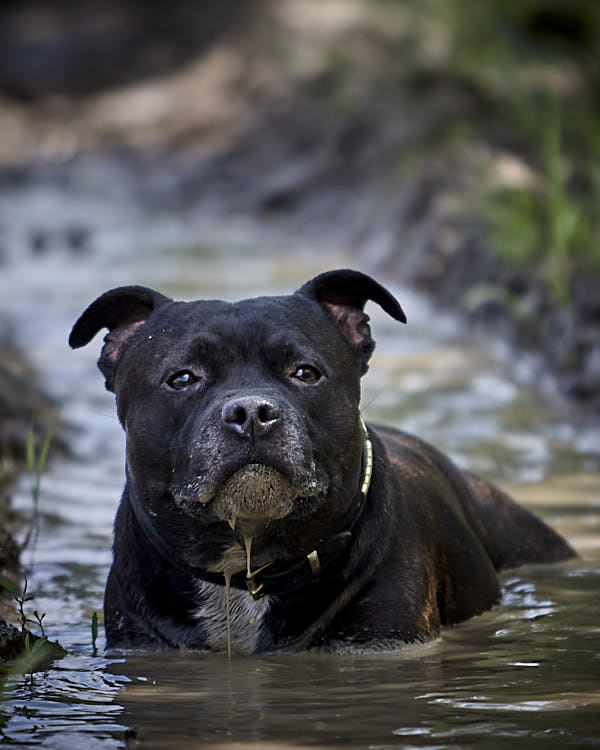
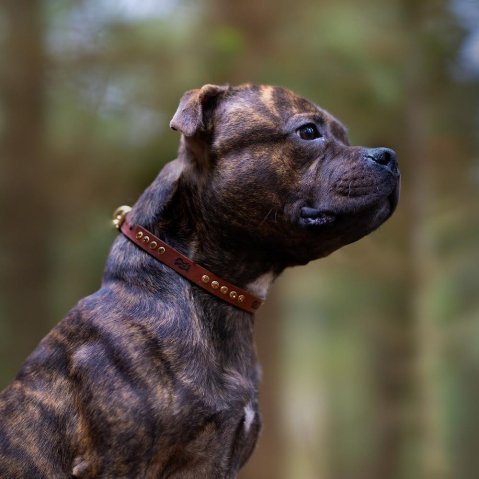
Strong, structured leather collars work because they stay more consistent under that daily strain. That matters for muscular dogs with plenty of drive in the chest and neck. For owners of Staffordshire-type dogs, this Staffordshire collar guide gives a more breed-specific next step.
Who is this approach good for?
- Dogs that hit the leash with real force and make light collars move instantly.
- Owners who want steadier control without turning every walk into a correction circus.
- Muscular, forward-driven dogs that quickly expose weak gear.
- Dogs wearing collars daily where durability is not a bonus but basic survival.
Final summary
If your dog pulls, start by making the collar smarter, not more dramatic. In most cases that means more width, more structure, and better stability on the neck. A good classic leather collar is often the best first answer. If the dog slips, braces hard, or needs more controlled containment, a half check may be the better tool. Pretty is cheap. Reliable under pressure is where the real value starts.
Frequently asked questions
Is a wider collar better for a pulling dog?
Usually yes. More width often means better pressure distribution and less twisting during pulling.
Can a soft collar be the reason walks feel messy?
Yes. If the collar folds, rotates, or shifts the leash line, it can make handling feel less clear and less stable.
When should I consider a half check collar?
When the dog braces hard, tends to back out, or needs more secure positional control than a classic collar provides.
Is leather worth it for strong dogs?
Often yes, as long as the collar is genuinely well made. Good leather tends to stay more stable and age better under repeated strain.
How do I know my dog’s collar is the wrong type?
If it twists fast, creates a narrow pressure line, or feels sloppy as soon as the dog pulls, it is probably not the right build for that dog.
Real Dogs