When the Pull Strikes: What Truly Holds Under Pressure
Short answer:
When a dog suddenly hits the leash, everything comes down to build quality, material strength, width, and how well the parts work together. Weak gear doesn’t fail slowly—it gives up exactly when pressure peaks. A properly made collar spreads force evenly and keeps control steady in your hands.
Which collar actually holds when a dog pulls hard?
A collar that performs under real pressure must stay stable, resist twisting, and avoid digging into the dog’s neck. Looking good at rest means nothing if it folds under stress. The real test comes in that split second when your dog lunges forward and the leash snaps tight.
What happens when the leash goes tight?
Force concentrates instantly on one specific point of the collar.
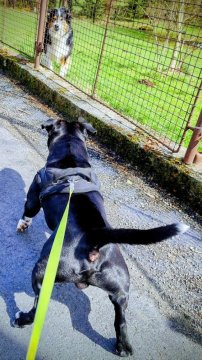
This is where theory ends. Your dog locks onto something—a movement, a scent, another dog—and commits. The energy travels straight through the collar. If the structure holds, you stay in control. If it doesn’t, you feel it immediately in your hand.
Why do some collars break down so fast?
Because they’re made to impress visually, not to handle real strain.
They might feel fine in the hand or look solid on screen. But once tension hits, weaker materials and soft builds start to give. That’s where expectations and reality split. Choosing based on looks often ends here.
How much does the material matter?
More than anything else.
The material decides whether the collar holds its structure or starts losing it under load. Good leather doesn’t collapse under pressure—it adapts and keeps working. It’s not about the first impression. It’s about what happens after months of real use.
Does collar width really change anything?
Yes, significantly.
A narrow collar channels force into a smaller area, increasing pressure and stress. On a strong neck, that’s not efficiency—it’s a weak point. A wider collar spreads the load and keeps things more balanced when force spikes.
How can you tell a collar isn’t right?
Your dog’s behavior gives it away.
More scratching, head movement, tension during pulling, or hesitation to move forward. Sometimes the difference is obvious only after removing it—suddenly the dog relaxes. A well-chosen collar fades into the background. A bad one keeps reminding you it’s there.
Is a softer collar a better option?
Not when strength is involved.
Soft doesn’t mean stable. If the collar bends, twists, or loses shape under load, it compromises control. A well-built collar can be firm without being uncomfortable—it supports movement instead of fighting it.
Why isn’t appearance enough?
Because pressure doesn’t care about looks.
The real test never happens in calm conditions. It happens mid-walk, without warning. What looks convincing at home can fall apart in motion. Style is secondary. Function decides everything once force comes in.
What actually works under pressure?
A collar with solid material, reinforced structure, proper width, and reliable hardware.
No single feature makes the difference. It’s the combination. When everything works together, the collar feels stable and predictable. Not like something you have to second-guess when your dog reacts fast.
Which collars make sense for strong dogs?
For powerful dogs, solid leather collars designed for real use—not just aesthetics—are the logical choice.
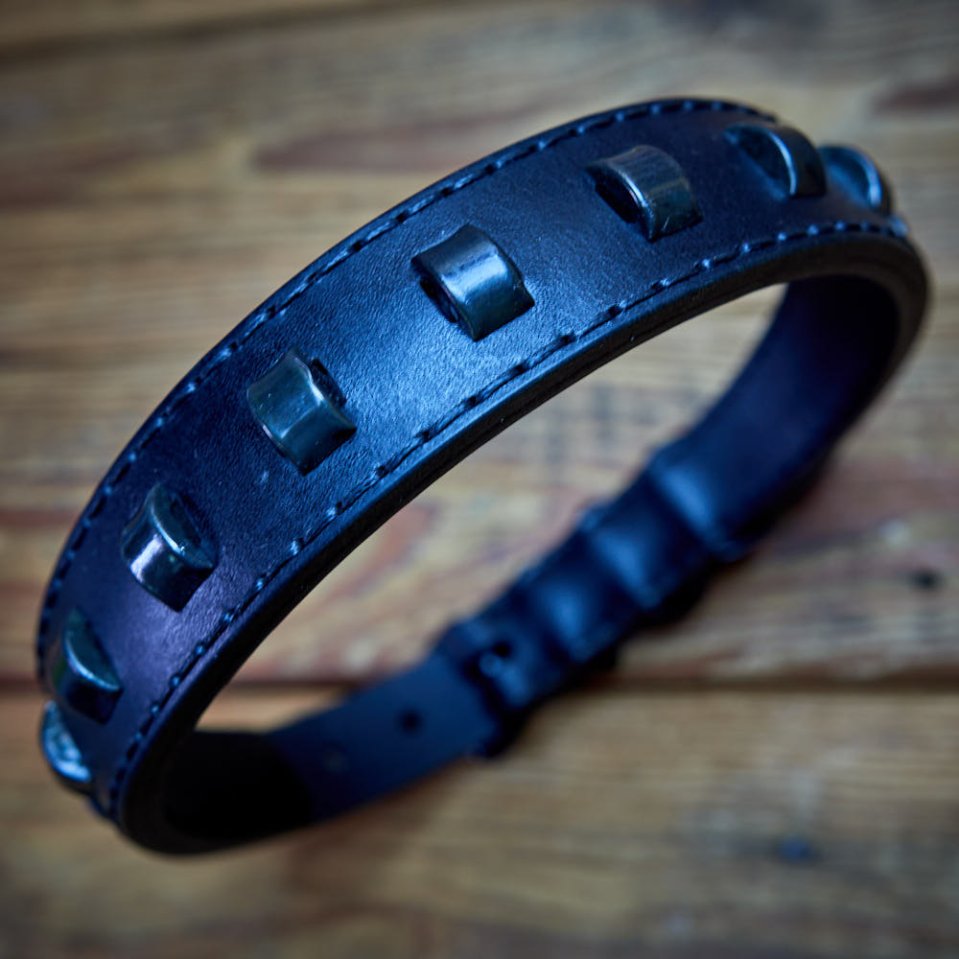
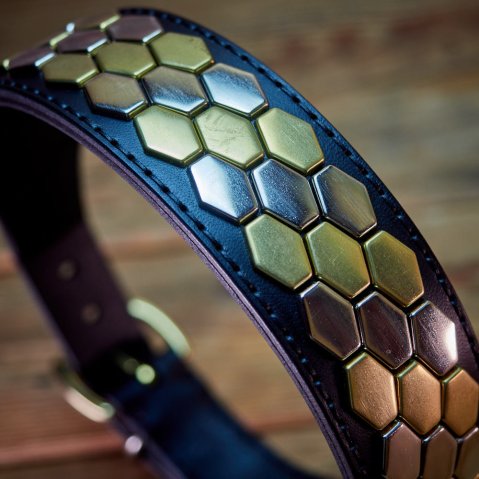
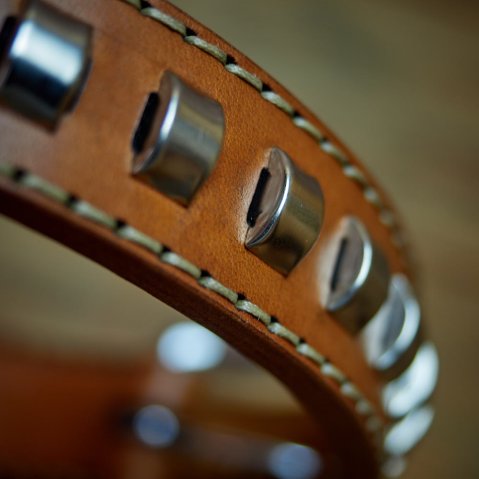
The Classic Viking Collar is built for situations where strength isn’t optional. The Classic Goliash Collar suits dogs that bring consistent force into every walk. And if you want a bold design backed by real structure, the Hexagon Classic Collar delivers both. These aren’t display pieces—they’re built for movement.
What a collar for a pulling dog should include
- Strong material – must hold shape and resist deformation under sudden force.
- Balanced width – spreads pressure and reduces stress concentration.
- Reliable hardware – weak points usually fail first, and fast.
- Secure fastening – should feel stable, not dependent on one fragile element.
- Correct sizing – too loose shifts, too tight creates unnecessary pressure.
- Functional construction – designed for real movement, not static display.
- Appropriate model – for stronger dogs, solid builds like Viking, Hexagon, or Goliash make practical sense.
Common mistakes
Choosing based on appearance instead of performance. It looks convincing—until it’s tested under real tension.
Using a narrow collar on a strong dog. It focuses pressure where you don’t want it and increases stress on both sides.
Relying on soft construction. It feels comfortable at first, but once force hits, it loses structure and stability.
Incorrect sizing. Too loose shifts constantly. Too tight creates unnecessary discomfort and tension.
And the typical real-life moment—dog reacts, leash tightens instantly, and everything is tested at once. That’s when you find out what you actually bought.
Expert perspective
In real use, collars aren’t tested in calm situations. They’re tested in motion, under tension, without warning.
A common issue is that a collar feels solid at first, but behaves differently when real force is applied. Twisting, uneven pressure, unstable handling. Small details become major differences over time.
With stronger dogs, wider and more structured collars consistently perform better. Lighter or narrower options may work briefly, but rarely hold up long-term.
Real-world feedback is immediate. When the collar is right, handling feels controlled and predictable. When it isn’t, you notice within minutes—not months.
That’s why models like the Classic Viking Collar, Hexagon Classic Collar, and Classic Goliash Collar make sense—they’re built for real conditions, not just presentation.
Who this is for
- Dogs that apply strong, sudden force on the leash.
- Owners who prioritize function over appearance.
- Strong or muscular dogs that need stable support.
- Anyone looking for more controlled, predictable handling.
- People who’ve experienced gear failing under pressure.
- Those who want reliability in real situations, not just first impressions.
- Owners considering proven options like Classic Viking Collar, Hexagon Classic Collar, and Classic Goliash Collar.
Final summary
When a dog pulls, performance under pressure is what matters—not appearance. Material, construction, width, and fit define how the collar behaves.
A weak setup might seem fine at first, but real testing happens the moment tension hits.
That’s why solid, purpose-built collars like the Classic Viking Collar, Hexagon Classic Collar, and Classic Goliash Collar make sense for everyday use.
A well-chosen collar doesn’t draw attention by failing. It simply does its job.
The force comes. The question is—what holds.
Frequently asked questions
What collar works best for a dog that pulls?
A strong, well-constructed collar with proper width and durable hardware offers the most reliable control.
Is a wider collar always better?
In most cases for strong dogs, yes—it spreads pressure more evenly and improves stability.
How can I spot a poor fit?
Look for signs like discomfort, head movement, or hesitation when the leash tightens.
Are soft collars a good choice?
They can be less stable under force. Structure matters more than softness when pressure increases.
Can I rely on looks when choosing?
No. Visual appeal doesn’t guarantee performance when the collar is under stress.
What matters more—material or design?
Material and construction determine durability. Design without strength won’t hold up under real use.
Real Dogs