No Twist, No Slack, No Nonsense: The Right Collar for a Staffy
Short answer:
For a Staffy, the smartest collar is usually a broad, well-built leather collar or a half check that stays put when the dog suddenly loads up against the lead. It should not fold, twist, or loosen into a floppy mess the moment real force shows up.
What kind of collar actually makes sense for a Staffy?
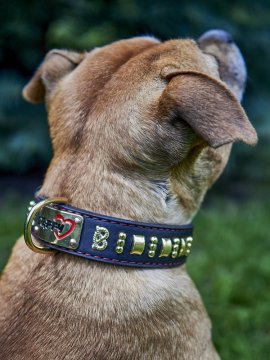
A Staffordshire Bull Terrier is compact, muscular, and very good at turning an ordinary walk into a strength test. That is why the usual “it fits, so it’s fine” logic falls apart fast. A Staffy collar needs to stay centred, keep a clear line around the neck, and still behave properly when the dog lunges, braces, or hits the end of the leash with full chest power.
If you are comparing options, here is the practical version: a strong classic leather collar works well for many dogs that just need better stability and pressure spread. A half check is the better move when the dog slips backwards, constantly shifts the collar sideways, or needs more secure positioning without going into harsh territory.
If you want to build the full picture first, start with how to pick the perfect collar for your Staffordshire Bull Terrier. If your next question is “how do I tell real gear from fancy-looking fluff?”, then how to spot a real deal leather collar is the right follow-up.
Why do weak collars show their limits so quickly on this breed?
Because Staffies expose bad gear in seconds. Soft collars roll. Narrow collars dig. Cheap straps start shifting all over the place. You clip the leash on, the dog spots something exciting, and suddenly the ring is halfway under the jaw and the whole collar is sitting crooked.
That is your 5-second test right there. If the collar rotates the moment tension arrives, something is wrong. Pressure is no longer spreading cleanly. Your handling gets sloppier. The dog often pushes harder against it because the whole setup feels unstable.
A collar that only looks tidy while the dog is standing still is not a serious answer for a Staffy. Nice on a shelf is easy. Useful in motion is the real exam.
When is a wide leather collar the right answer?
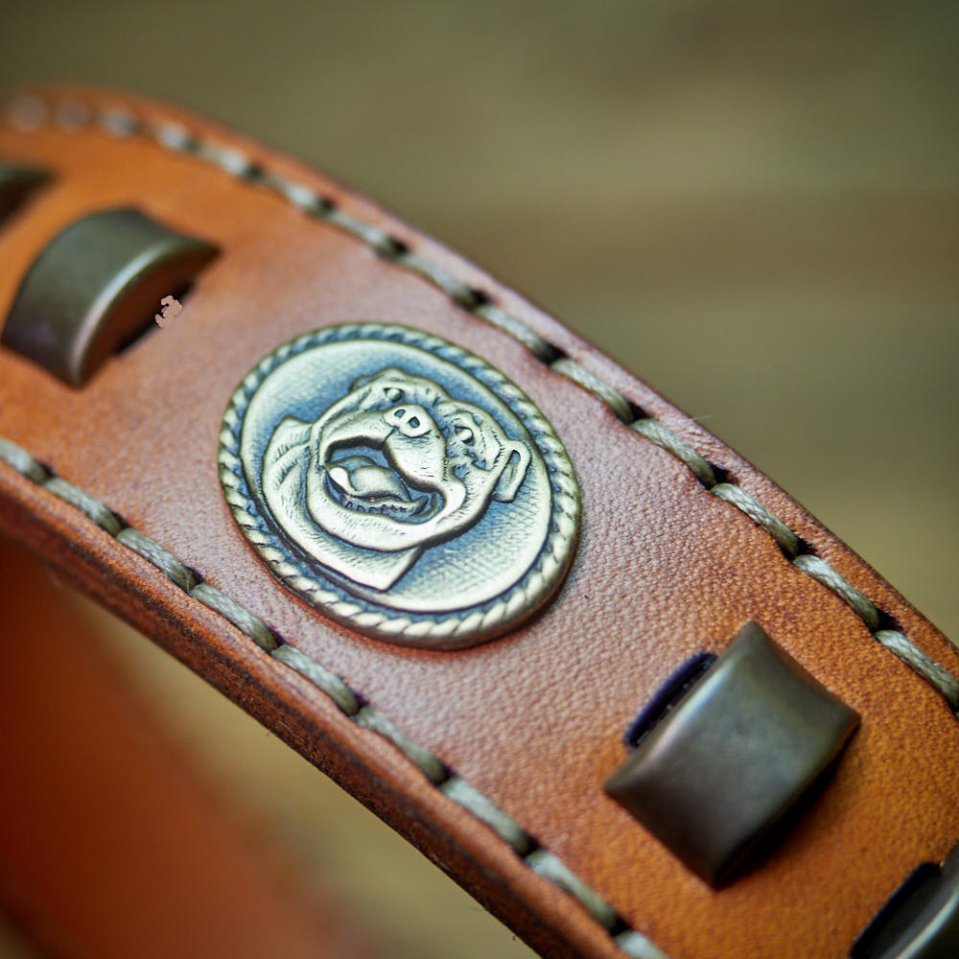
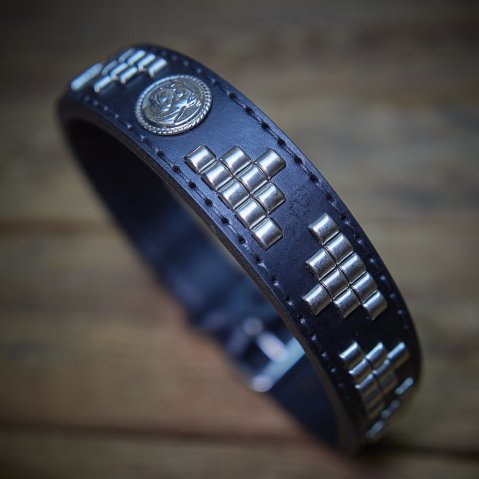
A wide leather collar is usually the best choice when you want stable everyday control without overcomplicating things. More width helps distribute force better, and firmer leather tends to hold its shape instead of collapsing into neck spaghetti.
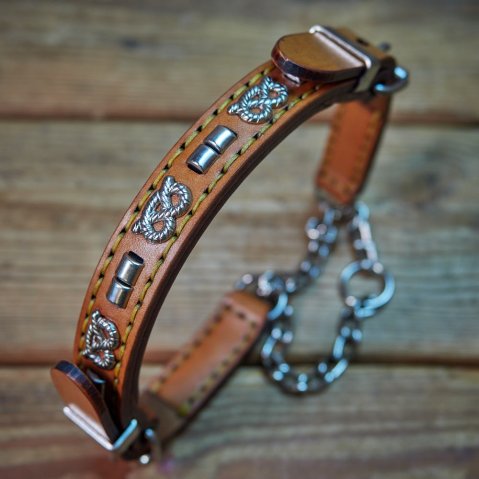
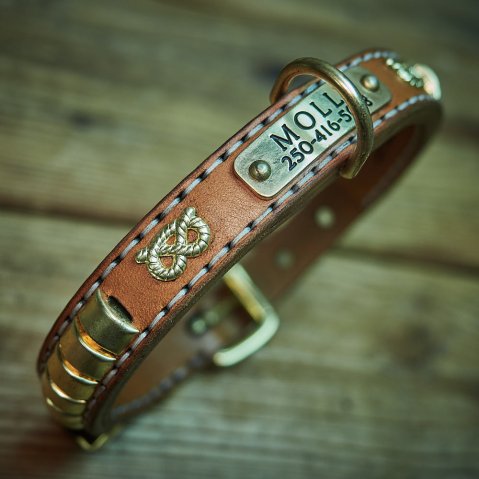
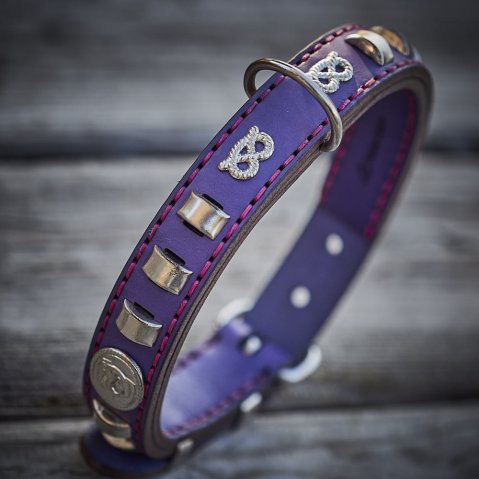
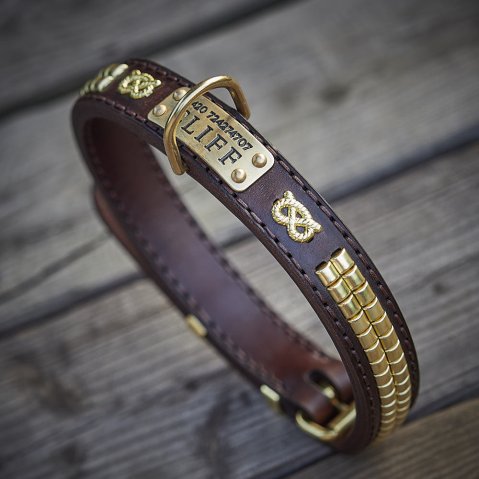
The King's Colours Classic Collar is a good match if you want a classic leather option with proper structure and steadiness. The Renegade Classic Collar makes sense for the same reason: strong everyday build, cleaner handling, and a look that does not come at the expense of function.
That last bit matters. A collar can be flashy, decorated, and photogenic. Brilliant. But if it twists sideways every time the dog surges, the glamour act is over.
When should you step up to a half check?
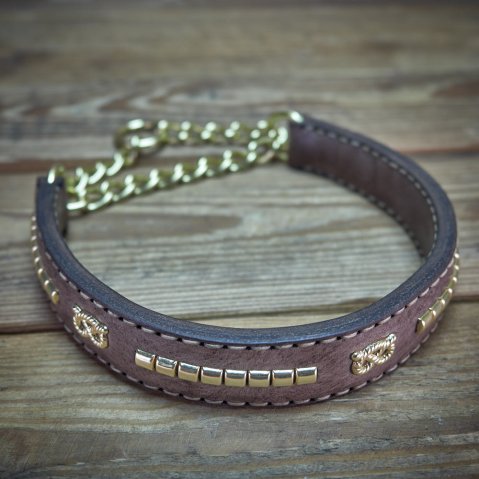
If your dog can reverse out of a standard collar, if the collar keeps drifting off-centre, or if you want more reliable neck placement during pulling, a half check is often the better tool. Not because it is dramatic, but because it gives a more controlled response in a controlled range.
The Tough Guy Choker Half Check Collar and the Dum Dum Half Check Collar fit that job well. These are useful for dogs that treat leash pressure as a personal challenge.
Decision block: choose by behaviour, not by guesswork
- If your Staffy is strong but stays safely in a regular collar, go with a wide classic leather model.
- If the collar slides around or the dog can back out, switch to a properly fitted half check.
- If the whole setup feels messy, check width, fit, and structure before blaming the category.
- If you want a broader comparison of types, sizes, and use cases, continue with the collar buying guides.
Časté chyby
- Buying too soft: soft gear often looks comfortable but becomes unstable the second force enters the picture.
- Going too narrow for a thick neck: that sharper pressure line is rarely the clever option on a power breed.
- Choosing by looks first: some collars are all photo, no backbone.
- Ignoring fit: too loose invites escape, too tight creates tension and poor movement.
Odborný pohled
From a real-use point of view, Staffies make gear tell the truth. A weak collar feels vague in the hand. A better one feels steady, readable, and far less chaotic when the dog changes direction hard. You are not only choosing material. You are choosing how much control survives when the walk stops being easy.
That is why good leather still earns its place. It keeps more form, handles repeated use well, and ages with character instead of wearing out like a tired ribbon.
Pro koho je řešení vhodné
- For Staffies with thick necks and sudden forward drive.
- For owners fed up with collars that drift sideways under load.
- For dogs that can wriggle, backpedal, or hit the lead hard.
- For anyone who wants a clean choice between a classic leather collar and a half check.
Závěrečné shrnutí
The right collar for a Staffy is the one that still works when the dog stops being easy. In many cases that means a wide leather classic. In others, especially escape-prone or heavy-pulling dogs, a half check is the smarter call. Width matters. Build matters. Fit matters. When a Staffy puts power on the line, weak gear stops pretending very quickly.
Často kladené otázky
How wide should a Staffy collar be?
Roughly 3 to 4 cm is a strong starting point, depending on the dog’s frame and neck thickness.
Is leather worth it for a Staffy?
Yes, if it is properly made. Good leather holds shape better and usually gives steadier handling than soft, flimsy alternatives.
Why would a half check help?
It helps when the dog can slip a regular collar, when the collar rotates too much, or when you need cleaner positioning during pulling.
Can a narrow collar still work?
Sometimes, but on a strong Staffy it is often less stable and less forgiving under real tension.
What should I fix first if walks feel messy?
Start with width, fit, and structure. The problem is not always the collar type itself.
Real Dogs