The History of Dog Collars: From Primitive Ropes to Gear Built for Real Dogs
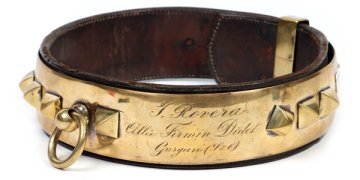
Dog collars have been around for thousands of years. Long before they became stylish accessories, they were practical tools built to control, protect, and manage dogs that worked alongside people. From primitive ropes to heavy-duty leather dog gear, the history of dog collars is really the story of dogs earning their place beside humans.
If you're trying to understand what separates a collar that simply looks good from one that actually works under pressure, it's worth reading No Twist, No Slack, No Nonsense – The Right Collar for a Staffy. It explains why construction matters just as much as appearance.
How did dog collars begin?
The first dog collars were not designed for fashion.
Early hunters needed a way to keep track of dogs, guide them during hunts, and prevent them from disappearing into the wilderness. The solution was simple: ropes, leather strips, and woven fibers wrapped around a dog's neck.
These early collars were rough, basic, and entirely functional.
But even thousands of years ago, people understood something modern dog owners still face today. A dog that decides to move in one direction can create a surprising amount of force.
Ancient Egypt: When collars became more than equipment
Ancient Egyptian artwork shows dogs wearing decorated collars made from leather and other materials.
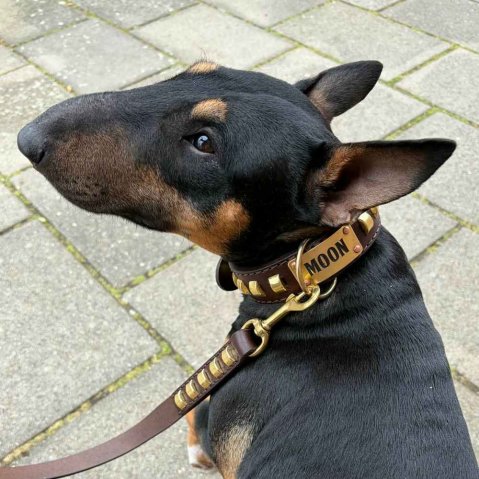
Some collars even displayed the dog's name.
This marked an important shift. Collars were no longer only tools. They also became symbols of status, identity, and the relationship between dog and owner.
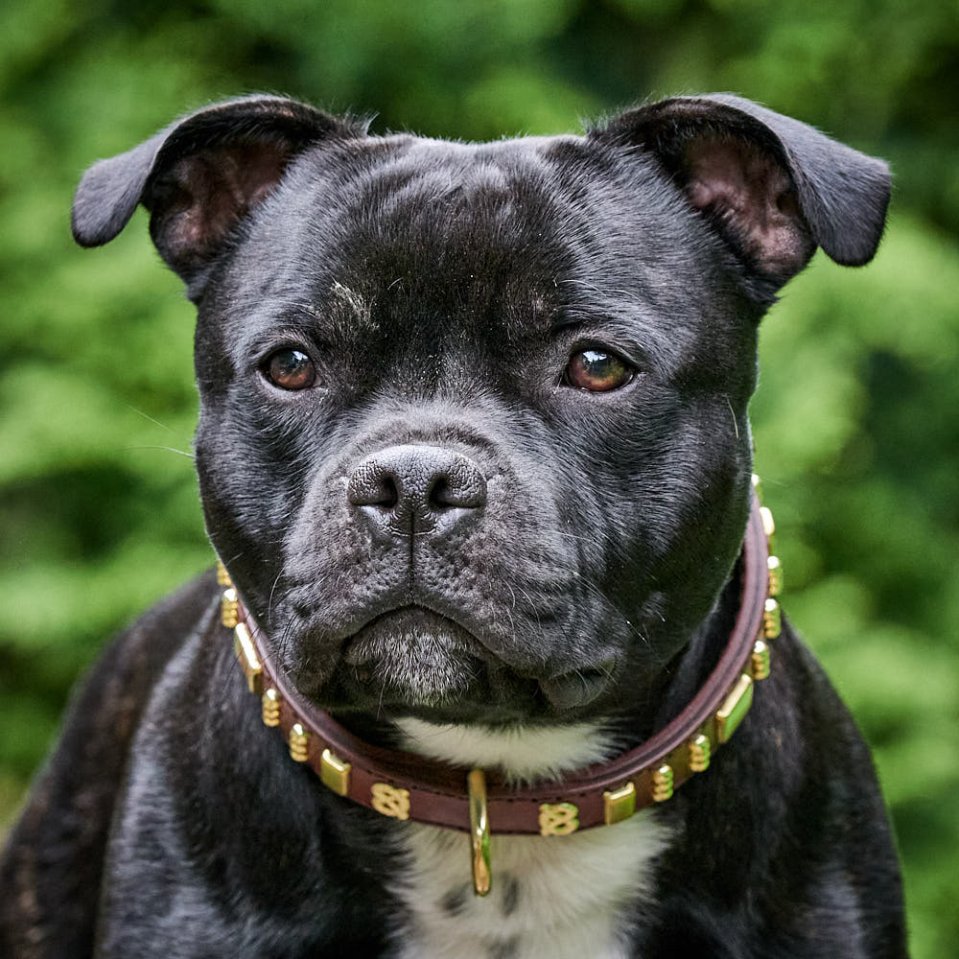
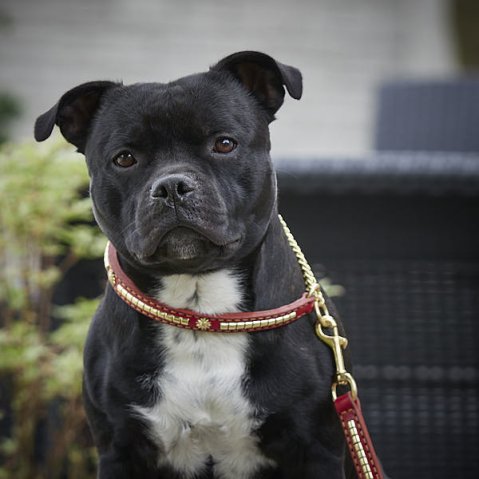
That same balance between function and appearance still exists in modern collars such as the Classic Swarovski Staffy Collar, where craftsmanship and practicality meet.
Working dogs changed collar design
As civilizations developed, dogs took on more specialized jobs.
Guard dogs protected homes.
Hunting dogs tracked game.
Livestock guardians defended animals from predators.
Each task required equipment that could withstand real-world use.
This is where collar construction started to matter.
A weak collar wasn't just inconvenient. It could mean losing control of a valuable working dog.
Real-life pressure isn't evenly distributed
One lesson has survived thousands of years.
When a dog suddenly hits the end of a leash, the force doesn't spread evenly. It often concentrates into one narrow area.
This is why collar width, material quality, and construction remain important today.
A collar that performs well in a product photo may behave very differently when a strong dog launches after a squirrel at full speed.
When collars became protective armor
During the Middle Ages, some dogs faced wolves, bears, and other predators.
Owners responded by creating wide leather collars reinforced with metal spikes.
The goal wasn't decoration.
The goal was keeping teeth away from the dog's throat.
These collars were early examples of gear designed around real risks instead of appearance.
That philosophy still matters. Good dog gear should solve a problem before it tries to impress anyone.
Looks good vs works in real life
This contrast has existed for centuries.
Some collars are built to attract attention.
Others are built to survive years of daily use.
The difference becomes obvious fast.
A cheap buckle bends.
Thin leather stretches.
Poor stitching starts separating.
Meanwhile, properly made leather gear continues doing its job.
That's one reason why leather remains popular today. If you'd like to understand why, read Leather Ages Like Whiskey. Plastic Ages Like Trash.
Decision guide
- Your dog walks calmly: A classic leather collar is usually enough.
- Your dog pulls hard: Focus on width and pressure distribution.
- Your dog backs out of collars: A half-check design may offer better control.
- Not sure where to start: Fit and construction matter more than decoration.
Dogs that regularly test their equipment often benefit from designs like the Dapper Half Check Collar, which combines security with everyday practicality.
Common mistakes owners still make
Buying with their eyes
Many people choose a collar because it looks impressive.
Unfortunately, dogs don't care how good their equipment looks in photos.
They care how it performs when pressure hits.
Ignoring width
A narrow collar may look elegant, but it can concentrate force into a small area during sudden pulling.
Assuming expensive means durable
Price alone doesn't guarantee strength.
Construction always matters.
Expert perspective
After thousands of years, the best collars still follow the same principles.
They fit properly.
They distribute pressure effectively.
They survive real life.
Technology changes. Trends change. Dogs don't.
A strong dog collar should still do what the earliest collars were designed to do: help people and dogs work together safely.
Who should care about collar history?
- Owners of powerful breeds
- Working dog enthusiasts
- Staffy owners
- Dog sport competitors
- Anyone interested in quality leather dog gear
Final summary
Dog collars started as simple tools and evolved into highly specialized equipment.
Yet the core purpose has remained remarkably consistent.
Control. Safety. Communication.
The best collars aren't the ones that only survive the photo. They're the ones that survive the dog.
Real Dogs