Engraved Dog Tags & Tough Leather Collars That Still Matter When Things Go Sideways
Quick answer:
A microchip is backup. An engraved dog tag is frontline gear. When a strong dog gets loose, visible contact info is usually the fastest way back home.
Why do strong dogs need visible ID that actually survives real use?
Because real-life leash chaos is messy.
A dog explodes after a squirrel. A gate doesn’t close fully. Fireworks hit. Somebody drops the leash for one second. That is usually how dogs disappear — not in some clean textbook scenario.
And when that happens, nobody standing on the sidewalk has a chip scanner in their pocket.
That is where engraved dog tags still beat theory. Fast.
If you still think “the chip is enough,” read 5 reasons why your dog needs a tag even with a microchip. Real recovery situations move faster than databases.
What fails first on cheap dog tags?
Usually the stuff nobody notices in product photos.
The split ring bends. The engraving gets shallow. The tag starts smacking the buckle nonstop. Then one hard leash hit later, the whole setup twists sideways.
That is the five-second reality check.
If the tag rotates constantly, disappears under the dog’s neck, or becomes unreadable while the dog is moving, it is no longer identification gear. It is decoration.
And strong dogs expose weak hardware brutally fast.
Best engraved dog tag setups for real-life pullers
For daily wear without constant flipping
The Plate Dog Tag stays tighter to the collar and avoids a lot of swinging movement. Good option for dogs wearing gear all day.
For hard pullers and heavy-duty use
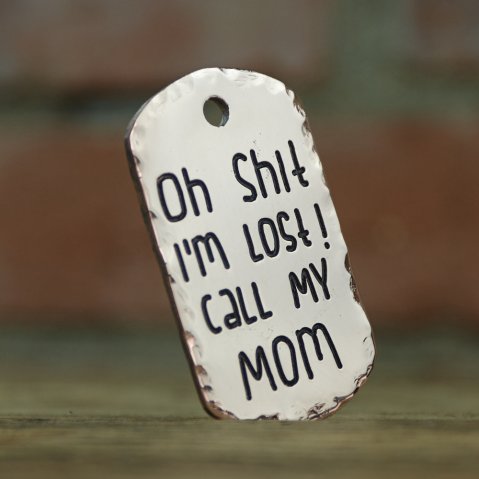
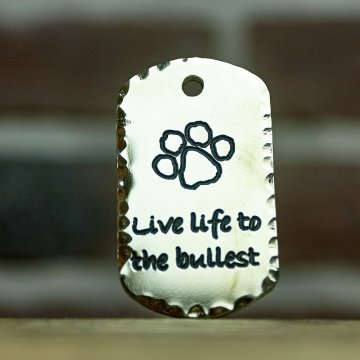
The Military Dog Tag works well for strong dogs that hammer the leash or constantly load pressure into the collar.
For lighter everyday setups
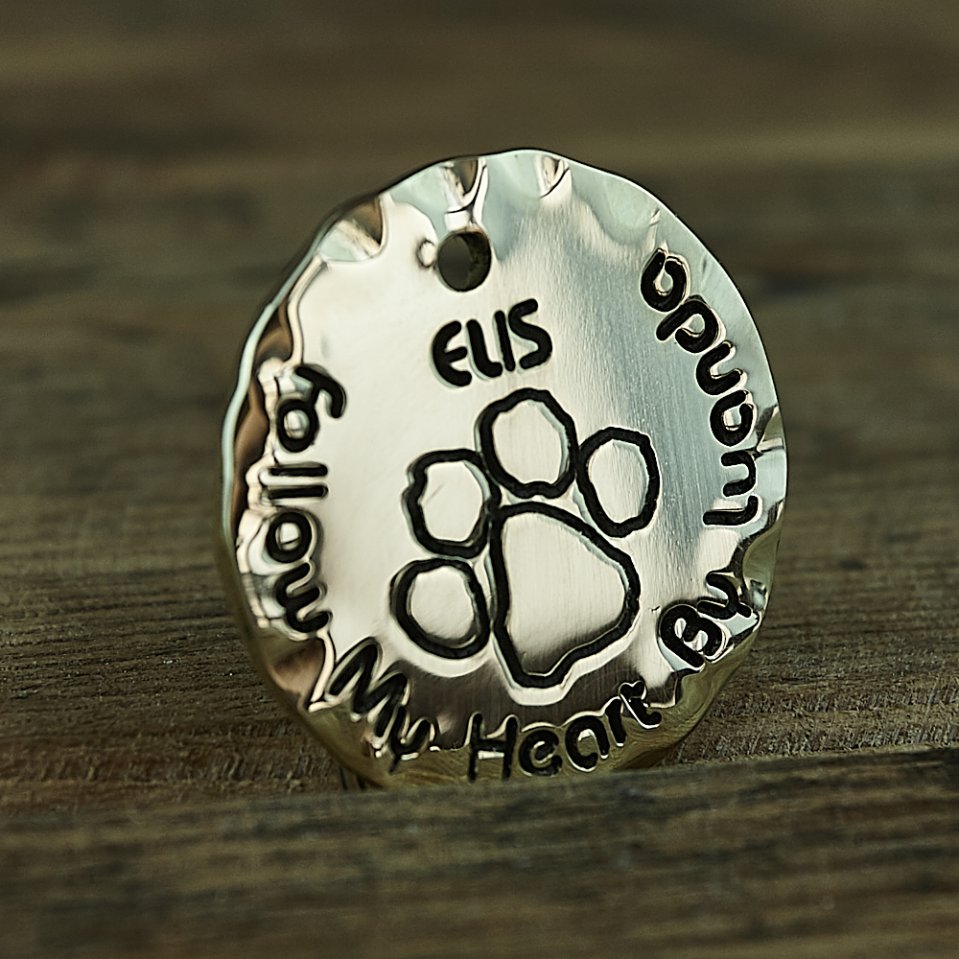
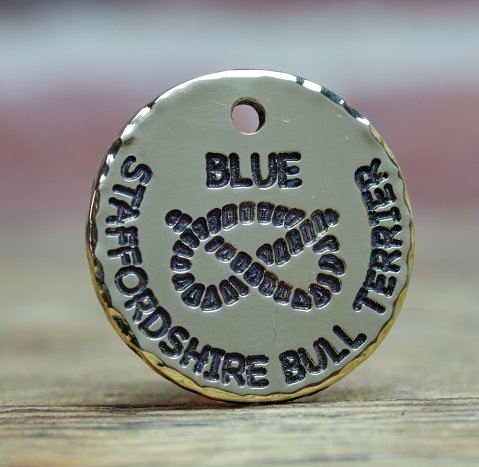
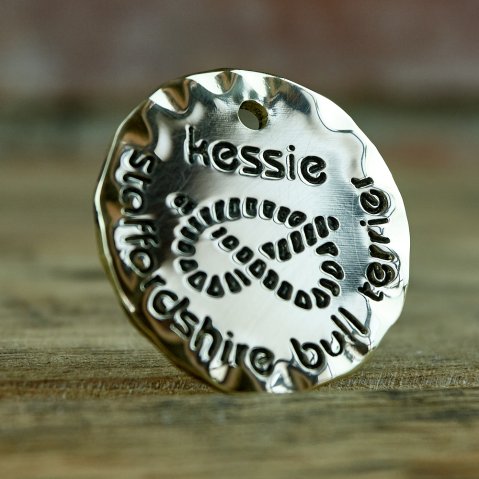
The Circle Dog Tag gives cleaner movement for owners wanting a more classic everyday setup without losing readability.
If you like solid brass hardware and gear that ages with character instead of peeling apart, continue with Art That Smells Like Brass.
Decision Flow: What setup makes sense for your dog?
- Your dog walks calmly → hanging tags like Bell Dog Tag work fine.
- Your dog hits the leash hard → flatter setups like the Plate Dog Tag usually stay more readable.
- Your dog has escape history → combine engraved ID with tracking using the AirTag Wrap.
- You are unsure what is failing → check collar width, hardware strength, and pressure distribution before chasing “stylish” solutions.
Why personalized collars fail in real life
A lot of engraved collars are built to look sharp hanging still.
Then a real dog uses them.
The collar rolls sideways. The pressure loads into one narrow strip. The hardware starts pulling unevenly. The ID disappears underneath the neck while the dog is dragging into the leash.
Looks good online. Falls apart in real movement.
That is why real leather dog gear for strong dogs needs more than clean photos and polished marketing.
If you want to see what personalized collars look like when they are designed for actual use instead of just social media photos, continue with personalized leather dog collars built for real-life dogs.
What happens after a dog gets loose?
Most owners upgrade identification after one ugly moment.
Usually after the dog disappears around a corner while somebody screams the dog’s name into traffic.
That changes how people think about ID gear fast.
The next smart step is knowing what actually helps during the first minutes after losing visual contact. Read what to do when your dog gets lost.
Should you combine AirTags with engraved dog tags?
For a lot of strong dogs? Honestly, yes.
Visible ID helps strangers contact you immediately. Tracking helps you follow movement after the dog disappears.
Different tools. Different jobs.
If you want to understand where AirTags help — and where they absolutely do not — continue with real-life AirTag tracking for dogs.
Common mistakes
- Choosing soft decorative gear
Looks clean. Twists instantly under pressure. - Tiny engraving
Unreadable once the dog moves or lighting gets bad. - Weak rings and cheap hardware
Strong pullers destroy weak attachment points surprisingly fast. - Relying only on the chip
The chip helps after capture. A visible tag helps before that.
Workshop perspective
Dogs that actually pull expose fake durability immediately.
That is why heavy-duty leather collar setups and engraved ID systems need to survive pressure, friction, weather, movement, and repeated leash shocks — not just sit nicely in a studio photo.
The strongest setups are usually simple: readable engraving, stable attachment, strong leather, and hardware that does not panic the second the dog hits full force.
Real dog gear is not tested while standing still.
Who is this built for?
- Strong pullers
- Staffies and bull-type dogs
- Dogs with escape history
- High-drive outdoor dogs
- Owners wanting real identification, not decoration
- Dogs that actually pressure-test gear daily
Final summary
Engraved dog tags look small until the exact moment they become critical.
The right setup is not about looking expensive. It is about staying readable after rain, pulling, friction, chaos, and daily use.
Because when a strong dog disappears at full speed, nobody cares whether the collar matched the leash. They care whether they can read the phone number before the dog is gone.
FAQ
Does a strong dog still need a visible dog tag with a microchip?
Absolutely. Visible ID works immediately in public.
What dog tag works best for hard pullers?
Stable engraved metal tags with strong attachment systems usually work best.
Can AirTags replace engraved tags?
No. Tracking and visible ID are two different layers.
Why do some collars rotate sideways under pressure?
Usually because the collar is too narrow, too soft, or poorly balanced.
What matters more: looks or readability?
Readability. Especially once the dog is moving fast.
Real Dogs