Metal Dog Tags & Engraved Dog Collars: Small Details That Matter When Your Dog Disappears
Short answer:
Engraved metal dog tags and personalized collars help people identify your dog immediately without needing a scanner or vet visit. In real-life situations, that speed matters. A visible phone number often works faster than a microchip database.
Why do engraved dog tags still matter if a dog already has a microchip?
A microchip is important. But a microchip only works after someone catches the dog, transports it somewhere, and scans it. An engraved dog tag works instantly.
That difference becomes obvious fast when a dog slips through an open gate, backs out of weak equipment, or disappears during a stressful moment. A person standing on the sidewalk is much more likely to call the number visible on the collar than drive around searching for a scanner.
If you are still deciding whether visible identification really matters, read 5 reasons why your dog needs a tag even with a microchip. It explains why real-life recovery rarely looks like a perfect theoretical scenario.
One thing people usually realize too late? Panic destroys memory. A lost dog situation gets chaotic fast. The simpler the identification, the better the chance someone reacts immediately instead of hesitating.
What makes a metal dog tag better than cheap printed identification?
Cheap tags often look fine on day one. Then rain, friction, mud, leash clips, and movement start doing their job.
The text fades. The surface scratches. The number becomes unreadable exactly when you finally need it.
That is why solid engraved metal tags still make sense for real-life use. Especially for active dogs, bull-type breeds, strong pullers, or dogs that constantly move under tension.
A weak tag is usually easy to spot within seconds:
- the ring bends sideways
- the engraving becomes shallow
- the tag flips and rotates constantly
- the surface starts looking “washed out”
- the edges deform after leash pressure
Pretty in product photos is one thing. Surviving real daily use is another game entirely.
Which engraved dog tag works best for different dogs?
Not every dog needs the same shape or setup.
For active everyday dogs
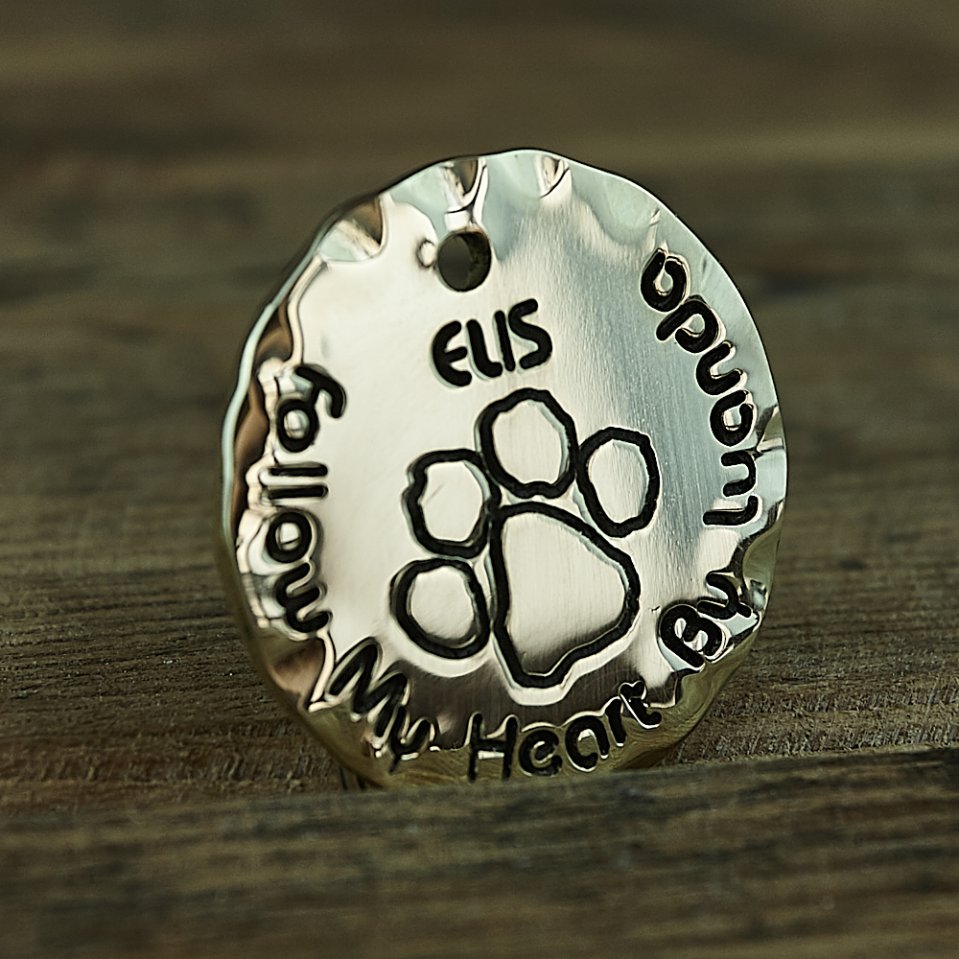
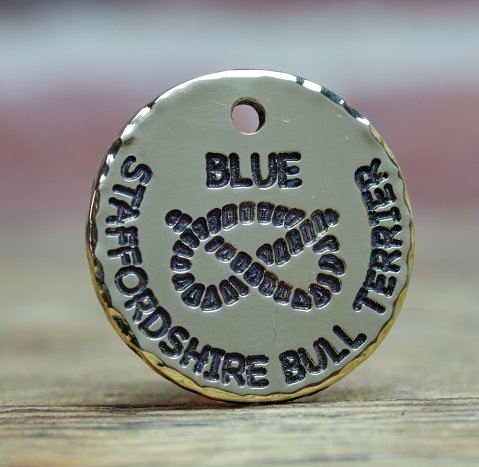
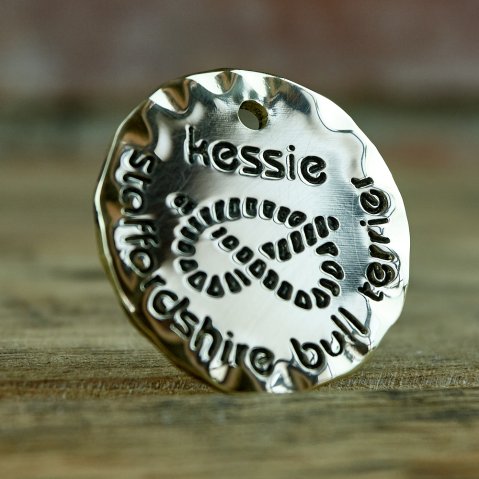
The Circle Dog Tag works well for owners who want simple visibility and balanced everyday use. The round shape moves naturally without creating sharp pressure points against the collar.
For stronger dogs and harder use
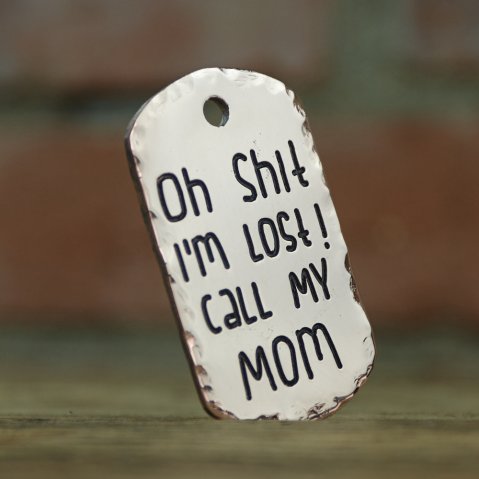
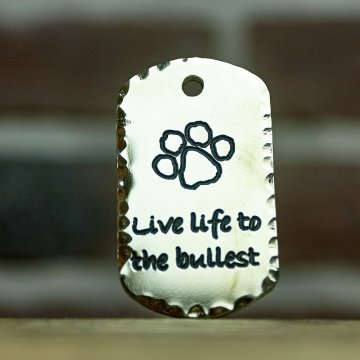
The Military Dog Tag makes more sense when the dog hits the leash hard, moves aggressively under tension, or constantly tests equipment during walks. Flat military-style tags tend to stay stable instead of flipping wildly during movement.
For cleaner visual integration
The Plate Dog Tag attaches directly to the collar and reduces swinging or constant metal noise. Some owners prefer this setup for dogs that wear identification every single day.
If you want to understand how brass, engraving, and handmade details age over time, the article Art That Smells Like Brass goes deeper into the material side behind dog tags and engraved details.
Decision Flow: Which identification setup makes sense?
- Your dog walks calmly and wears gear occasionally → a classic hanging tag like Bell Dog Tag or Victory Dog Tag is usually enough.
- Your dog pulls hard or constantly moves under leash pressure → flatter solutions like the Plate Dog Tag tend to stay more stable.
- Your dog escapes or disappears repeatedly → combine visible engraving with tracking. The AirTag Wrap becomes useful when paired with a strong collar setup.
- You are unsure what fails first → check the collar width, attachment stability, and movement under tension before focusing only on aesthetics.
Why do engraved collars matter beyond appearance?
Many personalized collars look great online. Then the dog leans into the leash once and the entire collar rotates 90 degrees.
That is the five-second test.
If all the pressure collapses into one narrow line, the collar twists, or the identification becomes unreadable during movement, the problem is no longer aesthetic. It becomes practical.
A proper engraved collar should still stay readable and stable when the dog actually moves like a dog — pulling, shaking, turning, sprinting, stopping suddenly.
That is why many owners eventually move toward more stable personalized setups instead of decorative-only collars. If you want to explore that direction further, see personalized dog collars that are not just for show.
What if your dog already escaped once?
Owners often upgrade identification only after the first serious scare.
The gate was “open just for a second.” The leash slipped during fireworks. The dog backed out while reacting to another animal.
That is also the moment people realize how valuable visible contact information really is.
If your dog has escape tendencies, the next logical step is understanding what to do immediately after losing visual contact. The guide What To Do When Your Dog Gets Lost covers the first critical decisions that often decide whether the dog is found quickly or not.
Do AirTags replace dog tags?
No. They solve different problems.
An AirTag helps you track movement. A visible dog tag helps another human contact you instantly.
The strongest setup usually combines both. Especially for dogs with strong prey drive, escape history, or high-energy outdoor routines.
If you are considering tracking options, continue with how AirTag tracking works for dogs in real life.
Common mistakes
- Using unreadable tiny engraving
Looks clean in photos. Becomes useless in poor light or stress. - Choosing decoration over stability
A noisy swinging tag that constantly flips sideways quickly becomes annoying and harder to read. - Trusting only the microchip
Microchips are critical backup identification. They are not immediate visual identification. - Weak attachment rings
Cheap rings often deform after repeated leash shocks or strong pulling.
Expert view
From a practical standpoint, identification gear is not really about decoration. It is about readable information surviving real movement, weather, friction, pressure, and time.
The dogs that test gear hardest are usually the same dogs owners struggle to recover quickly after escape. Strong Staffies, bull-type dogs, athletic breeds, dogs with explosive reactions — those situations expose weak equipment immediately.
A dog tag should not only look good hanging still in a product photo. It should remain readable after months of movement, rain, pulling, mud, and everyday abuse.
That is where real construction starts separating itself from decorative hardware.
Who is this setup suitable for?
- Dogs with strong pulling behavior
- Bull-type breeds and Staffies
- Dogs walked in busy urban areas
- Outdoor and hiking dogs
- Owners wanting visible identification without relying only on microchips
- Dogs with previous escape history
Final summary
Engraved dog tags are small pieces of equipment with very real consequences. In many situations, they work faster than any database, app, or paperwork.
The best setup is usually simple: readable information, stable attachment, durable construction, and identification that survives real movement instead of only looking good online.
Because when your dog disappears, nobody cares how pretty the collar looked in the product photo. They care whether they can read the number before the dog disappears around the next corner.
Frequently Asked Questions
Should my dog wear a tag even with a microchip?
Yes. A visible tag allows instant contact without scanning equipment.
What information should be engraved on a dog tag?
The dog's name and a working phone number are usually the most important details.
Are hanging dog tags bad for strong dogs?
Not always, but flatter or more stable tags often work better for heavy pullers or highly active dogs.
Can AirTags replace engraved identification?
No. Tracking and visible identification solve different situations.
What type of dog tag is best for a Staffy?
Durable engraved metal tags with stable attachment systems usually work best for strong, active dogs.
Featured Dogs