How to Train a Strong Dog to Walk on a Leash Without Pulling
Short answer:
To train a strong dog to walk on a leash, stop every time the leash goes tight and move again only when the leash relaxes. Pulling must stop creating forward movement, while calm walking must start creating rewards, direction and access to sniffing. With powerful dogs, training works best when the collar and leash stay stable under pressure instead of twisting, stretching or dumping force into one sharp line.
How do you train a strong dog to stop pulling on the leash?
A strong dog stops pulling when pulling no longer works. If tension creates movement, the dog learns that leaning into the leash is the fastest way to reach another dog, a smell, a gate, a car or the mysterious patch of grass that apparently contains state secrets. The rule has to change: tight leash means stop, loose leash means go.
If your dog already pulls hard, start with the behaviour and the equipment together. For the pressure side of the problem, the article when the pull hits hard and what actually holds is the natural next step. If the collar is already stretched, twisted or tired around the holes, also compare it with how long a dog collar should really last.
Why does a strong dog pull on the leash?
A strong dog pulls because pulling is rewarding.
Every step forward confirms the habit. The dog sees another dog, launches from zero to full engine, the leash goes tight, and the walk still continues. In the dog’s head, that is not disobedience. That is a working system. Pull equals movement. Movement equals win.
What happens in the real pulling moment?
In the real moment, training and physics meet in one ugly second.
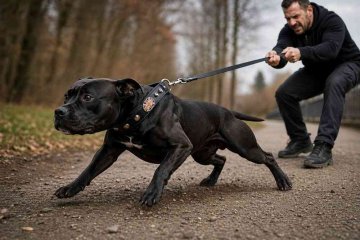
The dog spots a trigger, drops weight into the front, pushes through the chest and loads the leash. If the collar rotates 90°, the pressure shifts into one narrow point and control gets messy fast. That is the five-second test: if the gear twists before you can breathe, the problem is not just training anymore.
What is the biggest mistake when teaching leash walking?
The biggest mistake is training the dog while ignoring the equipment.
A narrow, soft or weak collar can fold, slide or cut pressure into one line. Under real pull, the dog learns how to lean harder and more efficiently. The owner thinks, “We are working on training.” The dog thinks, “Great, I found the throttle.” Nice on a photo is not the same as useful on pavement.
How do you stop rewarding pulling?
Stop moving when the leash goes tight.
No argument. No extra three steps. No “just this once”. Forward movement is the reward, so forward movement must disappear the moment the dog pulls. The second the leash softens, move again. At first it feels slow. That is normal. You are changing the rule that the dog has been cashing in on.
How do you reward loose-leash walking?
Move, praise, feed or allow sniffing when the leash is relaxed.
A dog should not only hear what is forbidden. He must understand what pays. If he checks back, slows down, walks beside you or releases pressure on the leash, reward it quickly. Sometimes the best reward is not a treat but access to a smell. For many dogs, sniffing is the paycheck.
Which collar makes sense for a dog that pulls?
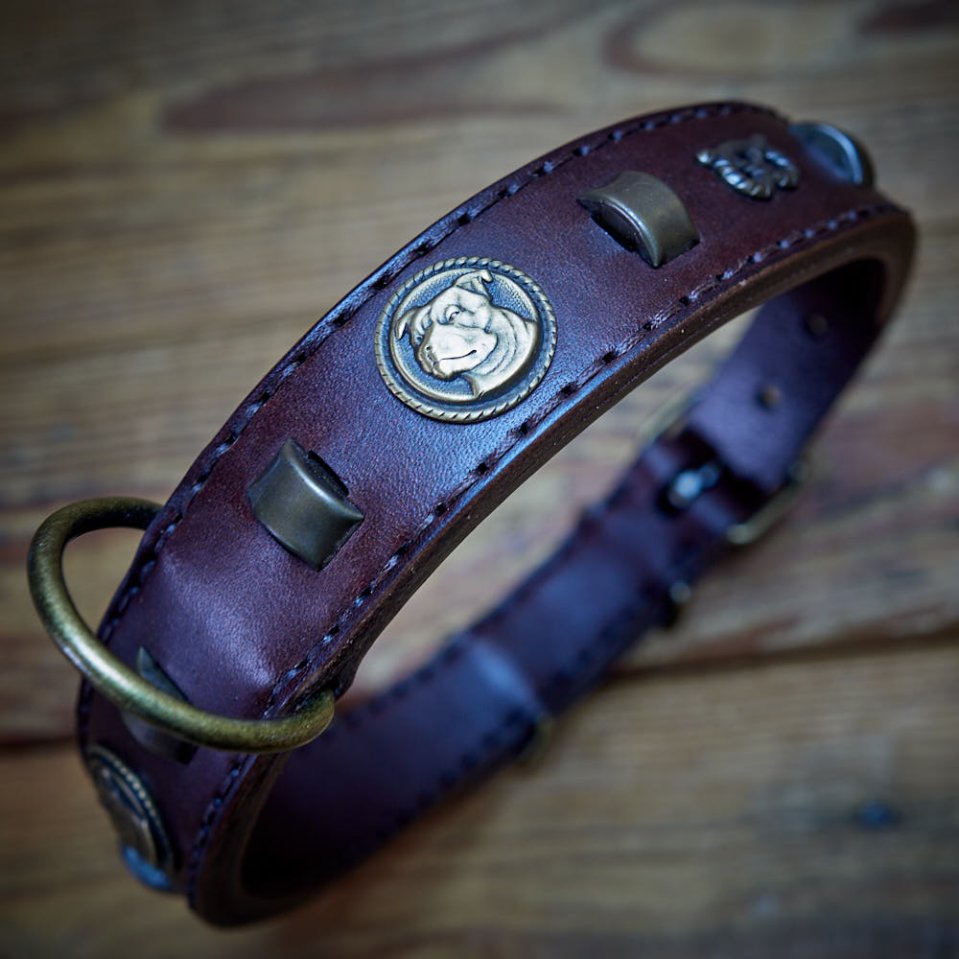
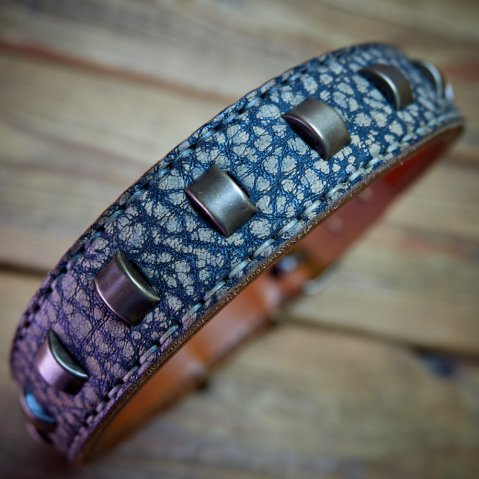
A wider, firm leather collar usually makes more sense than a narrow, soft collar for a powerful pulling dog.
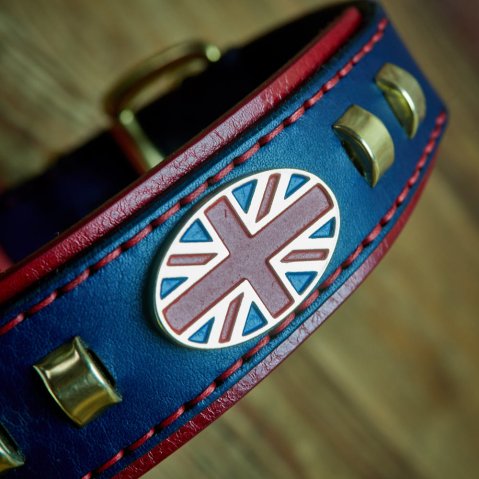
A collar such as the Buffalo collar for strong dogs that need stable pressure distribution fits this job because its wider build helps spread pressure and stay readable under load. For a more classic everyday setup, the King’s Colours classic collar for controlled daily walking makes sense when the dog needs structure without turning the walk into a wrestling match.
When is a leash part of the training problem?
The leash matters when it changes timing, distance or control.
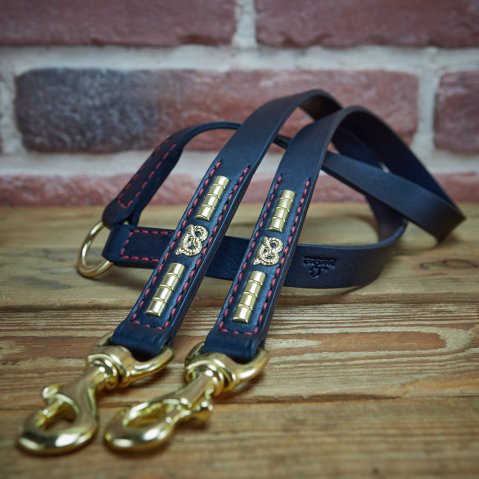
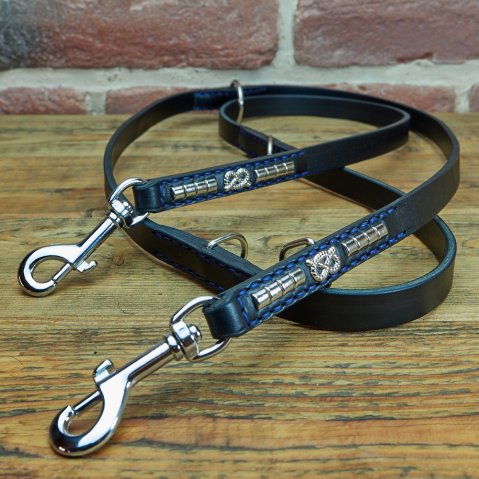
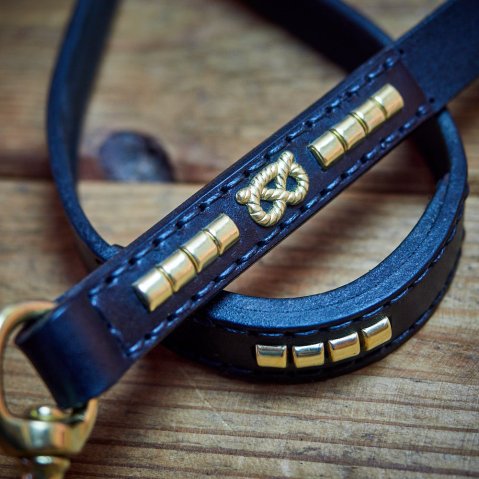
A weak, stretchy or chaotic leash makes your signal late. A flexi leash often teaches the exact opposite of loose walking because the dog feels tension and still gains distance. For direct control, the Skunk’s Fail lead for clear handling in stronger pulls keeps things simple. If you need a more adaptable setup for different walking situations, the Free Hand adjustable leash for changing distance and activity gives more options without losing the plot.
Decision flow: what should you choose?
- If your dog pulls forward but does not back out: start with stop-and-go training and a firm classic collar such as a stable classic leather collar for everyday control.
- If your dog hits the end of the leash with heavy force: choose a wider, stronger collar like a Buffalo-style collar that spreads pressure under load.
- If your leash handling feels messy: switch to a clearer lead such as the Craze lead for firmer hand contact.
- If you walk two dogs together: avoid crossed chaos and consider the Side by Side brace fittings for paired walking.
- If you are not sure: solve width, fit and construction first, then fine-tune the training.
Common mistakes
Letting the dog pull “just a little”
If pulling works sometimes, the dog will keep trying. Random success makes the habit stronger, not weaker. One allowed launch toward a dog can undo several quiet minutes.
Using gear that collapses under pressure
A soft collar may look harmless, but under load it can twist, curl and push pressure into one narrow track. You notice it when the collar shifts, your hand loses clean contact and the dog suddenly feels stronger than he did three seconds ago.
Walking too slowly with no job for the dog
A bored dog creates his own entertainment. That often means scanning, pulling and rushing. Use direction changes, short reward windows and controlled sniff breaks so the walk has structure, not just dragging with scenery.
Expert view
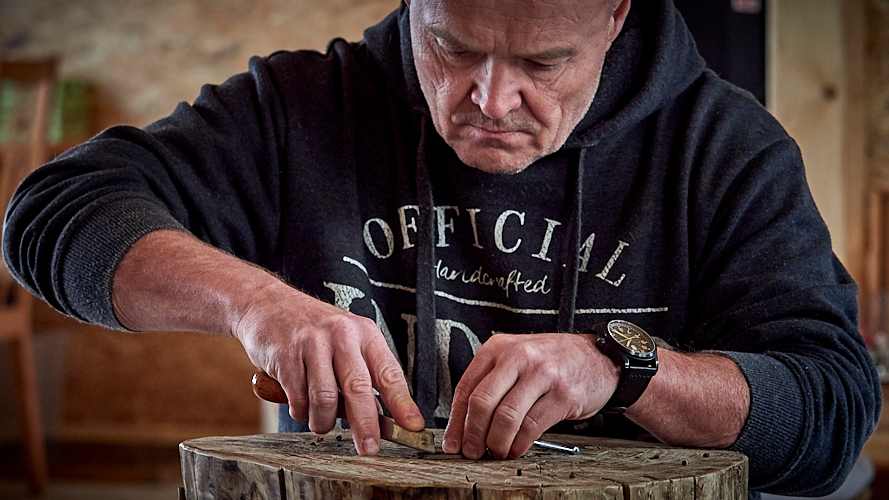
Loose-leash walking is not only a behaviour issue. It is a system: motivation, timing, body mechanics and equipment. If one part fails, the whole walk gets noisy. In real leatherwork, you quickly learn that a collar is not judged on the table. It is judged when a dog loads it, twists it, sweats into it and repeats that for months.
This is where products like the Vintage Paws collar for dogs that need substance, not decoration make sense in the right context: not because the pattern is pretty, but because the collar still has to behave like usable equipment. Decoration is welcome. Losing control is not.
Who is this approach for?
- Owners of strong dogs that launch at triggers.
- Dogs that lean into the leash with the whole chest.
- Handlers whose collar twists or slides during walks.
- People using training but seeing no change because pulling still creates movement.
- Owners who want daily walking to feel controlled, not like towing a small tractor with opinions.
Final summary
A strong dog learns loose-leash walking when pulling stops paying and relaxed walking starts paying. The rule is simple, but it must be consistent: tension stops the walk, slack restarts it. For powerful dogs, the right collar and leash are not decoration; they are the part of the system that keeps your training readable under pressure.
If you want the next step, compare real pulling load in what actually holds when the dog hits the leash, then check whether your current gear is still alive with how long a dog collar lasts in real use. Training gives the rule. Gear keeps the rule from falling apart.
Frequently asked questions
How long does it take to teach a strong dog not to pull?
It depends on consistency, but many dogs start understanding the rule within a few walks. The habit takes longer to rebuild if pulling has worked for months.
Should I stop every time my dog pulls?
Yes. If pulling sometimes creates movement, the dog keeps testing it. Stop when the leash tightens and move only when it relaxes.
Is a wide collar better for a dog that pulls?
A wider firm collar can spread pressure better and stay more stable than a narrow soft collar. Fit and construction still matter.
Are flexi leashes good for leash training?
Usually not. Flexi leashes often teach the dog that tension still creates distance, which is the opposite of loose-leash training.
Can equipment replace training?
No. Equipment supports training, but it does not teach the rule by itself. Training without stable gear is weak; gear without training is chaos.
Featured Dogs