Dog Biting the Lead? It Is Not Naughty. It Is Telling You Something
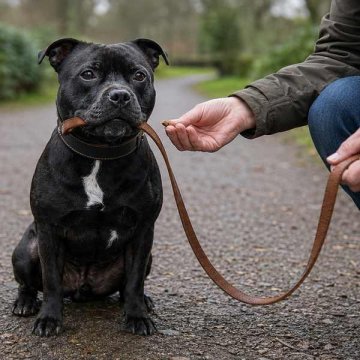
Short answer: Dogs usually bite the lead because they are over-aroused, frustrated, uncertain, playful or teething. Do not pull back. Stop moving, keep your hands quiet, redirect the dog to an easy familiar behaviour and reward the release. The strength of your correction matters far less than identifying the right cause.
From the outside, every case looks similar: teeth on leather, patience running out and a neighbour receiving free morning entertainment. Inside the dog, however, very different things may be happening. Until you know which one, you are only arguing with the smoke while the fire carries on.
Why does a dog bite the lead?
Lead biting is not a diagnosis. It is a behaviour the dog is using to cope, play, communicate or release pressure. Watch the five to ten seconds before the bite. Did another dog appear? Did you shorten the lead? Did sniffing end? Had you just stepped through the door? Or is your dog mentally exhausted after a busy walk?
1. Over-arousal: the body is outside but the brain has missed the bus
The door opens and the dog launches, jumps, spins and grabs the lead. This is rarely a calculated rebellion. The nervous system has climbed above the level at which the dog can still think clearly.
Do not begin teaching in the middle of the explosion. Start one step earlier: clip the lead on, pause, reward calm, open the door, pause again. If the dog fires out like a champagne cork, reset and try once more. Quietly. A cork has never improved after a lecture.
2. Frustration: “I want to go there” meets a lead saying no
The dog sees another dog, a person, a pigeon or the smell of the century. You stop forward movement and the dog redirects onto the nearest barrier: the lead. The body is often tight, movement sharp and attention repeatedly pulled back towards the original target.
Adding more pressure usually makes this worse. Increase distance from the trigger, allow enough slack to avoid a guitar-string lead and ask for something easy: eye contact, a hand touch or several steps in the opposite direction. Reward the return of thought, not perfect obedience.
3. Learned tug: the human pulls and the fun begins
The dog grabs the lead. The human jerks it. The lead comes alive, moves and resists. Congratulations: tug has officially opened for business.
A playful dog often has a looser body, bouncy movement and repeatedly releases and re-grabs while watching your hands. The best response is boring: freeze the lead, stop walking, offer a trade and ask for a short easy behaviour after the release. A motionless lead is about as thrilling as washing-machine instructions.
4. Teething and the need to chew
Between roughly three and seven months, puppies may chew more as adult teeth arrive. A lead is soft, moving and permanently available. Perfect – except that it already has another job.
Carry a safe chew or tug toy, offer it before the puppy grabs the lead and keep sessions short. If shoes, beds and furniture are also disappearing, manage the wider chewing habit rather than treating this as a walking problem alone.
5. Stress, uncertainty or discomfort
Not all lead biting looks playful. A dog may crouch, stiffen, avoid contact, lick its lips, pant rapidly or try to escape. If the behaviour appeared suddenly, check the mouth, teeth, neck, collar and harness. Pain and discomfort are not trained away with a louder “no”.
Seek veterinary and qualified reward-based training help when the behaviour is sudden, intense or escalating, especially if the dog redirects towards hands, growls, panics or cannot be interrupted safely.
What should you do when the dog already has the lead?
- Stop moving. Biting must not carry the dog towards its goal or start a game.
- Quiet your hands. Do not jerk or lift the lead. Movement and resistance increase its value.
- Reduce chaos without creating a tightrope. Hold the lead steadily enough to prevent spinning, but do not begin another wrestling match.
- Offer a trade. Present food near the nose or use a previously trained “drop”. Mark and reward the instant the jaw releases.
- Give the brain a small job. A hand touch, eye contact, scattered treats in grass or three calm steps will do.
- Change the situation. Move away from the trigger, shorten the walk or allow a sniffing break. Do not drop the dog straight back into the same pressure cooker.
Important: Food must not become a fee paid after every bite. Most rewards should arrive before the mistake – for a relaxed head, voluntary attention and a loose lead. Otherwise a clever dog may build its own vending machine: bite, release, collect payment. Bull breeds understand accounting disturbingly quickly.
Training that changes the behaviour
Teach “drop” away from the walk
Practise indoors with a toy, not while your dog is hanging from the lead beside three barking dogs. Offer the toy, then valuable food. As the dog releases, say “drop”, reward and often return the toy. Releasing should not always mean confiscation and the end of civilisation.
Pay for a loose lead
The useful rule is simple: a tight lead stops movement; a loose lead starts it again. Begin somewhere quiet and reward frequently. Add roads, dogs and exciting smells only after the dog understands the rule without distractions. Our guide to teaching calm lead walking takes this routine further.
Finish before the dog boils over
Training does not have to continue until the dog is physically exhausted. Five successful minutes beat half an hour that ends with you leading a crocodile home on a strip of leather.
Which lead helps when a dog bites it?
No lead can train the habit out of a dog. The right construction can, however, improve safety, give you a steadier grip and stop one quick bite ending both the walk and the equipment.
The dog targets the section beside the clip
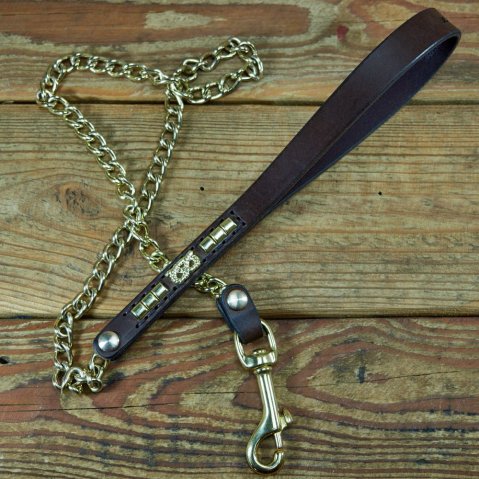
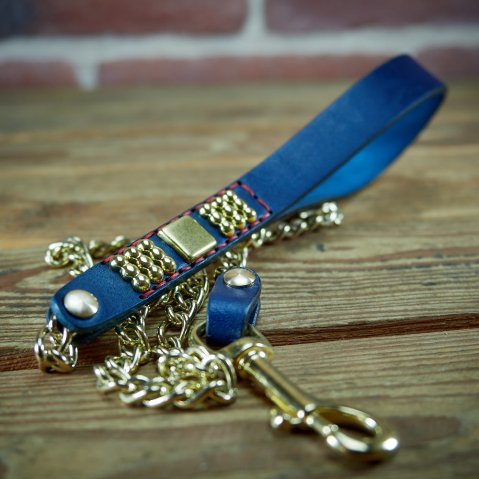
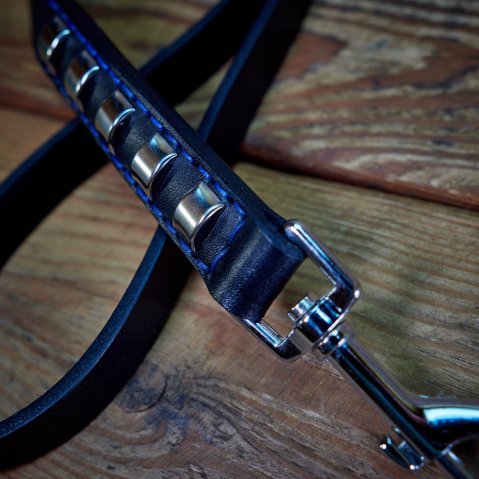
That section swings closest to the mouth when a dog turns. For a repeat chewer, the One Way leather lead with a chain section can work as a temporary safeguard. Metal is less inviting and harder to bite through than leather. It is not a toy or a training method, and forceful chewing on metal can damage teeth. The chain protects the vulnerable section; training addresses the cause.

A powerful dog throws its full weight into the lead
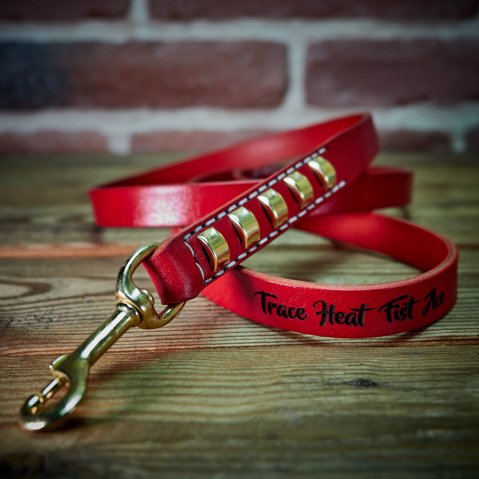
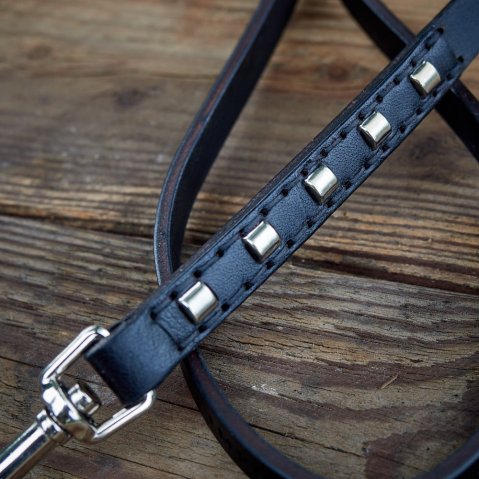
With a strong bull breed, a full, secure grip matters. The heavy-duty Goliash leather lead is made for the moment a dog launches and you do not want a thin strap cutting across your hand. Its strength should not tempt you into pulling harder. Goliash helps you control the situation; emotional control is still trained at the other end.
You need different lengths in different environments
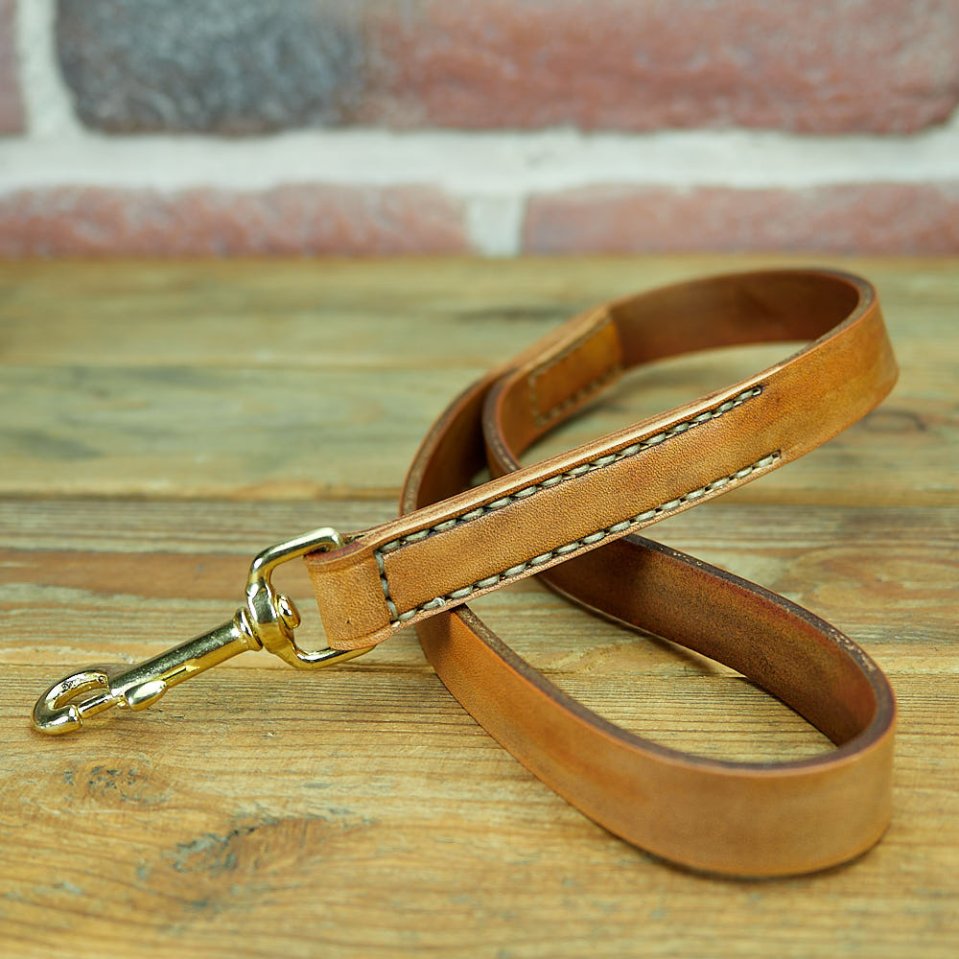
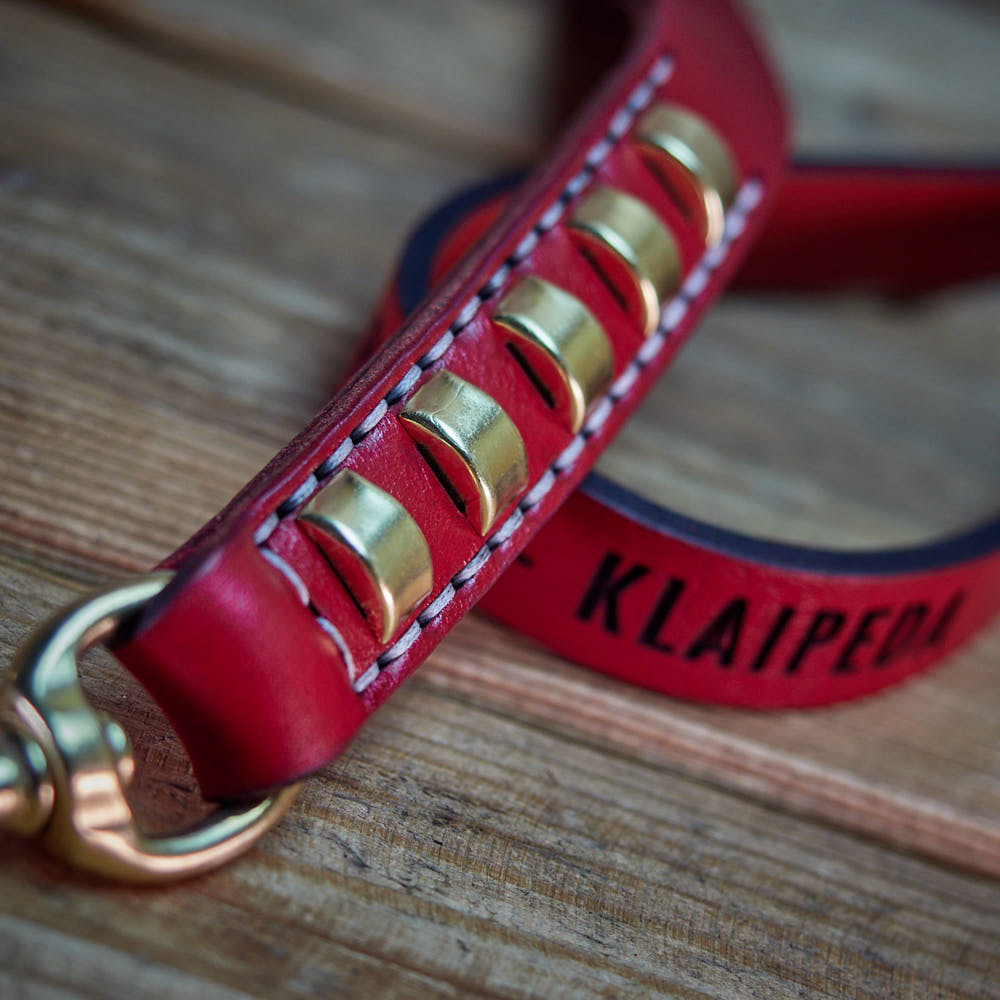
More space can reduce pressure in a quiet area; near traffic or while passing dogs, closer handling is safer. The adjustable Manyway leather lead lets you change the working length without carrying several leads. Do not adjust clips or wrap the lead around your hand during an active biting episode. Dog under control first. Technical wizardry second.
Quick decision: what should you address first?
- A puppy chews everything: address teething, legal chewing and shorter sessions.
- The dog bites after seeing a dog or being stopped: address frustration, distance and attention.
- The dog bites immediately outside: address arousal before leaving.
- The dog waits for you to pull back: end the tug game and teach a trade.
- The dog repeatedly targets the clip area: consider One Way as temporary protection during training.
- A strong dog lunges while biting: prioritise safety, distance and professional support; Goliash can provide the secure grip.
What not to do – even when your patience is packing its bags
- Do not pull back. Resistance feeds tug and raises arousal.
- Do not shout ten cues. A dog over threshold mainly hears loud background noise.
- Do not wrench the lead from the mouth. You risk teeth, gums and fingers.
- Do not switch to metal and declare victory. An intact lead is not the same as a resolved dog.
- Do not punish warning signals. Freezing, avoidance and growling are information, not faulty sound effects.
Frequently asked questions
Will a puppy stop biting the lead by itself?
Teething pressure usually fades, but a rehearsed tugging game can remain. Provide suitable chewing and teach loose-lead walking and “drop” early.
Does a chain lead help?
A chain section can prevent quick damage beside the clip, but it does not resolve arousal, frustration or learned play. Treat it as a safeguard during training, not a cure.
Should I use a bitter anti-chew spray?
It may reduce interest temporarily, but often misses the emotional trigger. Use only products confirmed safe for dogs and the lead material.
Why does my dog bite the lead on the way home?
Fatigue, accumulated stimulation and frustration at the walk ending can combine. Try a shorter route, calm sniffing and returning before self-control disappears.
Is a shorter or longer lead better?
A controlled shorter length is often practical in busy places; more length can reduce constant pressure in quiet areas. Choose according to the environment, the dog’s strength and safe handling.
Can an unsuitable collar or harness cause lead biting?
Yes. Pressure, restricted movement or pain may increase stress and escape behaviour. Check fit, construction and health if biting begins when equipment is attached or tightened.
Final thought: read the dog before blaming the lead
A dog gripping the lead does not need a stronger argument. It needs you to recognise whether it is overflowing with excitement, fighting frustration, teething or operating a very successful human-powered tug machine.
Stop the game, teach an alternative and reward calm before teeth reach leather. Match equipment to the real situation: chain protection for the vulnerable section, a substantial grip for power or adjustable length for changing training conditions. A lead should connect dog and human – not become a boxing rope between two stubborn mammals.
Featured Dogs