Staffordshire Bull Terrier 1990 vs 2026: How One of the World's Most Loved Bull Breeds Changed
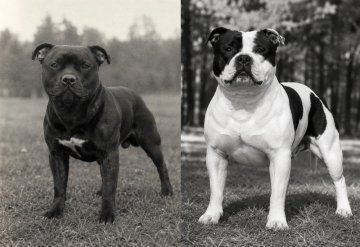
The Staffordshire Bull Terrier of 2026 is not exactly the same dog people knew in 1990. Older bloodlines were generally lighter, more athletic and closer to the breed's working roots. Modern Staffies are often broader, more muscular and more heavily influenced by decades of selective breeding and show-ring preferences. Yet the most important qualities have barely changed at all: courage, loyalty, confidence and an extraordinary bond with people.
Staffordshire Bull Terrier 1990 vs 2026: How Has One of the World's Most Popular Bull Breeds Changed?
The Staffordshire Bull Terrier did not change overnight. The breed evolved gradually over several decades through selective breeding, advances in health testing, changing lifestyles and the growing influence of dog shows and social media.
When most people compare photographs from the early 1990s with modern examples from 2026, they notice one thing almost immediately.
Today's Staffies look bigger, broader and more powerful.
And they are right.
But appearance tells only part of the story.
To understand how the breed changed, we need to look at old bloodlines, modern bloodlines, show dogs, working dogs, temperament and health.
The Staffordshire Bull Terrier in 1990
In the early 1990s, the Staffordshire Bull Terrier remained relatively close to its historical identity.
The breed had not yet become as fashionable or globally visible as it is today. In the United Kingdom especially, many owners appreciated the Staffy for its toughness, reliability, character and practical ability rather than purely for its appearance.
Dogs from that period were often:
- Lighter in build
- More athletic
- Less extreme in appearance
- More focused on physical performance
- Built for active lifestyles
It was not unusual to see a Staffordshire Bull Terrier spending most of the day outdoors, walking, training, exploring and generally living a very active life.
Many dogs from that era looked less like bodybuilders and more like athletes.
Old Bloodlines: Function Before Fashion
Breeders in the late twentieth century often placed enormous value on functionality.
Important qualities included:
- Endurance
- Movement
- Mental stability
- Working ability
- Physical resilience
Many dogs from older bloodlines displayed narrower chests, lighter bone structure and longer body proportions than modern examples.
They were often quicker, more agile and exceptionally efficient movers.
This is where one of the biggest contrasts appears.
A modern dog may look spectacular standing still.
An older dog often looked less dramatic but came alive the moment it started moving.
Good looks and practical function are not always the same thing.
A dog built purely for visual impact may impress in photographs. A dog built for movement proves itself every time its paws hit the ground.
The Modern Staffy in 2026
The Staffordshire Bull Terrier of 2026 reflects decades of careful breeding and changing preferences within the breed community.
Modern examples are commonly:
- Broader
- More muscular
- Heavier in bone
- More compact
- More powerful in overall appearance
Today's Staffy often displays a wider head, stronger neck, deeper chest and more substantial body structure than many of its predecessors.
That does not automatically make modern dogs better.
Nor does it make older dogs superior.
They simply represent different stages in the breed's development.
Breeding priorities changed and the dogs changed with them.
Show Lines: When Details Shape a Breed
Few influences have shaped the modern Staffordshire Bull Terrier as strongly as the show world.
Today's successful show dogs often feature:
- Broad skulls
- Pronounced heads
- Strong necks
- Deep chests
- Excellent muscle development
In the show ring, tiny details matter.
Sometimes a decision comes down to movement.
Sometimes expression.
Sometimes overall balance.
Judges evaluate dozens of individual characteristics, many of which are measured in millimetres rather than centimetres.
Over time, those preferences naturally influence breeding decisions.
As generations pass, the entire breed gradually moves in a particular direction.
Working and Functional Lines: Strength Without the Spotlight
Although the Staffordshire Bull Terrier is no longer commonly viewed as a traditional working breed, many breeders still prioritise practical ability over show titles.
Dogs from functional bloodlines are often:
- Lighter
- More agile
- More athletic
- Less physically exaggerated
- Built for endurance
These dogs may attract less attention on social media or in the show ring, but they frequently excel in everyday performance.
Where show lines focus heavily on appearance, functional lines focus on capability.
Neither approach is inherently better.
They simply pursue different goals.
Decision Guide: Which Type of Staffy Fits Your Goals?
- If you want a show dog: Look for proven show bloodlines with strong breed type and successful ancestry.
- If you want an active companion: Athletic and functional bloodlines may be a better match.
- If you want a family dog: Prioritise health, temperament and breeder reputation above appearance.
- If you're unsure: Focus on character and health before head size, muscle mass or social media popularity.
Temperament: The Most Valuable Part Stayed the Same
Despite all physical changes, temperament remains remarkably consistent.
The Staffordshire Bull Terrier is still known for being:
- Friendly toward people
- Courageous
- Confident
- Intelligent
- Extremely devoted to family
This is one of the reasons the breed continues to attract owners across the world.
A modern Staffy may look different from a Staffy of thirty years ago, but the emotional connection to people remains one of its defining traits.
The famous British nickname "The Nanny Dog" remains controversial and often oversimplified, but it reflects the breed's long-standing reputation for forming exceptionally strong bonds with humans.
Has the Relationship With Other Dogs Changed?
Yes and no.
The Staffordshire Bull Terrier originated from bull-and-terrier stock, meaning confidence around other dogs remains part of the breed's heritage.
That aspect has never completely disappeared.
However, responsible breeding has increasingly focused on:
- Stable temperaments
- Trainability
- Control
- Social balance
Many well-bred modern Staffies are better prepared for life in today's society than their predecessors were several decades ago.
Of course, genetics alone never tells the whole story.
Training, socialisation and responsible ownership remain essential.
A Staffy with no guidance will happily create its own rules. And creativity has never been in short supply within this breed.
Health: The Greatest Progress of All
Perhaps the biggest improvement since 1990 has occurred in health management.
Three decades ago, DNA testing was not routinely available.
Today, responsible breeders have access to advanced screening programs and genetic testing.
Conditions commonly monitored include:
- L-2-HGA
- Hereditary Cataracts (HC)
- Orthopaedic conditions
- Skin disorders
- Allergies
Modern testing allows breeders to significantly reduce the risk of passing certain hereditary diseases to future generations.
This represents one of the most important developments in the breed's history.
Longer Life and Better Quality of Life
Many Staffordshire Bull Terriers today live between 12 and 14 years, with some reaching even greater ages.
Several factors contribute to this:
- Better nutrition
- Improved veterinary care
- Health-conscious breeding
- Greater owner education
As a result, modern Staffies often remain active and engaged well into their senior years.
Social Media Changed Everything
Thirty years ago, most people encountered Staffordshire Bull Terriers at dog shows, training clubs or breeding kennels.
Today, the breed appears every minute on Instagram, Facebook and TikTok.
This increased visibility has brought many benefits:
- Greater awareness of the breed
- Improved access to information
- More international cooperation among breeders
However, popularity also creates risks.
Among them:
- Fashion-driven breeding
- Inexperienced breeding practices
- Excessive focus on appearance
- Demand driven by trends rather than knowledge
For that reason, selecting a puppy from a responsible breeder is more important today than ever before.
Common Mistakes When Comparing Old and Modern Staffies
Assuming Bigger Means Better
A broader dog may look impressive, but excessive size means little if movement, health or endurance suffer as a result.
Romanticising Old Bloodlines
Older dogs often appeared more athletic, but they did not benefit from the health testing available today.
Choosing a Dog Based on Photographs Alone
A photograph can show muscle and expression.
It cannot fully reveal temperament, movement, health or long-term soundness.
Expert Perspective
Looking back across the decades, the biggest change is not appearance.
It is knowledge.
Modern breeders possess tools, data and health information that simply did not exist in the early 1990s.
Yet one principle remains as important as ever.
A Staffordshire Bull Terrier should never become a decorative version of itself.
The breed should remain physically capable, mentally stable and true to its purpose.
Who Is the Staffordshire Bull Terrier Suitable For?
- Active families
- People seeking a close companion
- Owners willing to invest time in training
- Bull breed enthusiasts
- People who value character as much as appearance
Final Thoughts
The Staffordshire Bull Terrier of 1990 and the Staffordshire Bull Terrier of 2026 are not identical dogs.
Older bloodlines remind us of a time when functionality often came first.
Modern bloodlines demonstrate what decades of selective breeding, health testing and accumulated experience can achieve.
Yet the most important qualities never changed.
The Staffy remains courageous, stubborn, loyal and deeply devoted to its people.
Whether in a show ring, on a countryside walk or occupying half the sofa at home, it continues to win hearts exactly as it has done for generations.
That is why the Staffordshire Bull Terrier remains one of the most loved bull breeds in the world.
Frequently Asked Questions
Has the Staffordshire Bull Terrier changed a lot since 1990?
Yes. Modern Staffordshire Bull Terriers are generally broader, more muscular and more influenced by show breeding, while older bloodlines were often lighter, more athletic and focused on functionality.
Were Staffies from the 1990s better?
Not necessarily. Older dogs were often more athletic and less extreme in appearance, but modern breeding benefits from advanced health testing and a better understanding of genetics.
Why do modern Staffies look more powerful?
Breeding preferences have gradually favoured broader heads, stronger bone structure, deeper chests and more compact bodies.
Has the Staffordshire Bull Terrier's temperament changed?
Very little. The breed remains known for courage, confidence, loyalty and a strong bond with people.
Are working-line Staffies still available?
Yes. Some breeders still prioritise athletic ability, endurance and practical functionality over show-ring success.
What is the biggest improvement since 1990?
The greatest progress has been made in health testing. Responsible breeders now use DNA testing and screening programs that help reduce the risk of certain inherited diseases.