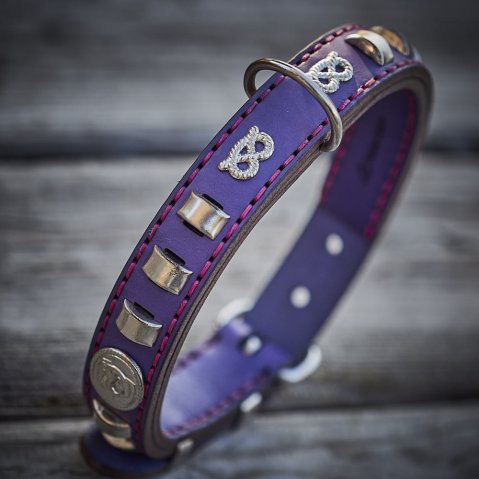
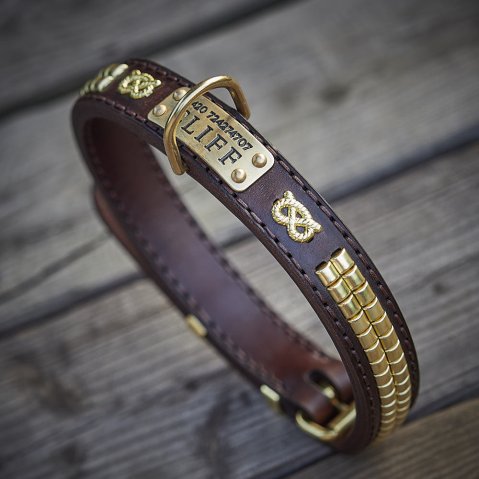
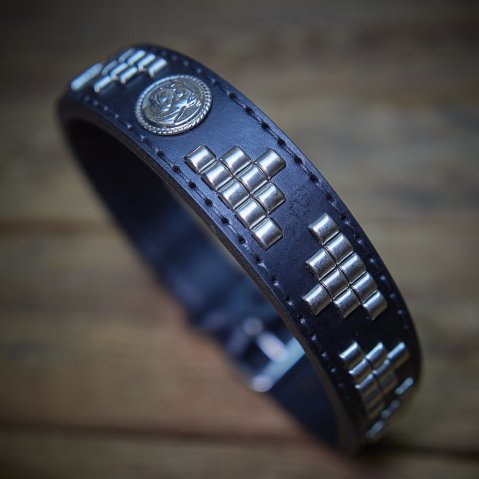
Holds Firm, Stays Put, Won’t Quit: A Stafford Collar Without Weak Spots
Short answer:
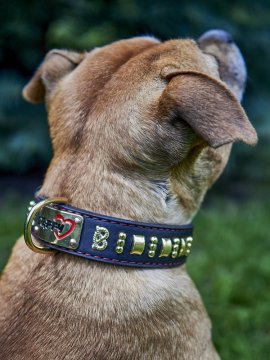
For a Staffordshire Bull Terrier, the best everyday choice is usually a wide, well-made leather collar or a half check collar that stays stable on the neck. The collar should hold its shape, spread pressure across a wider area, and stay dependable when the dog suddenly surges, spins, or slams to the end of the leash.
What collar works best for a Staffordshire Bull Terrier?
A Staffordshire Bull Terrier usually needs more than a basic collar that merely closes around the neck. The best option is a firm, wider collar that does not twist easily, does not collapse under pressure, and still feels predictable when the dog goes from calm walking to full launch mode in half a second.
If you are deciding between classic control and extra security, this is where the split begins: a strong traditional leather collar works brilliantly for many Staffies, while a half check becomes more useful when the dog backs out, tests boundaries, or hits the leash with more drama than manners.
If you want the broader picture first, read how to pick the perfect collar for your Staffordshire Bull Terrier. If you are already comparing materials and build quality, the guide on how to spot a real deal leather collar is the right next stop.
Why does an ordinary narrow collar often fail on a Staffy?
Because a Staffy is compact, muscular, quick, and not exactly famous for gentle little leash opinions. A narrow or soft collar often concentrates force into one line, shifts around the neck, and starts working against control instead of helping it.
You usually notice it within five seconds. The collar turns off-centre, the ring slips sideways, and the whole thing rotates when the dog hits tension. What looked sleek on the product photo suddenly behaves like a loose strap with commitment issues.
This is not just about comfort. When a collar twists hard, pressure becomes less even, handling becomes less clean, and the dog often pulls against it more.
Why is a wide leather collar such a strong choice?
A wide leather collar spreads pressure better and keeps a steadier line on the neck. That matters when a dog spots another dog, locks onto a squirrel, or fires forward from a standstill like someone pressed launch.
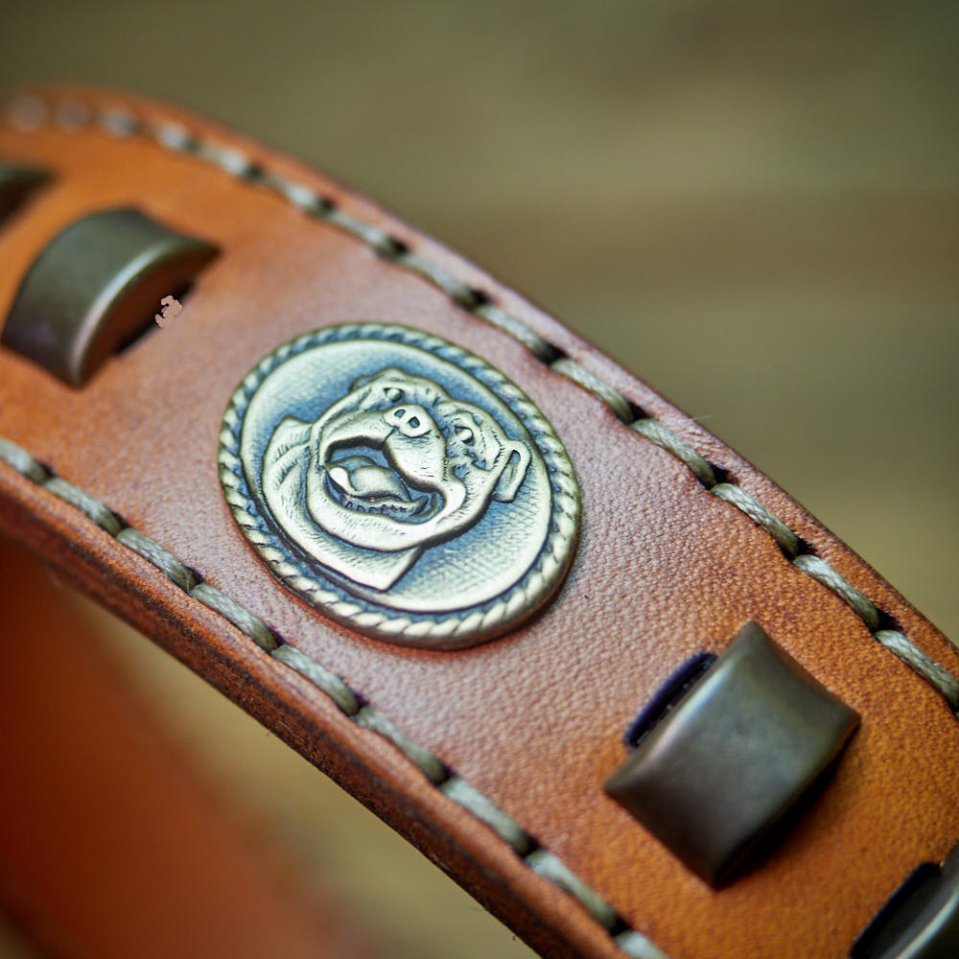
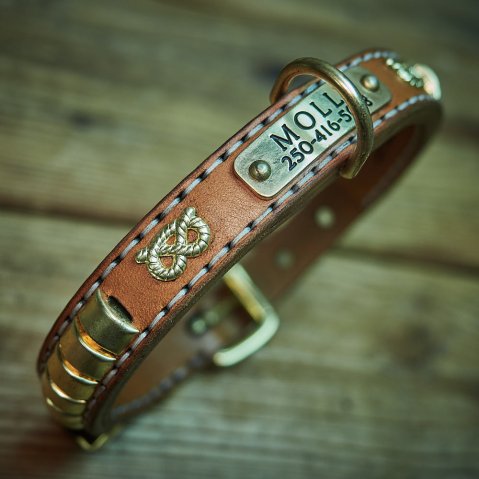
A solid model such as the King's Colours Classic Collar makes sense for owners who want a classic leather option with better stability than flimsy collars usually offer. If you prefer a bolder, tougher everyday look, the Renegade Classic Collar fits the same logic: firm structure, reliable control, and no soft, saggy nonsense.
Pretty on the neck is nice. Pretty while still doing its job when the dog explodes sideways is better. That is the difference that matters.
When does a half check make more sense?
A half check is often the smarter option when your Staffy can reverse out of a loose collar, throws sudden body weight into the lead, or needs cleaner feedback without full choking action. Used correctly, it tightens only within a limited range and helps the collar stay in place more reliably.
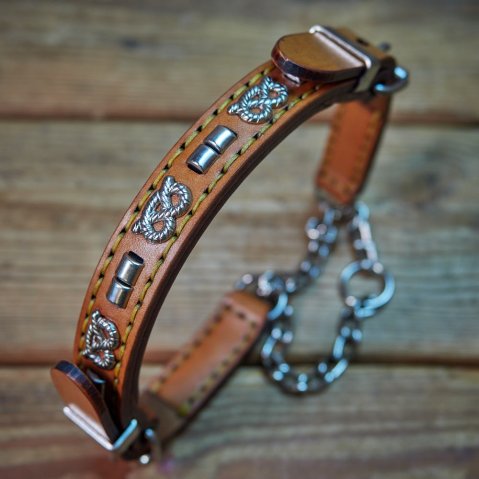
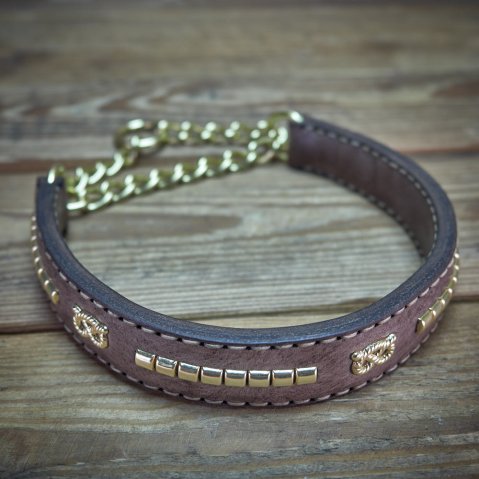
That is where options like the Tough Guy Choker Half Check Collar or the Dum Dum Half Check Collar come in. These are not there for theatre. They make sense for dogs that can turn a normal walk into a negotiation with biceps.
Decision flow: what should you choose?
- If your Staffy walks strongly but does not slip out of collars, choose a wide classic leather collar.
- If the collar keeps rotating or the dog can back out, move to a well-fitted half check.
- If the dog pulls hard and the collar feels unstable, check width and construction before blaming the collar type.
- If you are still unsure, start by comparing build quality and leather structure in the dog collar buying guides.
Časté chyby
- Going too narrow: it may look discreet, but on a strong neck it can cut in faster and stabilise less.
- Choosing soft cheap nylon for a power dog: it often stretches, twists, and loses structure early. Nice for a week, tired by next Tuesday.
- Picking the wrong size: too loose and the dog can slip out, too tight and movement becomes tense and unpleasant.
- Buying for looks only: a collar can photograph well and still fail the moment the dog puts real force into it.
Odborný pohled
From a practical gear point of view, Staffies expose weakness quickly. Weak holes stretch. Soft straps roll. Light hardware starts feeling questionable the moment the dog throws chest, neck, and attitude into one direction. Good gear behaves differently: it stays aligned better, feels more predictable in the hand, and does not turn every sudden pull into a small wrestling lesson.
This is why leather still makes sense when it is properly built. It keeps more shape, matures with use, and does not pretend to be tougher than it is.
Pro koho je řešení vhodné
- For Staffordshire Bull Terriers with strong necks and fast reactions.
- For owners who want steadier control without overcomplicating the walk.
- For dogs that twist ordinary collars sideways in seconds.
- For people deciding between a classic collar and a half check and wanting a practical answer, not fairy dust.
Závěrečné shrnutí
The best collar for a Staffy is usually the one that stays stable when the dog does something very Staffy. For many dogs, that means a wide leather classic. For others, especially escape artists and lead-hitters, a half check is the cleaner answer. Width, structure, and fit matter more than fluff. A collar should not just look ready. It should stay ready when the walk stops being polite.
Často kladené otázky
How wide should a collar be for a Staffy?
Usually around 3 to 4 cm, depending on the dog’s size and neck build. Stronger dogs generally benefit from more width.
Is leather better than nylon for a Staffordshire Bull Terrier?
In many cases, yes. A well-made leather collar tends to hold shape better, stay more stable, and cope with force more predictably.
When should I choose a half check collar?
Choose a half check when your dog backs out of regular collars, rotates them constantly, or needs more secure positioning on the neck.
Can a narrow collar work on a Staffy?
Sometimes, but it is often less stable under real pulling force and can create a sharper pressure line.
What matters more: collar type or collar quality?
Both matter, but poor construction ruins the result fast. A bad collar in the right category is still a bad collar.
Featured Dogs