How to Spot a Quality Leather Dog Collar in 30 Seconds
Short answer:
A quality leather dog collar can usually be identified within 30 seconds. Check the leather thickness, stitching, hardware, edge finishing and overall construction. A collar that only looks good on a product photo often reveals its weaknesses the moment a strong dog hits the end of the leash.
If you're also deciding between different collar types, you may want to read our guide on choosing the right dog collar before focusing on construction details.
How can you tell if a leather dog collar is truly high quality?
The fastest way is to stop looking at color, decorations and branding for a moment. Focus on the parts that actually carry the load.
A good leather collar should remain stable under pressure, distribute force evenly around the dog's neck and maintain its shape over years of use.
Many collars are designed to impress on a screen. Fewer are designed for the moment your dog suddenly spots a squirrel and launches forward with full enthusiasm.
Look at the leather first
Leather is the foundation of the entire collar.
If the material feels soft, thin and floppy, that's your first warning sign. Under repeated pulling, thin leather stretches, loses shape and often develops weak points around the buckle holes.
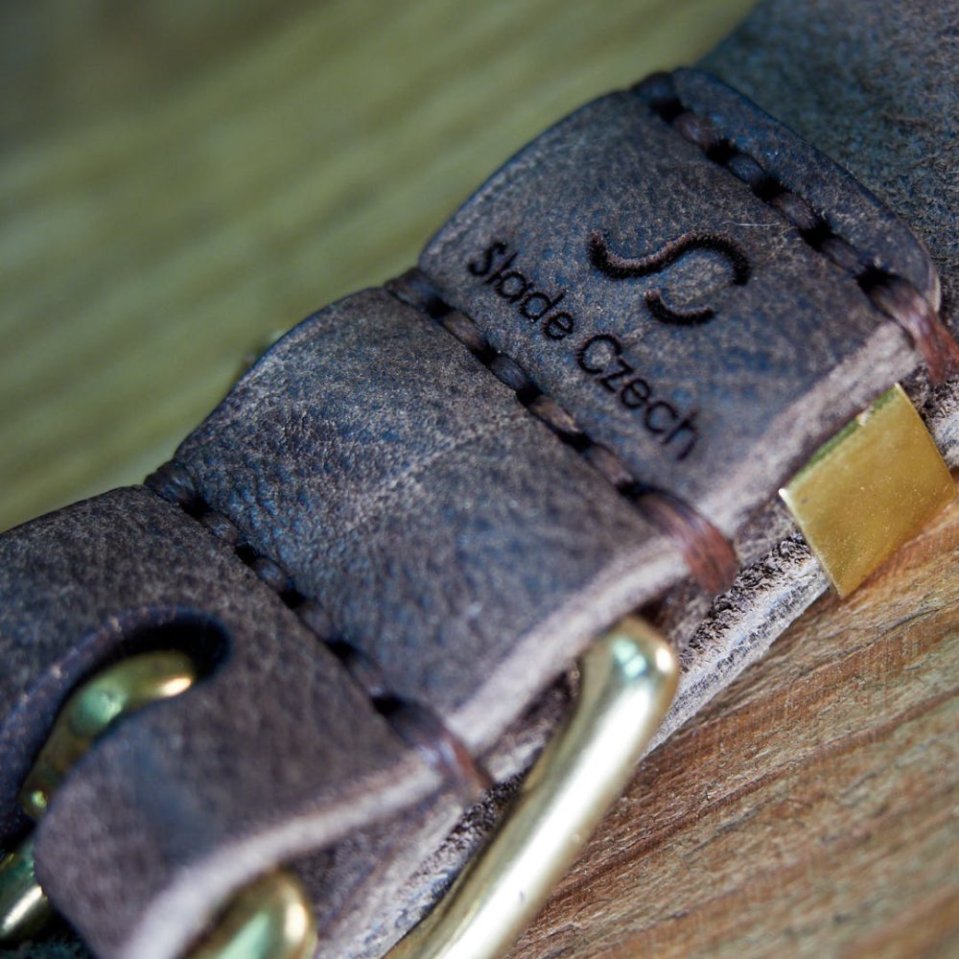
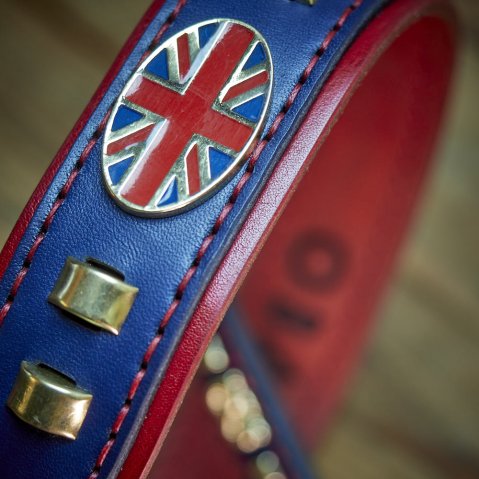
High-quality collars are usually made from thick full-grain leather that remains stable even after years of daily walks.
A simple test takes five seconds:
- Does the collar feel solid in your hands?
- Does it hold its shape when lifted?
- Does it feel like real leather rather than compressed material?
If the answer is yes, you're off to a good start.
Check the stitching
Stitching tells you a lot about how seriously the collar was built.
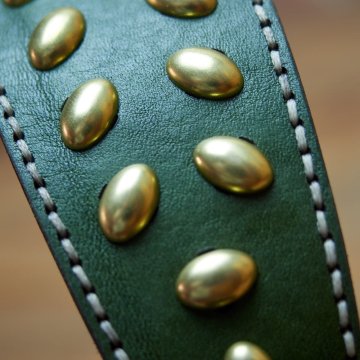
Uneven stitches, loose threads and large gaps usually indicate mass production with speed as the priority.
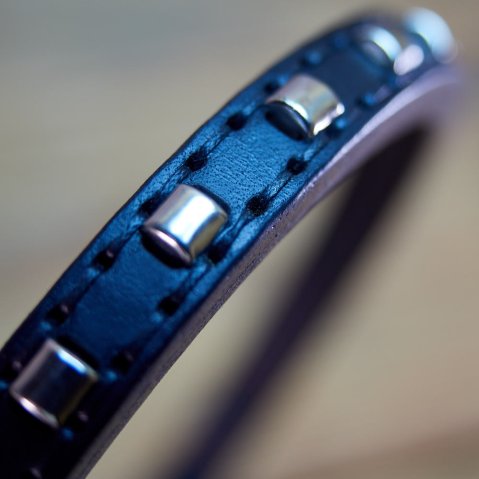
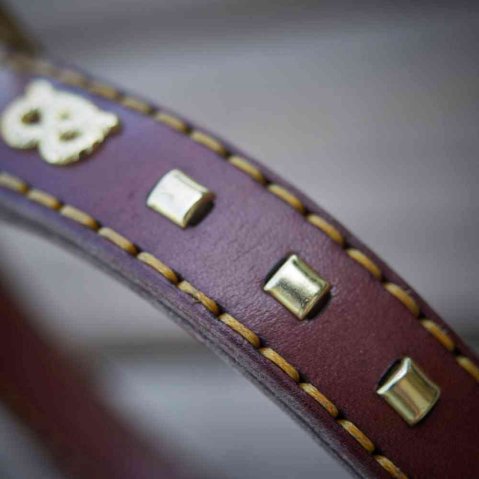
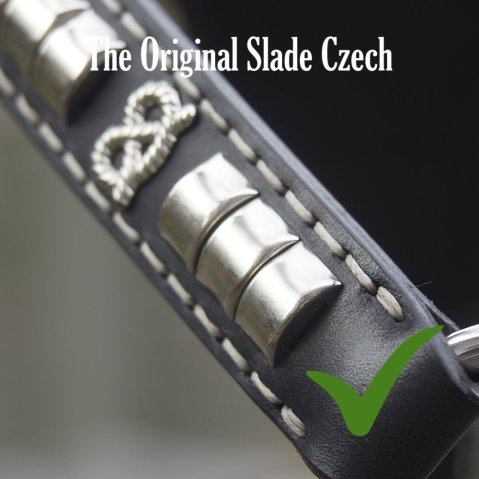
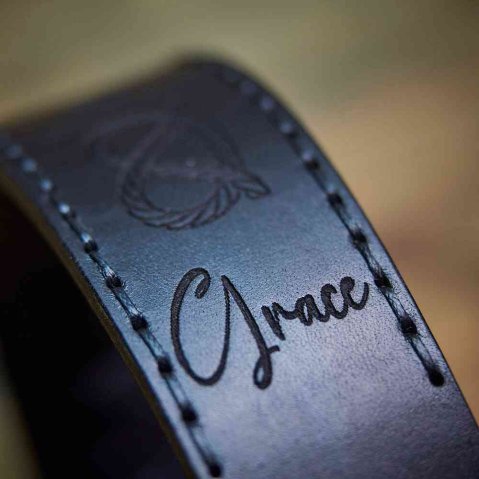
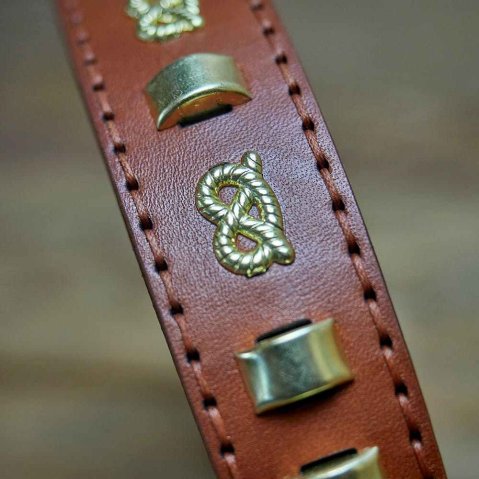
Strong stitching should be consistent from end to end.
One of the most common failures we see in cheap collars starts with stitching that slowly loosens around stress points. Once that begins, the collar often deteriorates surprisingly fast.
Pay attention to the hardware
The strongest leather in the world cannot compensate for weak hardware.
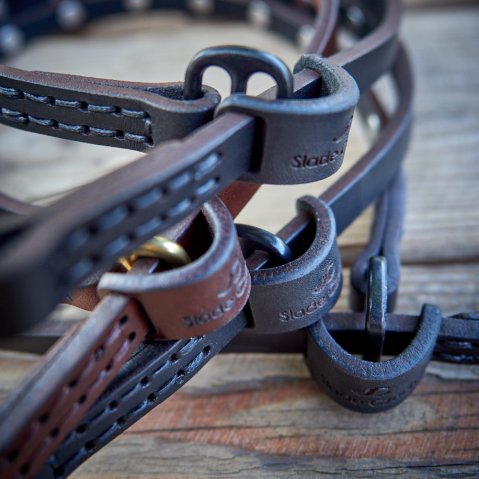
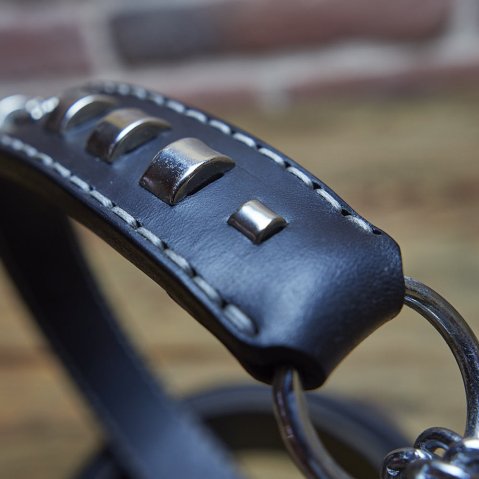
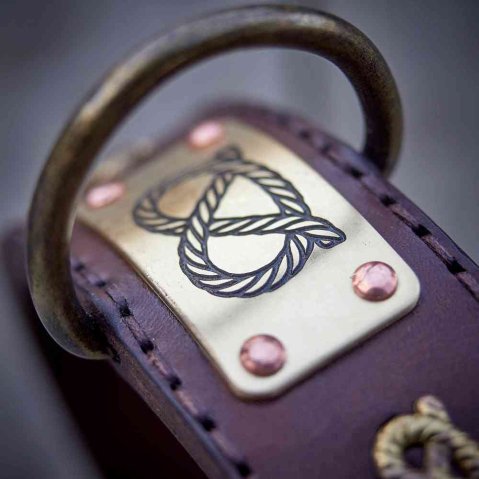
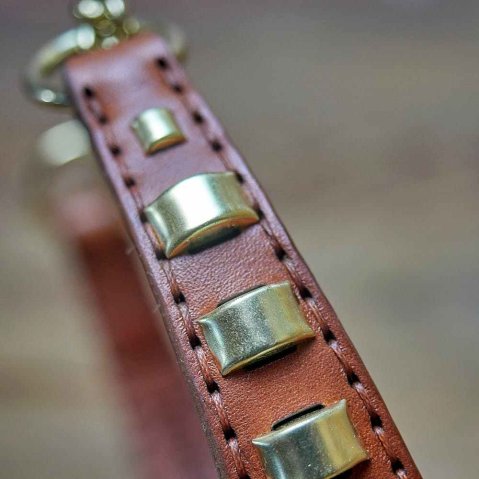
Buckles, D-rings and rivets carry enormous force when a powerful dog suddenly pulls.
Look for:
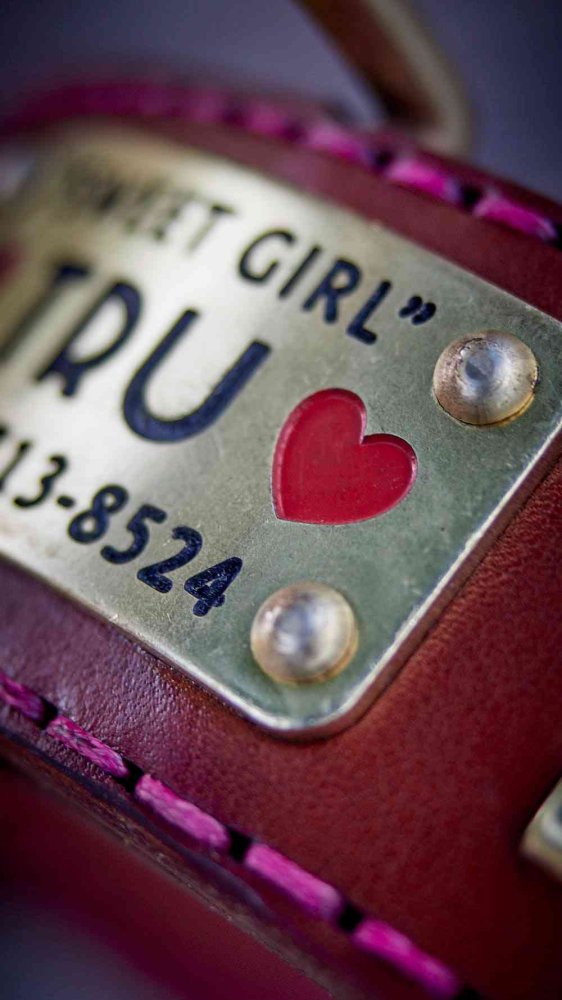
- solid brass hardware
- stainless steel components
- heavy-duty welded D-rings
- thick buckles without visible deformation
If the hardware looks lightweight, the collar probably is too.
The 5-second reality check
Imagine your dog pulling hard.
Not walking politely.
Pulling.
If you can already picture the collar twisting, rotating 90 degrees or concentrating all force into one narrow strip, the design may not be suitable for real-world use.
Good equipment remains stable when things become exciting.
That's usually when quality starts to matter.
Looks versus real-world performance
This is where many buyers get caught.
Decorative stones, bright colors and fashionable details attract attention. There is nothing wrong with that.
The problem starts when appearance becomes more important than structure.
A collar can look premium and still use thin leather, weak stitching and lightweight hardware.
A strong collar doesn't need to choose between beauty and function. It should offer both.
Decision guide
- If your dog walks calmly → a standard leather collar may be sufficient.
- If your dog occasionally lunges → pay extra attention to leather thickness and hardware.
- If your dog is a strong puller → construction and width often matter more than appearance.
- If the collar rotates easily around the neck → review sizing and width before changing collar type.
Common mistakes
Choosing based only on appearance
A beautiful collar that fails under pressure is still a poor collar.
Ignoring hardware quality
Weak buckles often fail before the leather does.
Choosing a collar that's too narrow
Pressure becomes concentrated into a smaller area, reducing stability and comfort.
Professional perspective
After years of making leather dog equipment, one pattern appears repeatedly.
The collars that survive years of real use are rarely the lightest or the cheapest. They are usually the collars built around strong materials, reliable hardware and construction that prioritizes function before decoration.
Because dogs don't test collars in a studio. They test them in the real world.
Who is this advice for?
- Owners of strong dogs
- Staffordshire Bull Terrier owners
- People buying a collar expected to last years
- Anyone comparing handmade and mass-produced collars
- Owners tired of replacing worn-out equipment
Final summary
A quality leather dog collar reveals itself through construction, not marketing.
Check the leather. Check the stitching. Check the hardware.
If all three are built properly, you're usually looking at a collar designed for years rather than months.
Because when your dog decides to test the limits, that's not the moment you want to discover where the manufacturer saved money.
Frequently Asked Questions
How thick should a quality leather dog collar be?
It depends on the dog's size and strength, but thicker full-grain leather generally offers better durability.
Is real leather always better?
Not automatically. Construction quality matters just as much as the material itself.
How long should a leather collar last?
A well-made leather collar can last many years with proper care.
Can stitching fail before the leather?
Yes. Poor stitching is one of the most common weak points in cheap collars.
What is the fastest quality check?
Inspect leather thickness, stitching consistency and hardware strength.
Featured Dogs