Brass, chrome, antique or black? Choosing collar hardware
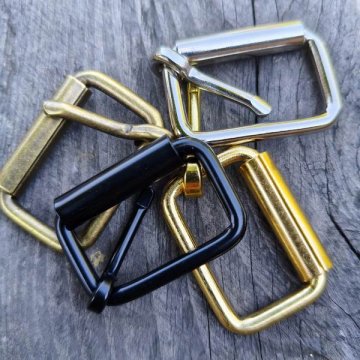
Short answer: Choose brass for a warm, traditional look, chrome for a bright and cooler contrast, antique brass for muted vintage character, and black for a bold modern finish. The best choice suits the leather, the dog’s coat and your tolerance for visible ageing. Finish changes appearance and maintenance; strength depends on the complete hardware, its construction and how it is fixed to the collar.
A dog stands quietly by the door and every finish looks perfect. Then a pigeon takes off, the lead snaps tight and the D-ring gets a proper job. That five-second moment explains the subject: colour matters, but construction comes first. Hardware must handle movement, rain, mud and the occasional four-legged launch sequence.
At Slade Czech, we have made leather equipment by hand since 2004. We see buckle tongues rub, snaps rotate, tags knock and wet collars land beside a radiator. Choose a finish for that life. Finish is the suit. Construction is the backbone.
What does the hardware finish actually change?
The finish changes three practical things: the visual temperature of the collar, the contrast against leather and coat, and the way normal use becomes visible. Warm brass can make honey or brown leather feel richer. Cool chrome can sharpen black, grey or blue. Antique brass begins with a deliberately subdued, aged expression. Black creates a clean graphic line, especially on light or strongly coloured leather.
It does not automatically tell you how strong a buckle, ring or snap is. Strength depends on the base component, its dimensions, shape, joints, attachment and the rest of the collar. A glossy weak ring is still a weak ring; a beautiful coating cannot negotiate with physics. If you want a fast quality check before thinking about colour, use our guide to spotting a quality leather dog collar in 30 seconds.
Look closely at the parts that move. The buckle tongue touches the frame. The lead snap rotates on the D-ring. A hanging tag taps the same small area thousands of times. Those high-contact points will show life first. That is normal ageing unless you also see bending, cracks, sharp edges, a widening gap or a loose fixing. Appearance and safety are two different conversations.
Brass: warm, traditional and made to gain character
When does brass work best?
Brass is the natural choice when you want warmth rather than sparkle. It pairs especially well with honey, natural, brown, green and deep red leather, and it often complements red, brindle, fawn or warm-toned coats. On black leather it creates a strong heritage contrast: less nightclub, more old saddle room with very good manners.
Brass does not need to remain mirror-bright to look right. Its surface can mellow and develop character with handling, air and moisture. Some owners enjoy that gradual change; others prefer a brighter appearance and wipe it regularly with a soft dry cloth. Choose it if you like a collar that records adventures instead of pretending it has never left the box.
Picture a brindle Staffy walking through wet grass, then leaning into the lead because another dog appears across the road. Warm brass still reads clearly against dark leather and coat, but small marks will eventually become part of the story. Good leather ages. Honest metal does not need stage make-up.
Chrome: crisp, bright and high-contrast
When is chrome the better choice?
Chrome suits people who want a clean, cool and polished look. It works well with black, night blue, grey, white and bright red leather. Against a black or blue dog it can catch the light and separate the collar visually from the coat. On a smart city walk or in the show ring, the effect is sharp without needing extra decoration.
Bright surfaces can show fingerprints, dried water spots and fine contact marks because light reveals them. After a rainy pavement walk, a quick wipe helps. Do not attack chrome with an abrasive pad: turning one mark into a cloudy patch is enthusiastic vandalism.
Chrome is a strong style choice, not a promise that every component beneath the finish is identical. Check the whole collar, not only the shine. When the dog cuts sideways after a cyclist and the lead becomes a string under tension, the useful questions are whether the ring stays aligned, the buckle remains seated and the leather around the fixings stays sound.
Antique brass: vintage character without the glare
Who should choose antique brass?
Antique brass is for owners who want warmth with the volume turned down. It looks established from day one and sits naturally beside brown, honey, natural, olive, grey and black leather. Western designs, embossed leather and collars with substantial decorative pieces often benefit from its softer contrast.
Because the appearance is already variegated and muted, small day-to-day marks tend to join the overall character rather than interrupt a perfect mirror surface. That does not make damage invisible, nor does it cancel inspection. It simply means the collar looks comfortable with a bit of history. Muddy woodland walks, dusty paths and a dog who treats every hedge as a personal research project suit this finish rather well.
If you enjoy seeing how original metal details move from a sketch to a finished component, read how Slade Czech hardware is developed and made. A finish is the last visual chapter of a much longer construction story.
Black: graphic, modern and designed to show real use
What should you expect from black hardware?
Black gives a collar the strongest graphic effect. Black-on-black is discreet and muscular; black on honey, natural, red or yellow leather creates a hard-edged contrast. It works particularly well on minimalist designs and on dogs whose coat already has a strong visual pattern.
Expect contact points to reveal wear over time. On the Django collar, for example, we state clearly that black hardware naturally develops a slightly distressed appearance where life rubs against it. An energetic dog who turns the snap, bangs tags and tightens the lead will show that history faster than a calm Sunday stroller. The change is cosmetic unless the component is also bent, cracked, sharp or loose.
Black is not the choice for someone who expects an untouched showroom surface after years of hard use. It is the choice for someone who likes a dark, purposeful look and accepts that equipment earns its patina. A collar should earn its shine—or lose a little of it honestly.
Match the finish to leather, coat and lifestyle
Start with the largest colour areas: the dog and the leather. Hardware is the punctuation, not the entire sentence. If the coat and leather are both dark, chrome or brass can create definition; black keeps the look stealthy. If the leather is light, antique brass feels softer, brass warmer and black more dramatic. There is no law saying the lead snap, collar buckle and your own belt buckle must pass a military uniform inspection, but a repeated finish makes the set feel deliberate.
Our article on choosing collar colours for a dog with personality helps with the wider palette. Use that first if you are still deciding between black, honey, red or blue leather; then choose the metal as the final note.
A quick decision block
- If you want warm tradition: choose brass.
- If you want bright, cool contrast: choose chrome.
- If you want muted western or vintage character: choose antique brass.
- If you want a bold, modern or stealth look: choose black and accept visible wear at contact points.
- If your dog swims, walks in rain or visits the coast: pick the look you like, then commit to rinsing away dirt or salt, drying the equipment and inspecting moving parts.
- If your priority is control or escape prevention: choose the correct collar construction and fit first. Finish comes afterwards.
What to do after rain, mud or a beach walk
Act before damp dirt dries into every joint. Unclip the lead, wipe the hardware with a soft damp cloth if needed, remove grit from the buckle and ring, then dry everything with a clean cloth. Let the leather finish drying naturally in a ventilated place, away from a radiator, fire or intense direct heat. Salt water deserves a prompt fresh-water wipe because dried salt remains abrasive and attracts moisture.
Do not soak the collar in polish, household cleaner or mystery garage spray. A product for one surface may mark another and reach the leather. Test specialist cleaner discreetly and follow its instructions. Beeswax belongs on clean, dry leather—not across the buckle like sandwich spread.
During cleaning, use your fingers and ears. Does the buckle tongue move cleanly? Does the D-ring sit as it should? Has a rivet started to turn? Is there a new rattle, sharp edge or gap? A tiny change noticed on the kitchen table is cheaper than a dramatic discovery when the dog fires after a squirrel.
Three pieces that let the finish fit the job
Django: a classic collar with a raw western edge
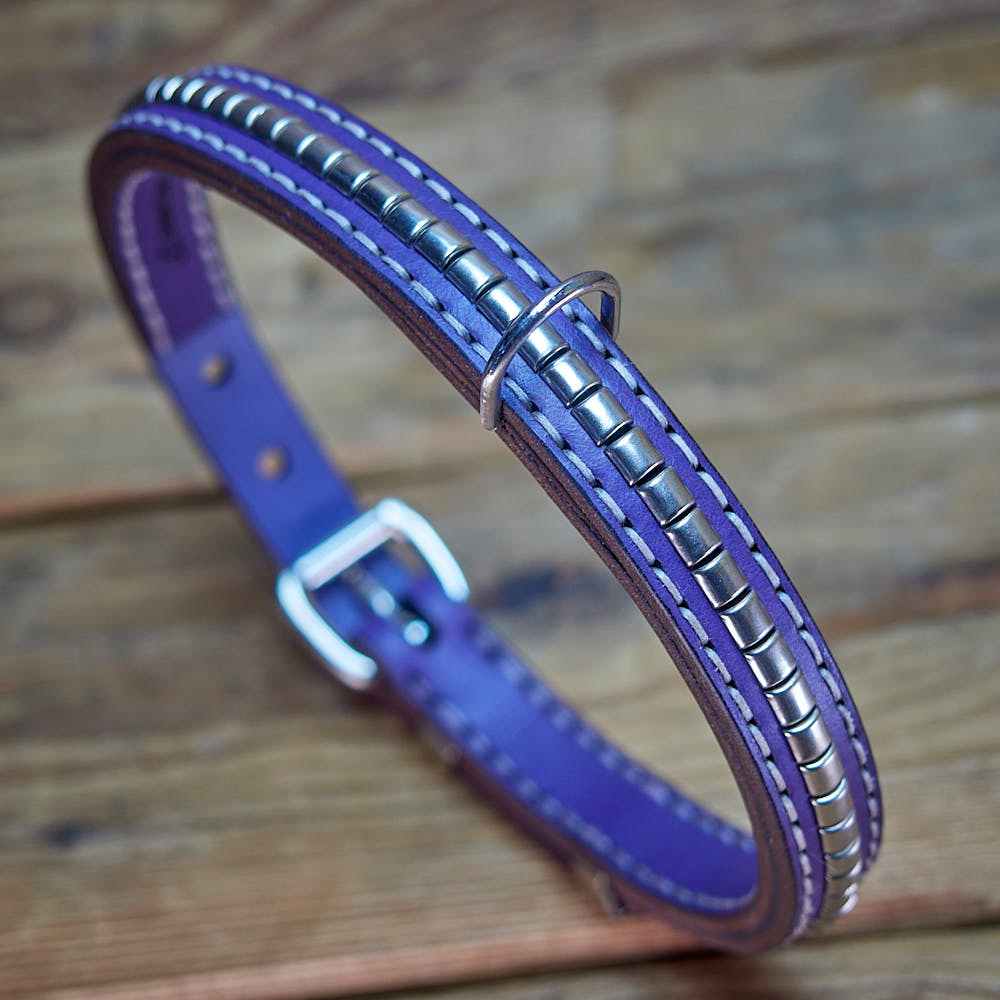
The Django Classic Collar offers chrome, brass, black and antique brass, moving the same substantial design from clean to rugged. Its thick leather and heavy hardware suit owners who want attitude. The finish does not teach loose-lead walking or make a wrong size fit.
Greyhoundsaurus: the shape comes before the shine
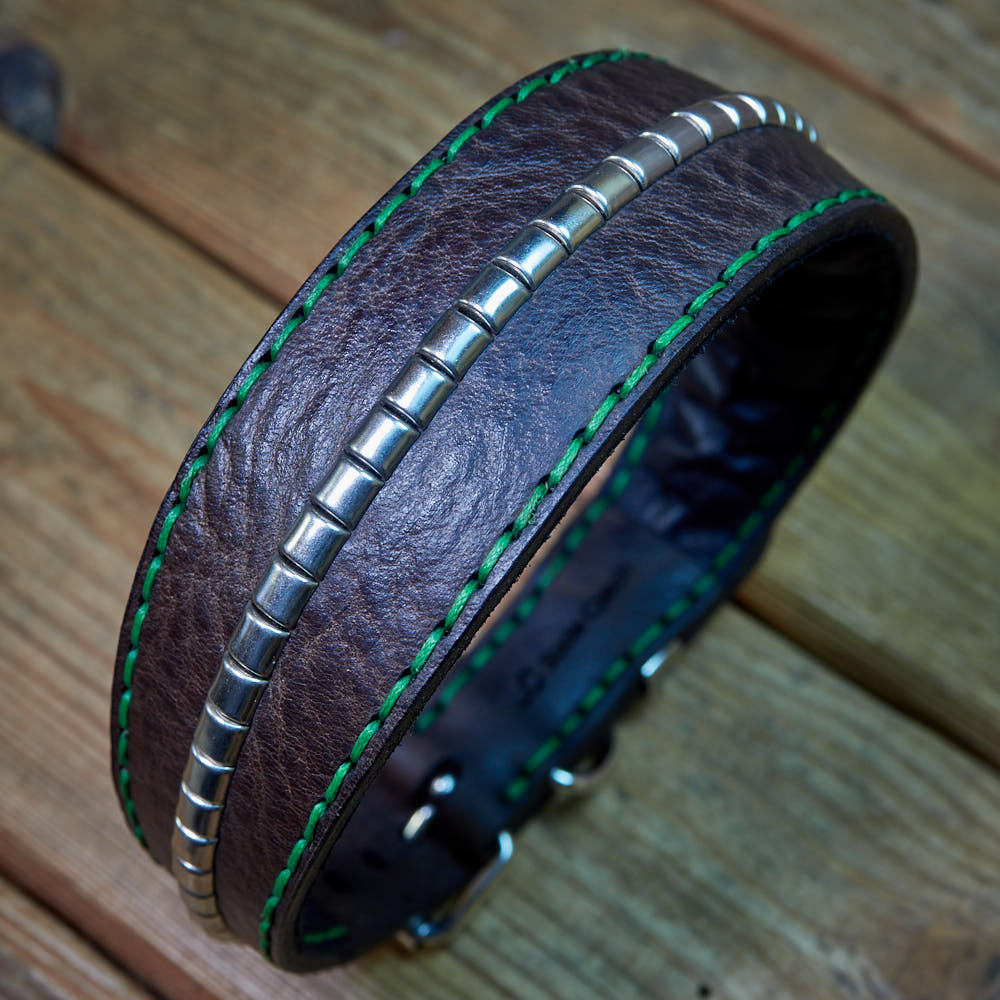
The Greyhoundsaurus greyhound collar uses a widened shape for a long, sensitive sighthound neck and offers all four finishes. Choose it for pressure distribution and breed-appropriate shape. Chrome cannot correct a wrong measurement, and brass cannot replace calm handling around prey triggers.
Smart Casual Lead: carry the same finish into your hand
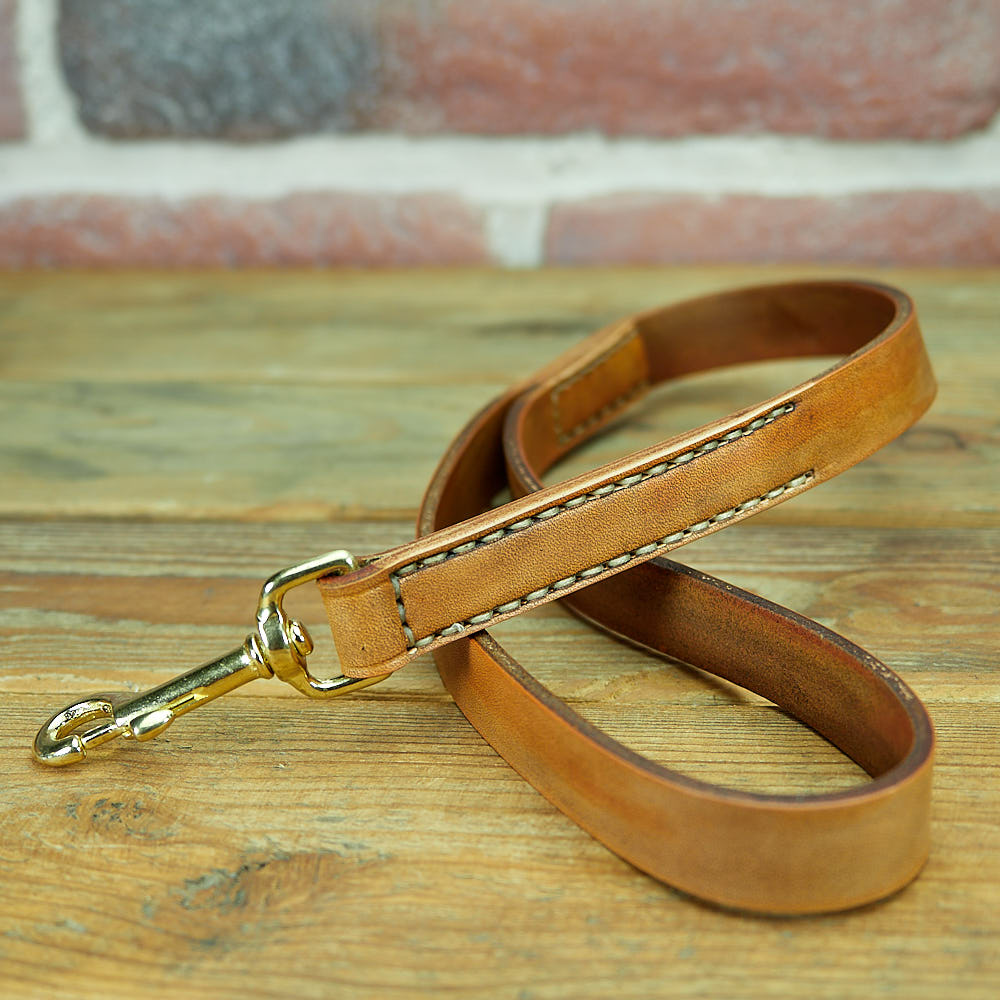
The Smart Casual leather lead carries the same finish into your hand. Its 4 mm cowhide has rounded edges and four finish choices. It gives a clean daily connection; pulling still belongs to training.
Common mistakes when choosing hardware
- Choosing shine before structure. A finish cannot rescue thin leather, a poorly proportioned ring or weak attachment.
- Expecting black to remain untouched. Friction at the buckle, ring and snap will eventually write its signature.
- Judging only from a studio photograph. Look at the finish in daylight beside the dog’s coat and remember that wet leather appears darker.
- Using aggressive cleaners. Abrasives can dull bright surfaces and chemicals can mark coatings or leather.
- Calling every colour change a failure. Patina and contact wear are visual; bending, cracking, sharp edges and looseness are functional warnings.
- Believing hardware changes behaviour. A strong collar improves security and handling, while pulling, lunging and reactivity require appropriate training and management.
When should appearance stop mattering?
Immediately, if safety changes. Stop using the collar or lead if a buckle tongue is distorted, a D-ring opens or twists, a snap fails to close fully, a fixing becomes loose, metal develops a sharp edge, or the leather around a load-bearing point tears or stretches abnormally. Do not wait for the next walk to confirm your suspicion under load.
When is professional help needed?
If you cannot confirm that a part is sound, ask the maker or a qualified leather-equipment repairer before reuse. Persistent pulling or lunging belongs with a qualified trainer; neck pain or skin injury belongs with a veterinarian.
If the equipment remains mechanically sound and the change is only a mellowed brass tone, fine marks on chrome, a softer antique surface or rubbed black at contact points, decide whether you enjoy that character. Working equipment is allowed to look as though it has met a dog.
Frequently asked questions
Which collar hardware finish is strongest?
No finish is automatically the strongest. Strength depends on the complete buckle, ring or snap, its base material, dimensions, construction and attachment to the collar.
Does black hardware wear off?
Black hardware can show rubbing at high-contact points over time. This is usually cosmetic, but bent, cracked, sharp or loose parts are safety problems and require action.
Will brass change colour?
Brass can mellow and develop patina with air, handling and moisture. Many owners value that warm, lived-in appearance.
Is chrome best for a black dog?
Chrome creates a clear cool contrast on a black coat, while black gives a stealth look and brass adds warmth. The best choice is the effect you prefer.
Can I mix different metal finishes on a collar and lead?
Yes. Matching looks more deliberate, but mixing finishes is not a functional problem when every component is suitable, sound and correctly fitted.
How should I clean collar hardware?
Remove grit with a soft damp cloth, dry the hardware and leather, and avoid abrasives or unverified chemicals. After salt water, wipe promptly with fresh water and dry naturally.
Choose the backbone first, then give it character
Brass, chrome, antique brass and black can all be the right answer. Start with collar type, size, leather and construction. Then choose the finish that looks at home on your dog and ages in a way you can enjoy. Browse our handmade classic leather dog collars, compare the four options and build a combination that works after the camera is back in your pocket.