When the Pull Hits Hard: What Actually Holds
Short answer:
When a dog hits hard on the leash, what matters most is construction, material, width, and how well everything holds together. Weak or poorly chosen gear fails exactly when you need it most. A solid, well-built collar spreads pressure better and keeps control where it belongs.
What kind of collar actually holds when a dog pulls?
A collar that truly holds under pressure must handle sudden force without twisting, digging in, or losing stability. Looking good at rest isn’t enough. It has to perform in that split second when your dog launches forward, the leash goes tight, and a normal walk turns into a real test of gear—and your grip.
What really happens when a dog pulls hard?
In that moment, intense pressure hits a very specific point on the collar.
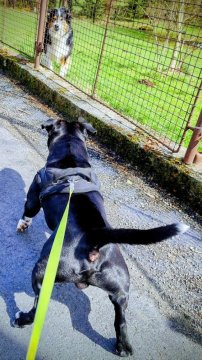
This isn’t everyday wear anymore. This is the moment that decides everything. Your dog spots another dog, a bird, or something worth chasing—and instantly sends full force through the neck, collar, and leash. That’s when you find out if the collar holds shape and distributes pressure… or starts twisting, cutting in, and working against you.
Why do some collars fail so quickly?
Because they’re built to look good, not to handle real stress.
On display, in photos, even in your hand—they can feel convincing. But outside is a different game. Weaker materials, soft construction, or thin builds give up fast under sudden force. And this is where many people get it wrong. They choose with their eyes, but live with it in their hands.
How important is the material?
It’s critical.
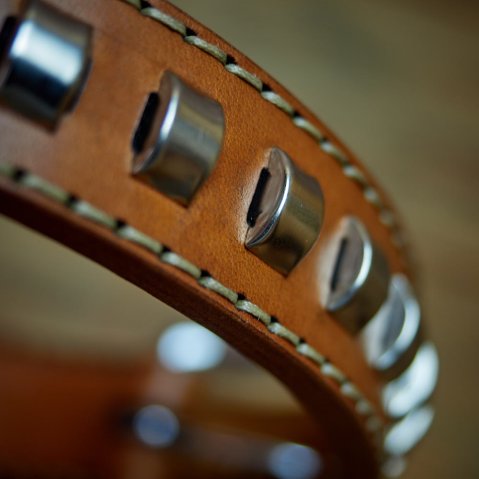
The material decides whether the collar handles pressure or starts breaking down. Good leather has one big advantage: when it’s done right, it doesn’t pretend strength for a week. It holds, ages well, and doesn’t behave like tired rubber under stress. It might feel like a detail—until the leash tightens.
Does collar width really matter?
Yes—and more than most people expect.
A narrow collar concentrates pressure into a smaller area. That means more strain on the dog and more stress on the collar itself. On a strong, muscular neck, a thin collar isn’t style—it’s trouble waiting to happen. A properly chosen width spreads the load better and stays more stable when things get real.
How do you know a collar doesn’t suit your dog?
Your dog usually tells you—fast.
More scratching, head shaking, tension when the leash tightens, or simply refusing to move forward. Sometimes you notice it only after taking the collar off—suddenly the dog relaxes. A well-fitted collar becomes something the dog barely notices. A bad one reminds you every few steps.
Soft or firm collar—what’s better?
For strong pulling, a firm, well-built collar is usually the safer choice.
Soft might feel nice to the touch, but that alone doesn’t mean much. If it twists, collapses, or loses structure under tension, it won’t help you. A properly made firm collar doesn’t mean uncomfortable—it means stable, balanced, and working with the dog’s movement instead of against it.
Why isn’t looks enough?
Because the real test never happens at home.
It happens outside. In motion. When your dog pulls and you need control—not a nice memory of buying something good-looking. On paper, it looks great. On a real dog, under tension, it’s a different story. Style is fine—but without structure, it’s just polished weakness.
What actually holds under pressure?
A collar made from solid material, with proper construction, the right width, and reliable hardware.
There’s no single magic feature. It’s the combination. Strong leather, stable fastening, smart construction, and a width that fits the dog. When it all works together, the collar doesn’t feel like a compromise—it feels like real gear. And that’s something you notice immediately in your hand.
Which collars make sense for strong dogs?
For powerful dogs, solid leather collars built for real use—not just appearance—are the way to go.
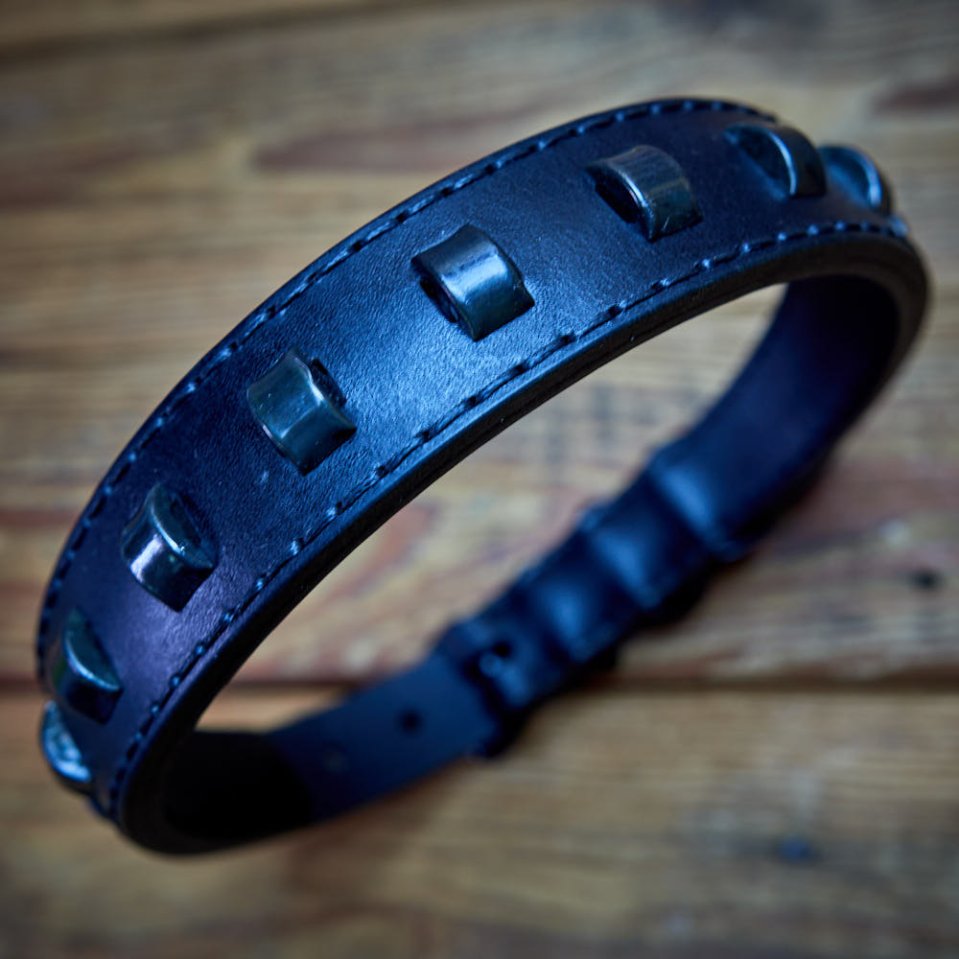
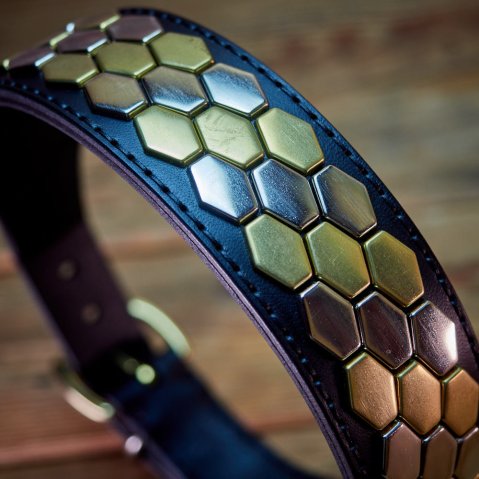
A great example is the Classic Viking Collar, which doesn’t pretend to be delicate. The Classic Goliash Collar is another strong option for dogs where strength isn’t theoretical—it’s daily reality. And if you want something bold in look but still built for actual use, the Hexagon Classic Collar makes sense. These are the kinds of collars that prove themselves outside—not just on a screen.
What a collar for a pulling dog should have
- Solid material – the collar must not twist or collapse under sudden force, or it loses both stability and function.
- Proper width – spreads pressure across a larger area and reduces strain on both dog and collar.
- Quality hardware – weak buckles or cheap connectors are usually the first point of failure.
- Reliable fastening – it should hold securely, not feel like everything depends on one optimistic click.
- Correct fit – too loose and it shifts around, too tight and it creates unnecessary pressure.
- Real-use construction – everyday walking is one thing, a full-force lunge is something else entirely.
- Right model for the dog – for stronger dogs, solid classics like Viking, Hexagon, or Goliash make far more sense than decorative options.
Common mistakes
The first mistake is choosing based on looks instead of reality. Something catches your eye, feels decent in hand, and you go with it. Then outside, under pressure, it tells a different story.
Another one is using a narrow collar on a strong dog. It might look sharp, but concentrates pressure where you don’t want it. That’s unnecessary stress for both the dog and the collar.
Soft collars without structure are another issue. They feel good at first, but once tension hits, they twist and lose stability. Suddenly, you’re not controlling the dog—you’re negotiating with your gear.
Poor sizing is also common. Too loose and the collar shifts constantly. Too tight and it becomes uncomfortable fast. Dogs don’t write reviews—but they make their opinion clear.
And then there’s the classic real-life moment: coffee in one hand, leash in the other, your dog reacts instantly—and in that split second, you know whether you bought gear… or decoration.
Expert perspective
In practice, most people evaluate collars in calm situations. Measuring, adjusting, checking the look. But the real test happens outside, in motion, without warning.
A common issue is that a collar seems strong enough—but behaves differently under real stress. Twisting, uneven pressure, unstable handling. It may look like a small detail, but over time, it makes a big difference in how controlled and balanced the walk feels.
With stronger dogs, the pattern is clear: correct width and solid construction outperform lighter or narrower options every time. A weaker setup might work temporarily, but long-term, it’s usually a compromise.
Real-world use is unforgiving. Your dog tests the gear instantly. When the collar is right, the dog barely notices it and the handling feels calm. When it’s not, you’ll know before you reach the end of the street.
That’s why proven models like the Classic Viking Collar, Hexagon Classic Collar, and Classic Goliash Collar make sense—they’re built with real use in mind, not just presentation.
Who this is for
- Dogs that pull hard and need a collar that doesn’t become the weak link.
- Owners who want function, not just appearance.
- Strong, muscular dogs that don’t suit narrow or soft collars.
- Anyone looking for more stable, controlled handling on walks.
- People who’ve already experienced gear failing at the worst moment.
- Those who want real-world reliability—not just first impressions.
- Owners considering solid options like Classic Viking Collar, Hexagon Classic Collar, and Classic Goliash Collar.
Final summary
When a dog pulls, looks don’t decide—performance under pressure does. Material, construction, width, and fit are what really matter.
A weak or poorly chosen collar might seem fine at first, but the real test comes when the leash tightens and everything is on the line.
That’s why solid, proven models like the Classic Viking Collar, Hexagon Classic Collar, and Classic Goliash Collar make sense for everyday reality.
A well-chosen collar doesn’t demand attention by failing. It simply holds. And that’s exactly what you need when it matters.
The pull hits. The only question is—what stays in control.
Frequently asked questions
What collar is best for a dog that pulls?
A solid, well-built collar with proper width, quality hardware, and stable construction is the best choice.
Is a wider collar better for strong dogs?
In most cases, yes. It distributes pressure more evenly and feels more stable during sudden pulls.
How can I tell a collar doesn’t fit my dog well?
Watch for scratching, head shaking, or discomfort when the leash tightens. Those are clear signs.
Can a soft collar be a problem?
It can. If it twists or loses shape under pressure, it reduces control and stability.
Is choosing by looks enough?
No. What looks good doesn’t always perform well when the dog actually pulls.
Does material matter more than appearance?
Absolutely. Material and construction determine how the collar behaves under real pressure.
Featured Dogs