Best Leather Lead for a Dog That Pulls: Which One Can Handle a Strong Dog?
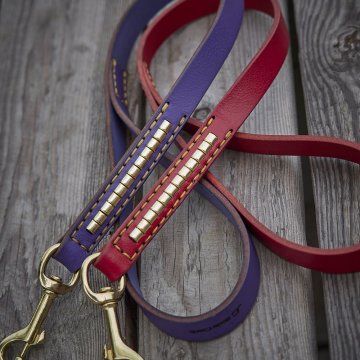
The best leather lead for a dog that pulls must match the dog’s strength, handling needs and the force of its sudden lunges. For a dog that leans into the lead with its full body weight, a solid 19 mm construction and a shorter length usually make the most sense. A narrow decorated lead may look wonderful, but it will not turn a fully charged Staffy into a polite pedestrian.
If you are dealing with the pulling itself as well as choosing the right equipment, read our guide on how to teach a strong dog to walk without pulling. A good lead improves control. Training must provide the rest.
What is the best leather lead for a dog that pulls?
The best leather lead for a strong pulling dog is approximately 19 mm wide, made from firm leather and fitted with hardware that matches the strength of the whole construction. A shorter lead limits the dog’s run-up and provides more direct handling. A padded handle helps when the dog does not pull once, but tests your hand throughout the entire walk.
You can see the difference within five seconds. The dog spots another dog, launches forward and pulls the lead into a straight line. At that moment, the photograph and the number of decorations no longer matter. What matters is the leather, the width, the connection to the snap hook and whether the handle remains securely in your hand.
Is the width or length of a lead more important for a strong dog?
Width affects the strength of the construction and how securely the lead sits in your hand. Length determines how much room the dog has to accelerate. For a genuinely powerful dog, a 19 mm lead in a length of 61 or 92 cm is usually the safer choice. A 122 cm lead is better suited to a dog that already walks without regular lunges.
- 61 cm: direct control in town, around people or whenever you need to keep the dog close.
- 92 cm: a versatile length for everyday walking and a sensible balance between freedom and control.
- 122 cm: more room for a calm dog, but also a longer run-up before a sudden hit at the end of the lead.
- 19 mm: a suitable width for a powerful dog that regularly puts the lead under tension.
- 13 or 16 mm: lighter handling for a calmer dog where raw pulling strength is not the main concern.
Goliash: for a dog that launches with its whole body
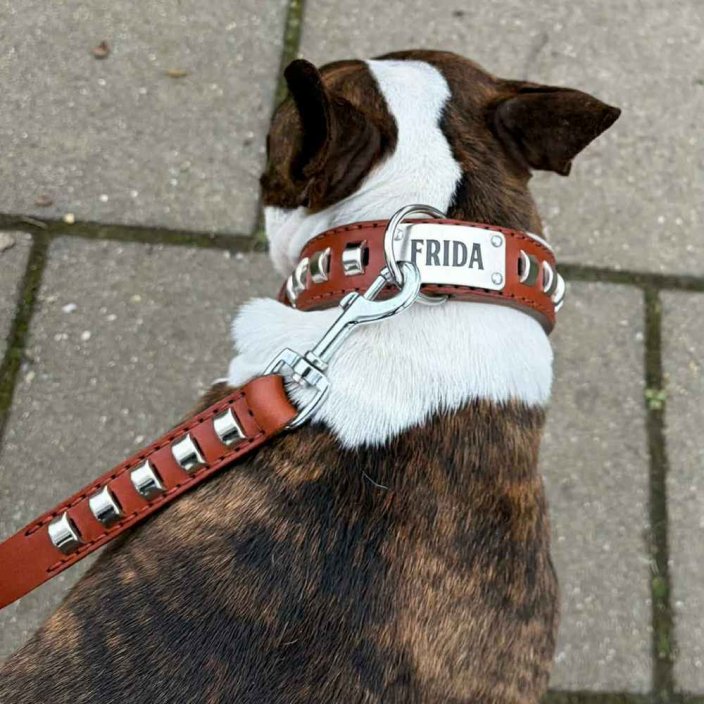
The Goliash leather lead for powerful dogs is the most robust option in this comparison. It is made from 4 mm cowhide, has a fixed width of 19 mm and uses a substantial snap hook. It is intended for large, strong dogs that do not engage only their neck when they lunge, but their chest, back and half the surrounding street.
Goliash makes sense for Staffordshire Bull Terriers, Bull Terriers, Amstaffs and other powerful breeds. It is particularly useful when the dog does not create only a steady pull, but can launch from a standstill without warning. The 61 cm version provides the most direct control, while 92 cm is more practical for an ordinary walk.
Choose Goliash if your dog hits the end of the lead with its full weight and a 19 mm construction is not an unnecessary reserve, but a practical requirement.
Skunk’s Fail: for a dog that also tests your hand
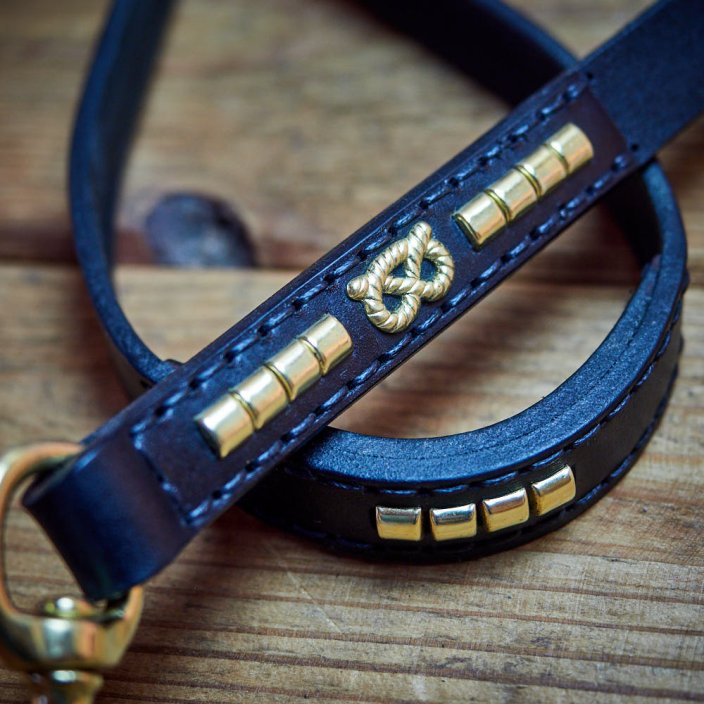
The Skunk’s Fail leather lead with a padded handle is designed for a dog that does not pull only during one sudden lunge. It pulls repeatedly and with the determination of somebody who has mistaken a walk for a tug-of-war competition.
The padded handle distributes pressure more comfortably across the hand and helps you maintain a more secure grip. The lead can be made in widths of 13, 16 or 19 mm. For a strong dog, the 19 mm version makes the most sense. The narrower options are lighter, but do not provide the same feeling of security in the hand.
Skunk’s Fail demonstrates the difference between a detail that merely decorates and one that actually works. Padding may not shout the loudest in a product photograph. After half an hour with a pulling dog, however, your hand may wish to send it a thank-you letter.
Stalker: straightforward construction for firm everyday handling
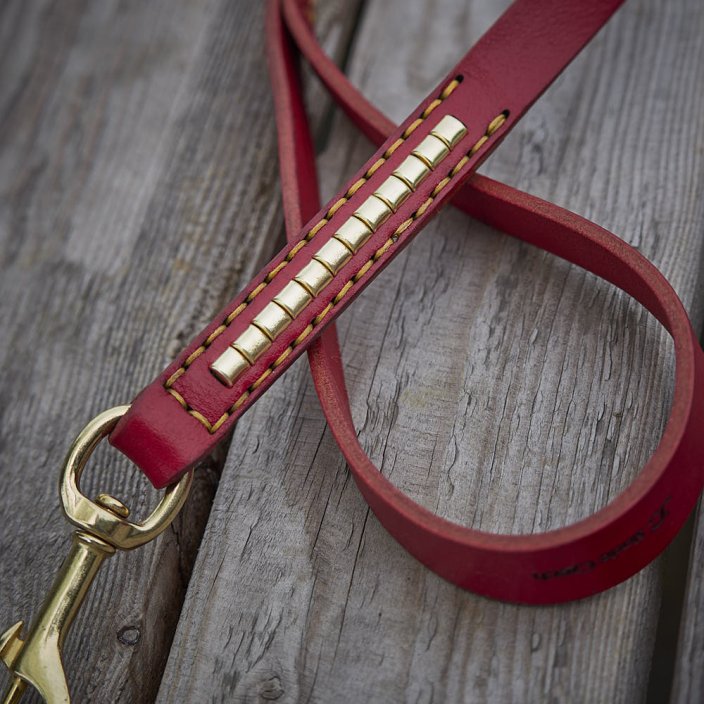
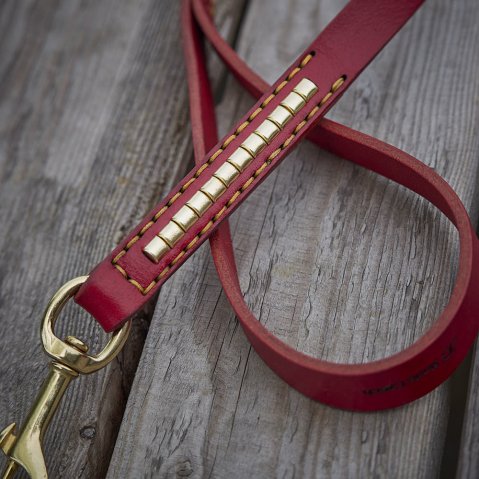
The Stalker leather lead relies on a clean construction, a stable grip and substantial hardware. It does not pretend that every functional product needs to carry a small metal carnival.
Stalker can be made in widths of 13, 16 or 19 mm. We recommend 19 mm for a powerful dog, while 16 mm may be sufficient for a calmer one. Length also matters: 61 cm keeps the dog closer, whereas 92 cm works better for ordinary everyday walking.
Stalker is the right choice if you want a clean, strong lead for everyday use and do not need a padded handle or a bold two-colour design.
Manyway: when a strong lead should also match
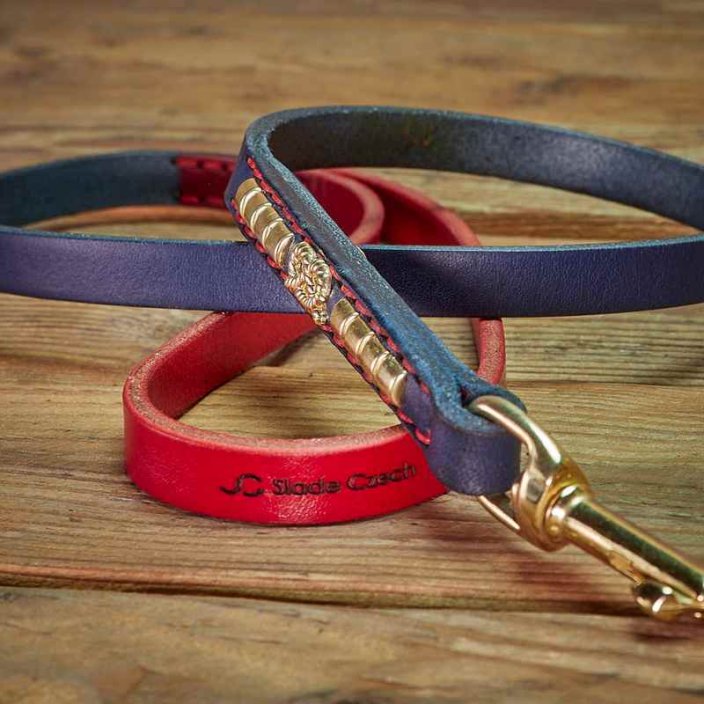
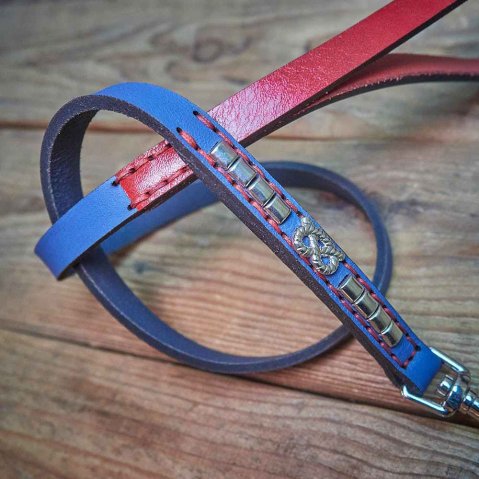
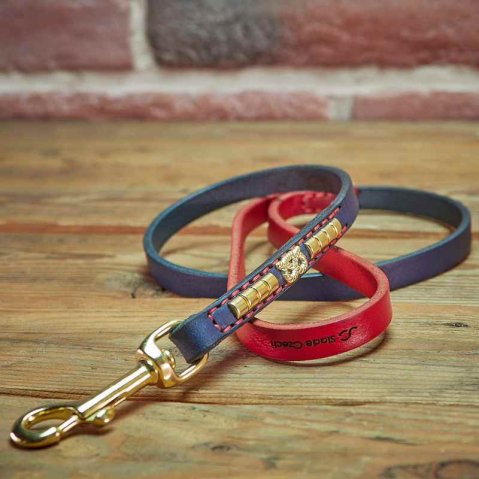
The Manyway two-colour leather lead combines a functional construction with the option to coordinate two leather colours, the stitching and the hardware. In the 19 mm version, it is also suitable for a stronger dog when you want a firm lead that matches its collar.
Manyway is not made only for appearance. The difference is that its design does not come at the expense of function. You can select the width according to the dog’s strength, the length according to the way you handle it and only then choose the colour combination. In precisely that order. Dog first, fashion police second.
If you are unsure whether your dog should be walked on a collar or whether another form of handling would work better, continue with our comparison of a dog harness versus a collar.
Prestige: a beautiful lead, but not a brake for a runaway tank
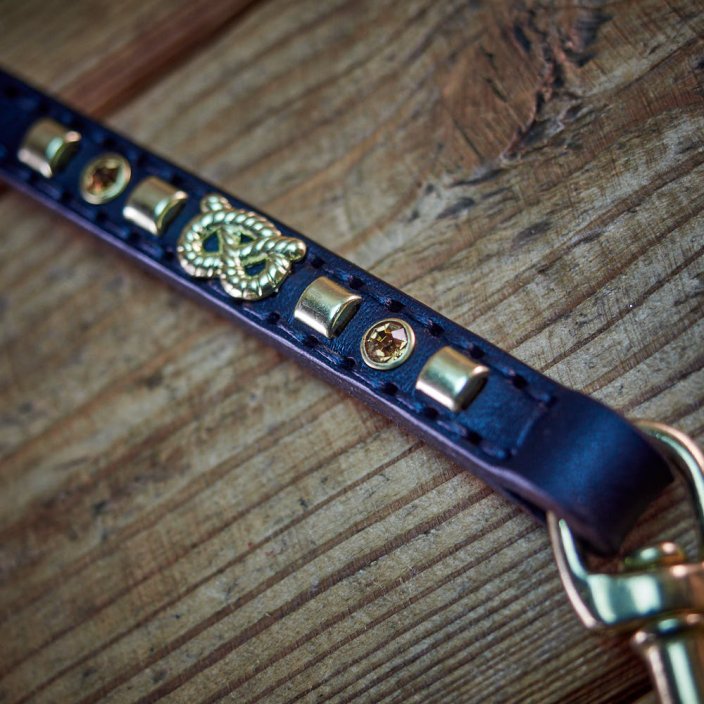
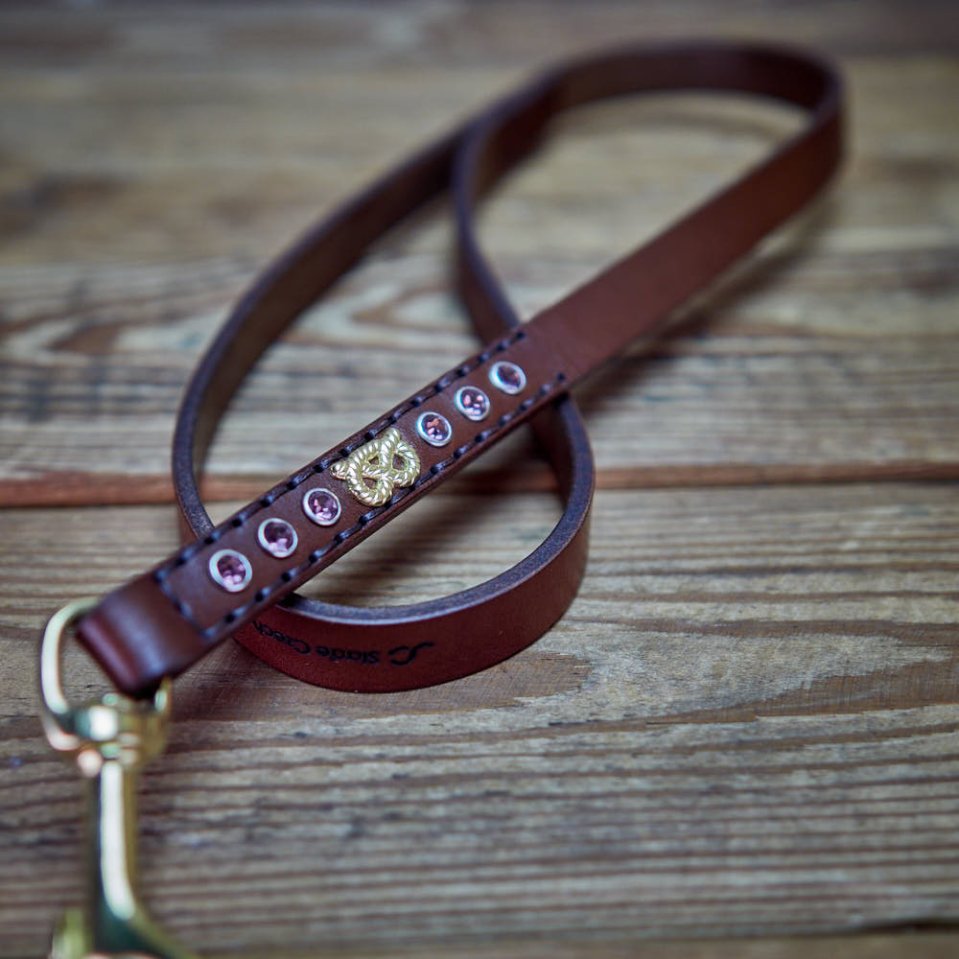
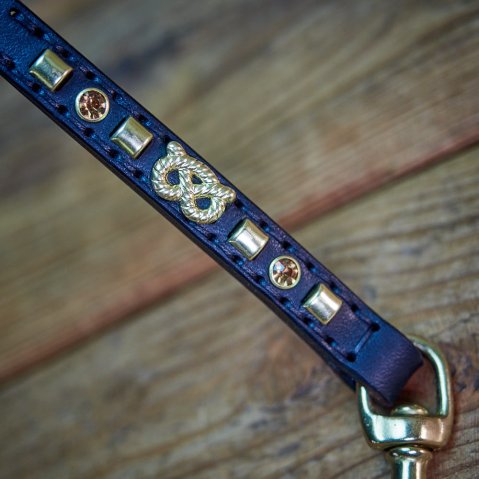
The Prestige leather lead with crystals belongs with a calmer dog, the show ring and situations where matching the collar also matters. It is available in widths of 13 or 16 mm and is decorated with crystals and Staffordshire details.
Prestige may be the most visually striking option, but we do not recommend it as the first choice for a dog that regularly launches with its full strength. That is not criticism of the product. It is respect for its actual purpose.
What looks best in a photograph may not be the best choice when the dog suddenly hits the lead. Prestige is an elegant partner for a dog that already knows how to walk. Goliash, Stalker or a 19 mm Skunk’s Fail belong where calm behaviour cannot yet be taken for granted.
How can you choose the right lead in five seconds?
- The dog launches suddenly and puts its full weight into the lead: choose the 19 mm Goliash lead.
- The dog pulls continuously and the handle cuts into your hand: choose the Skunk’s Fail lead with a padded handle.
- You want a clean and robust construction: choose the 19 mm Stalker lead.
- You want strength combined with your own colour scheme: choose the Manyway two-colour lead.
- The dog walks calmly and appearance also matters: choose the Prestige decorated lead.
- You are unsure about the construction: consider the dog’s strength, the width and the length first. Colour can wait. The dog usually will not.
Common mistakes when choosing a lead for a pulling dog
Choosing a lead that is too narrow
A narrow lead is light and elegant, but under strong pulling it concentrates pressure into a smaller area of the hand. The handler starts changing grip, loosens the hold or instinctively wraps the lead around the hand. That is no longer a question of appearance. It is a practical handling problem.
Using a lead that is too long in town
A longer lead provides freedom, but it also gives the dog room to accelerate. The difference between smooth tension and a violent hit at the end of the lead can be one additional step. For a powerful dog in town, a length of 61 or 92 cm is usually more practical.
Choosing by photograph instead of purpose
Crystals, contrasting leather and decorative hardware can be the right choice for a calm dog. If the dog regularly launches, however, construction must come first. A lead is not a decoration connecting the collar to the handler. It is the only thing between the dog’s decision to go and your attempt to remain standing.
Trying to solve pulling only with stronger equipment
A stronger lead improves control, but it does not remove the cause of pulling. If your dog spends every walk hanging on the lead, follow our practical guide on working with a strong dog that pulls.
Our practical view
We do not judge a lead for a strong dog by the way it looks lying on a table. What matters is how it behaves in motion: whether it twists in the hand, how it distributes pressure, whether its length allows the dog to build speed and whether the hardware matches the rest of the construction.
Experience also shows that the most robust lead is not automatically the best for every dog. A calm smaller dog does not need an unnecessarily heavy 19 mm construction. Equally, a thin show lead does not belong in a daily tug-of-war with a powerful dog. The right product is not always the biggest or the most decorated. It is the one whose construction matches real use.
Who should use a strong leather dog lead?
- A dog that launches suddenly when it sees another dog.
- A bull-type breed that leans into the lead with its chest and full body weight.
- A handler whose narrow lead cuts into the hand under tension.
- A dog walked in town where it may need to be brought closer quickly.
- An owner who wants the length, width, hardware and leather colour selected for a real dog rather than a standard warehouse size.
Final summary
For a genuinely strong pulling dog, choose a 19 mm lead in a length of 61 or 92 cm. Goliash offers the most robust construction, Skunk’s Fail adds a padded handle, Stalker focuses on clean and firm handling, and Manyway combines practical strength with a custom colour scheme. Prestige belongs with a calmer dog and more elegant use.
If you are still unsure, start with one simple question: does the dog pull continuously, or does it launch suddenly? The answer will tell you more about the right lead than ten polished photographs.
When the dog puts its weight into the lead, the equipment has no room left for showing off. It must hold.
Frequently asked questions
How wide should a lead be for a dog that pulls?
A width of 19 mm is suitable for a large and powerful dog. It provides a more secure grip and a more robust construction than lighter leads measuring 13 or 16 mm.
What lead length is best for a pulling dog?
A length of 61 cm provides direct control, while approximately 92 cm works well for everyday walking. A 122 cm lead offers more freedom but also gives the dog more room to accelerate before a sudden hit.
Will a leather lead stop a dog from pulling?
No. A strong leather lead improves grip and control, but pulling must also be addressed through training, changes of direction and rewarding the dog for walking on a loose lead.
Is a padded handle suitable for a strong dog?
Yes, particularly when the dog pulls repeatedly throughout the walk. A padded handle distributes pressure more comfortably across the hand and helps the handler maintain a more secure grip.
Is a long lead suitable for a dog that lunges?
Usually not. A longer lead allows the dog to build more speed, making the eventual hit at the end of the lead more severe. A length of 61 or 92 cm is generally more practical in town.
Which lead should I choose for a Staffordshire Bull Terrier?
For a strong Staffy that launches suddenly, choose the 19 mm Goliash. For repeated pulling and a more comfortable grip, consider the 19 mm Skunk’s Fail. For straightforward everyday handling, the 19 mm Stalker is a practical choice.
Featured Dogs