Brass, chrome, antique, or black? Collar hardware guide
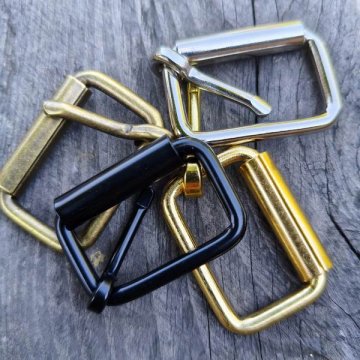
Quick answer: Go with brass for warm heritage style, chrome for a bright cool edge, antique brass for low-key vintage character, or black for a bold modern setup. Match the finish to the leather, your dog’s coat, and the amount of visible wear you are comfortable with. Finish affects looks and upkeep; actual strength comes from the full component, its build, and its attachment.
Your dog stands beside the truck like a catalog model. Then a squirrel crosses the parking lot. One launch later, the leash is tight, the D-ring is loaded, and nobody is discussing color temperature. The rule is simple: pick real construction first, then the finish that makes it yours.
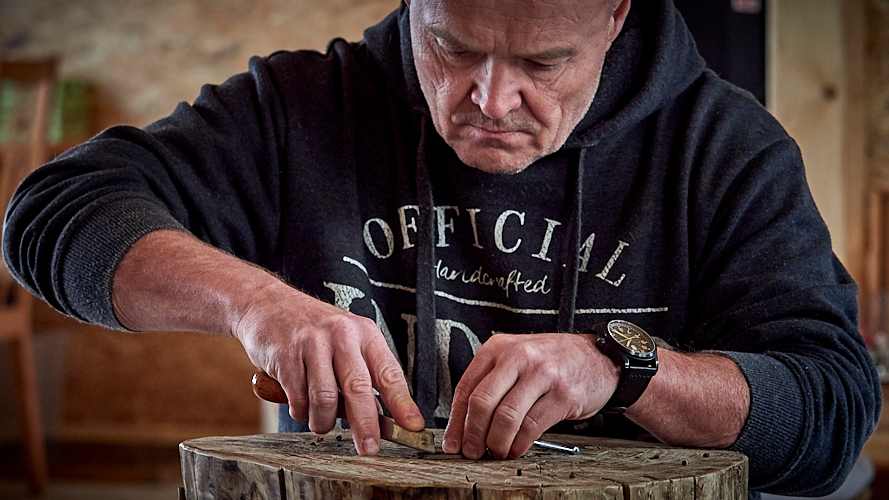
We have handcrafted leather dog gear since 2004, so we know life after unboxing. Buckle tongues scrape, snaps swivel, tags drum, and wet collars hit the mudroom floor. Color gets the first look. Construction gets the hard shift.
Start with the ten-second rule
Ask two separate questions. First: is this buckle, ring, snap, and attachment built for the dog and the job? Second: which finish looks right and will age in a way I like? Reversing those questions is how people end up buying a shiny weak point.
A hardware finish controls visual tone, contrast, and the visibility of everyday wear. It does not automatically make one ring stronger than another. Base material, thickness, shape, joint design, attachment, and the leather around it all matter. Our guide to telling whether a leather dog collar is built to last in 30 seconds covers that first inspection.
Check moving contact points, not just broad pretty surfaces. The buckle tongue rubs the frame every time you fasten it. The snap rotates on the D-ring when your dog circles a fire hydrant. A hanging ID tag taps one small area through thousands of steps. Cosmetic change begins there. A bent part, spreading gap, crack, sharp edge, loose fastener, or snap that no longer closes is different: that is a stop-and-fix problem.
Black hardware: maximum attitude, honest wear
Is black right for your collar?
Choose black when you want the hardware to draw a clean, dark outline. Black leather with black metal looks stealthy and muscular. Honey, natural, yellow, or red leather with black hardware creates hard contrast that reads from across the dog park. It is especially effective on simple collars where every line is visible and there is no decorative noise to hide behind.
Black contact points can show rubbing as the collar works. We say this plainly on the Django product page: its black hardware naturally takes on a slightly distressed look over time. A high-energy dog who hits the end of the leash, shakes tags, and spins the snap will write that story faster than a dog whose main athletic event is choosing a sunny couch cushion.
Visible wear is not automatically structural failure. If the finish is rubbed but the part is straight, smooth, tight, and operating correctly, you are looking at appearance. If metal is bent, cracked, sharp, loose, or failing to close, retire the gear until it is repaired or replaced. Black hardware can lose a little ink. It must never lose its job.
Brass hardware: warm, classic, and built for character
What colors look best with brass?
Brass is a natural fit for honey, brown, natural, forest green, and deep red leather. It complements fawn, red, brindle, and other warm coats, while brass on black leather gives a strong old-school contrast. Think well-kept saddle room, not glitter cannon.
Brass can mellow with air, moisture, and handling. Many owners value that gradual patina. If you prefer it brighter, wipe away grime with a soft dry cloth. A color shift is not automatically failure; inspect shape and function separately.
On a damp morning trail, a brindle Staffy plants all four feet because a rabbit moved in the weeds. The warm metal still stands out against dark leather, and the little marks around the moving parts fit the overall character. Real gear should age like leather, not expire like fashion.
Chrome hardware: clean light and cool contrast
When does chrome win?
Chrome delivers the brightest, coolest effect of the four. Pair it with black, gray, night blue, white, or clear red leather for a crisp setup. On a black or blue-gray dog, it catches daylight and separates the collar from the coat. It also works when you want a cleaner show-ring or city look without piling on extra ornament.
That sharp reflection can advertise dried raindrops, fingerprints, and fine marks. After a wet sidewalk walk, use a soft cloth. Skip abrasive pads and random shop chemicals. Sanding off the shine because of one spot is a plot twist, not a cleaning plan.
Chrome describes the visual finish, not a universal strength grade. When your dog darts sideways toward a skateboard, watch what actually carries load: ring alignment, buckle engagement, snap closure, fasteners, stitching, and leather around the connection points.
Antique brass: vintage from day one
Who gets the most from antique brass?
Antique brass is warm without being loud. Brown, honey, natural, olive, gray, and black leather all work well with its muted variation. It belongs naturally on western shapes, embossed leather, and collars with heavier decorative elements because it does not fight them for attention.
Its deliberately aged look also makes small daily marks feel less isolated than they can on a mirror surface. That is a visual advantage, not an invisibility cloak for damage. Keep inspecting the buckle tongue, ring, snap, and attachments. A dusty farm road and a dog who treats every ditch like breaking news may improve the mood of antique brass, but they do not cancel maintenance.
Want to see what comes before the final surface? Read how Slade Czech hardware moves from an idea and 3D model to a finished part. The finish is the last visible decision, not the whole engineering story.
Use the dog, leather, and routine as your color chart
Stand the leather beside your dog in daylight. A finish can look very different against a blue coat, red coat, white chest, or heavy brindle pattern. If both leather and coat are dark, chrome creates the clearest separation, brass adds warmth, and black stays understated. On light leather, antique brass feels soft, brass feels rich, chrome feels clean, and black hits hardest.
Then think about the rest of the setup. Matching collar hardware and leash snap makes the combination look intentional, but mixed finishes are not a safety problem by themselves. Your dog is not being inspected by a ceremonial guard. The parts need to be suitable and sound; the style rule is yours.
If you have not picked the leather yet, our article on choosing collar colors for a dog with personality helps settle the main palette first. Hardware works best as the final punctuation.
Fast decision guide
- Warm and traditional: brass.
- Bright and cool: chrome.
- Muted, western, or vintage: antique brass.
- Bold, modern, or low-profile: black, with visible contact wear expected over time.
- Beach, rain, or swimming routine: choose the look you want, then rinse away salt or grit, dry the gear, and inspect moving parts.
- Escape risk or hard pulling: solve collar type, fit, construction, and training first. Finish comes last.
What real life does to hardware
A café dog and a trail dog age equipment differently. So do a leash-chewing puppy, an explosive sighthound, and a Staffy under steady pressure. Add rain, beach sand, road salt, mud, and tags, and surface change becomes normal.
Watch for three patterns. Fine rubbing on a contact edge is usually visual. Dried spots after rain call for cleaning. A new rattle, widening gap, stiff snap, rotating fastener, sharp edge, or distorted ring calls for immediate inspection. Good hardware does not audition on a shelf. It works when the leash turns into a tow line.
Clean it before grit gets comfortable
After rain or mud, unclip the leash and wipe grit from buckle, D-ring, and snap with a soft damp cloth. Dry the gear, then air-dry it away from a heater, fireplace, or intense sun. After salt water, use fresh water promptly; salt crystals are abrasive and hold moisture.
Do not soak the collar in metal polish, household cleaner, or whatever spray happens to be closest in the garage. Products made for one surface may stain another finish and can reach the leather. Follow the cleaner manufacturer’s instructions and test specialist products in an inconspicuous area. Apply leather care only to clean, dry leather—not across the hardware like barbecue sauce.
Use cleanup as a safety check. Work the buckle tongue, close the snap, feel around rivets and stitched load points, and listen for a new sound. A small issue found at home is far less exciting than finding it when your dog spots a deer.
Three practical ways to use the four finishes
Django: one rugged collar, four different moods
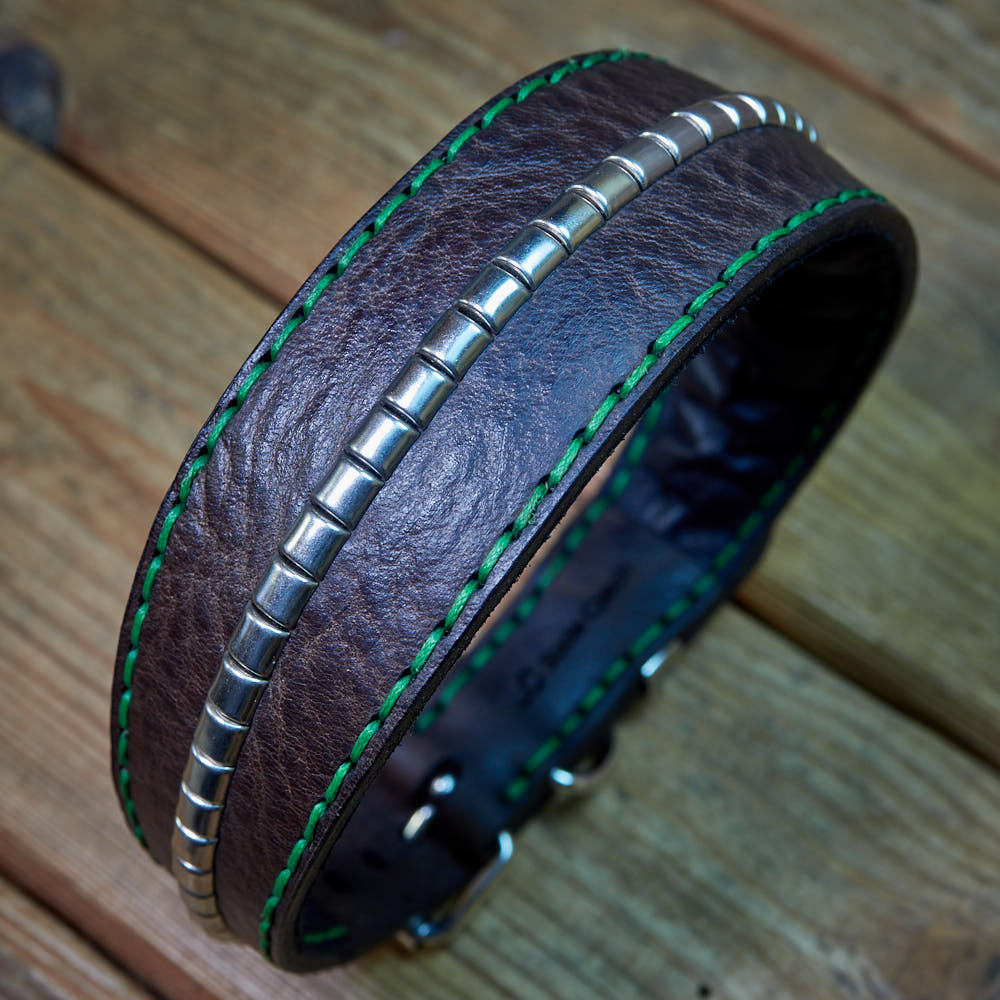
The Django Classic Collar comes in chrome, brass, black, or antique brass. Chrome cleans up the western shape, brass warms it, antique brass goes rugged, and black turns up the attitude. Thick leather and heavy hardware serve real use; color cannot teach leash manners or fix a bad measurement.
Greyhoundsaurus: anatomy first, finish second
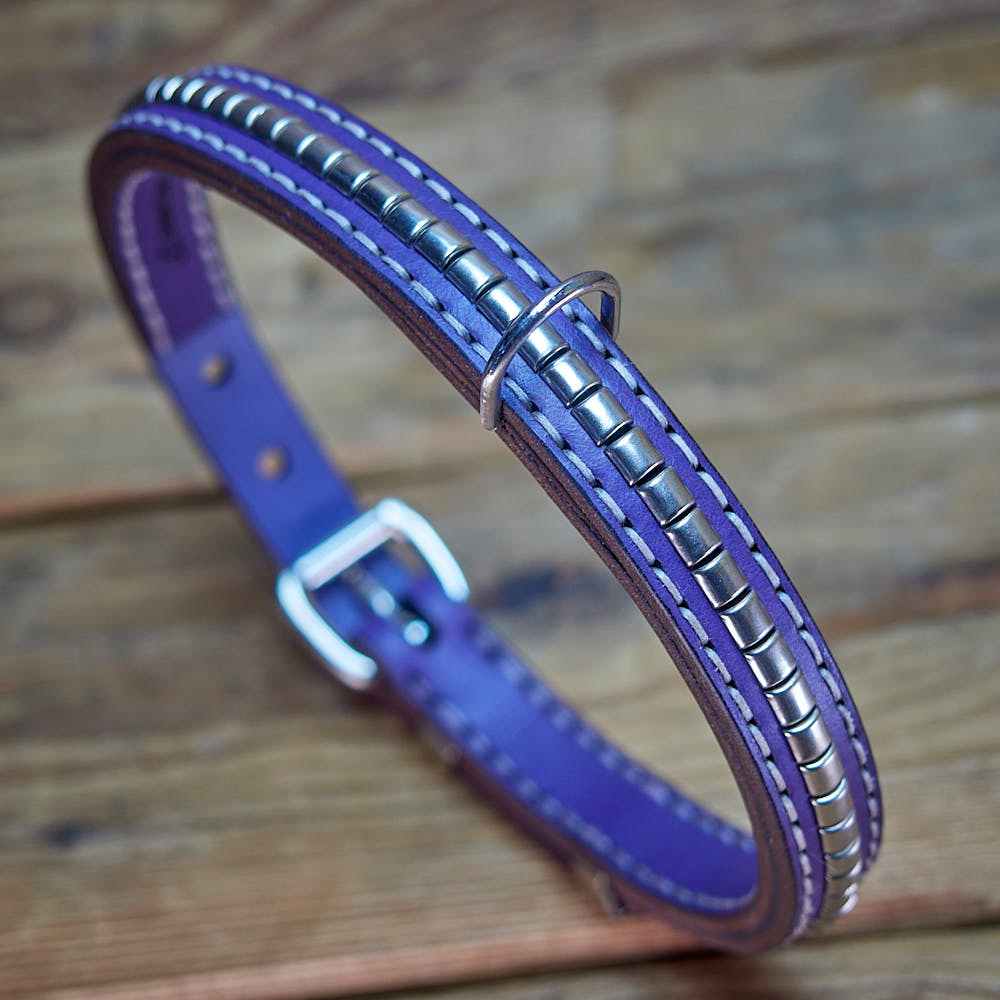
The Greyhoundsaurus wide greyhound collar uses an extended shape for a long, sensitive sighthound neck and offers all four finishes. Choose it because you need the breed-appropriate shape and pressure distribution. The finish should complete that solution, never distract from correct measurement, secure fit, and calm handling around prey drive.
Smart Casual Lead: make the whole setup agree
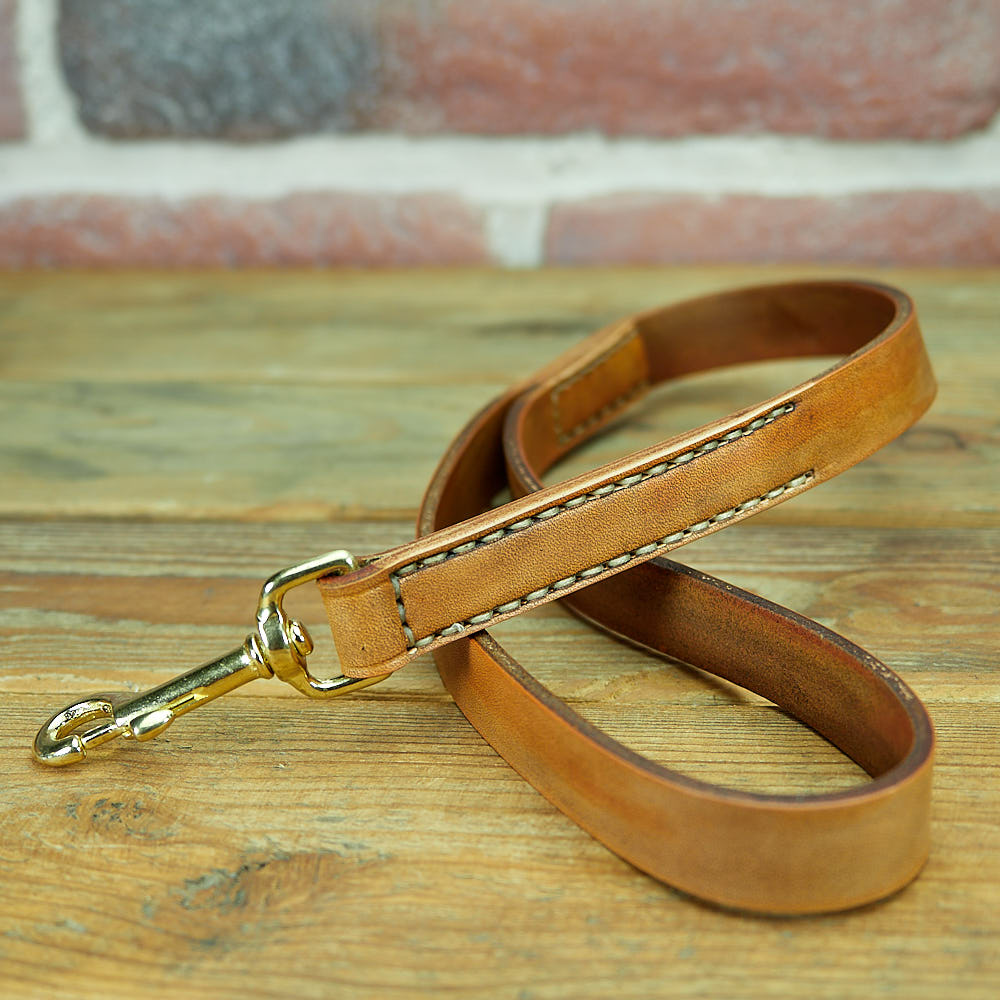
The Smart Casual leather leash lets you carry the same hardware finish from the collar into your hand. Its clean 4 mm cowhide construction and rounded edges suit everyday handling without extra metal clutter. Matching creates a finished look; the leash itself does not stop pulling, so training and sensible management stay on the clock.
Mistakes that turn style into a weak decision
- Shopping for color before construction. A finish cannot reinforce a thin ring, weak attachment, or poor leather.
- Expecting black to stay untouched forever. Buckles, rings, snaps, and tags create friction by doing their jobs.
- Trusting one studio photo. Check daylight, the dog’s coat, and the fact that wet leather looks darker.
- Scrubbing with abrasives. A rough pad can turn an easy wipe-down into permanent haze.
- Calling every patina a defect. Color change is visual; bending, cracks, sharp edges, loose parts, and failed closure are functional.
- Expecting hardware to train the dog. Strong gear can improve security and handling, but pulling and lunging change through training and management.
When should you stop using the collar or leash?
Stop immediately if the buckle tongue is distorted, the D-ring spreads or twists, the snap does not close fully, a fastener loosens, metal develops a sharp edge, or leather tears or stretches abnormally around a load point. Do not run one more field test under full dog power. Repair or replace the equipment first.
When should you call a professional?
If you cannot verify that a part is sound, ask the maker or a qualified leather-gear repairer before reuse. Ongoing pulling or lunging needs a qualified trainer; neck pain or skin injury needs a veterinarian.
If the part remains straight, smooth, secure, and fully functional while brass has mellowed, chrome shows fine marks, antique brass looks more lived-in, or black has rubbed at contact points, the decision is aesthetic. Working dog gear is allowed to look employed.
Frequently asked questions
Which dog collar hardware finish is the strongest?
No finish is automatically strongest. Strength comes from the complete buckle, ring, or snap, including its base material, dimensions, construction, and attachment to the collar.
Will black collar hardware wear?
Black hardware can show rubbing at high-contact points over time. That is usually cosmetic, but bent, cracked, sharp, loose, or poorly closing parts are safety issues.
Does brass hardware change color?
Brass can mellow and develop patina with air, handling, and moisture. Many owners choose it specifically for that warm, broken-in character.
Is chrome hardware a good choice for a black dog?
Chrome gives a black coat clear cool contrast. Black creates a stealth look, while brass adds warmth; choose the visual effect that fits your dog.
Can the collar and leash use different metal finishes?
Yes. Matching looks coordinated, but mixed finishes are not a functional problem when each part is appropriate, mechanically sound, and correctly attached.
How do I clean dog collar hardware?
Wipe away grit with a soft damp cloth, dry the metal and leather, and avoid abrasives or unverified chemicals. After salt water, use fresh water promptly and air-dry.
Build first. Character second. No weak links.
Brass, chrome, antique brass, and black can all be right. Lock down collar type, size, leather, and construction first. Then choose the finish that looks right on your dog and ages the way you want. Explore our handmade classic leather dog collars, compare the four choices, and build a setup ready for the walk that happens after the perfect photo.