How to Tell if a Leather Dog Collar Is Built to Last in 30 Seconds
Short answer:
You can spot a quality leather dog collar in about 30 seconds by checking four things: real leather, strong hardware, solid stitching and overall construction. If a collar looks great but twists, stretches or feels flimsy in your hands, it probably won't hold up when a strong dog decides to test it.
If you're still deciding between collar styles, start by learning the difference between a classic buckle collar, a wider power collar and a half-check design. Construction matters, but choosing the right type matters too.
How do you know if a leather dog collar is actually good?
Forget the color for a minute.
Forget the fancy photos.
Forget the marketing.
The fastest way to judge a collar is to look at the parts that take the punishment when your dog hits the end of the leash.
A quality leather dog collar isn't tested while sitting on a shelf. It's tested when a powerful dog suddenly spots a squirrel, another dog or something that absolutely must be investigated right now.
That's where cheap gear starts telling the truth.
Start with the leather
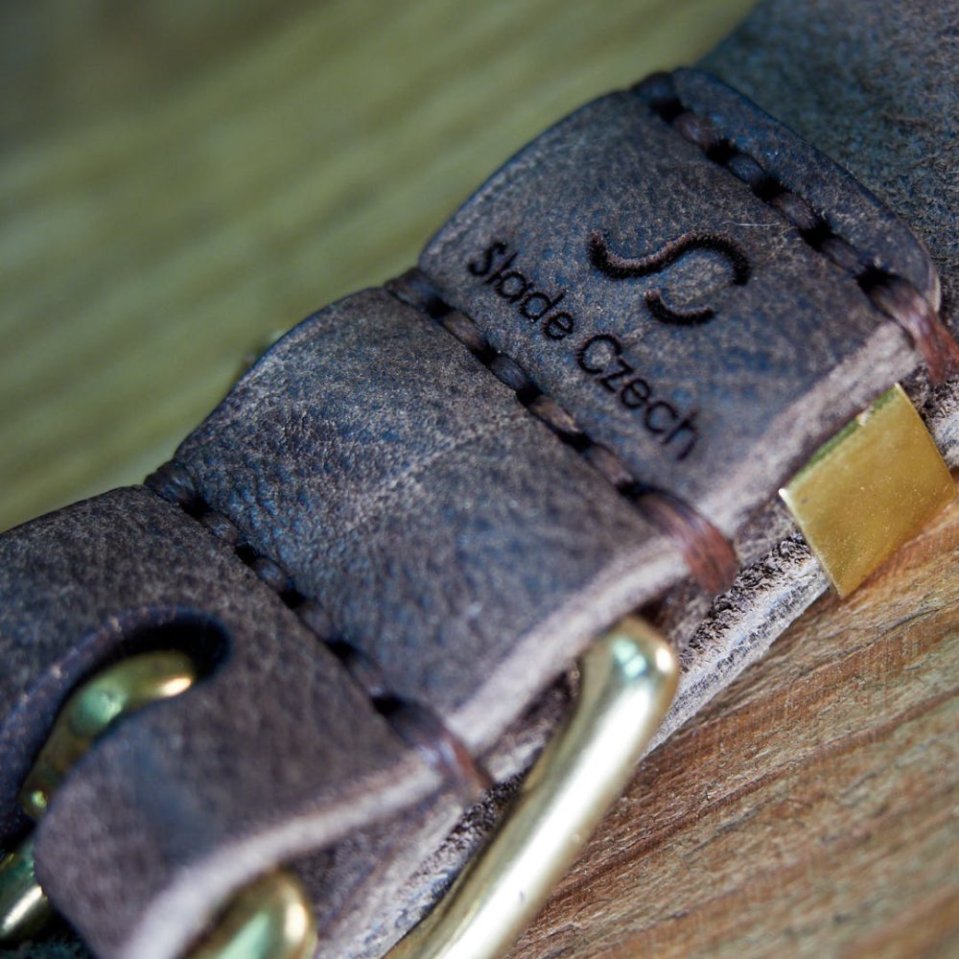
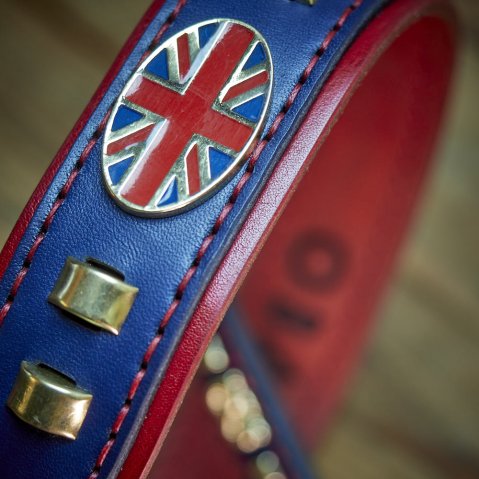
Real leather should feel dense, solid and confident.
If the collar feels thin, floppy or overly soft, pay attention. Cheap leather often stretches around buckle holes, loses shape and becomes weaker every month.
A good collar should feel like it was built to do a job.
Not like it was built to survive a photoshoot.
One quick test:
- Does the collar hold its shape?
- Does it feel substantial in your hands?
- Would you trust it attached to a strong dog moving at full speed?
If you're hesitating on that last question, that's usually your answer.
Look closely at the stitching
Good stitching rarely gets attention.
Bad stitching eventually gets all the attention.
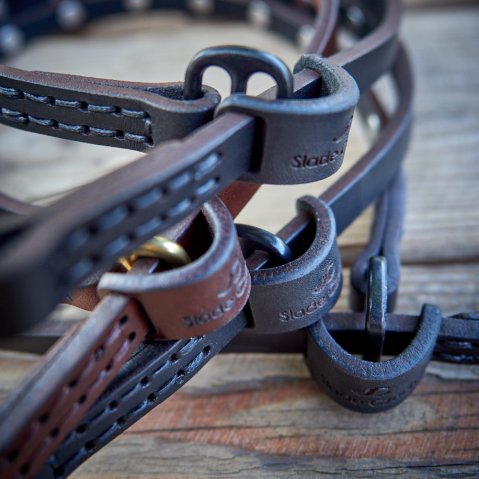
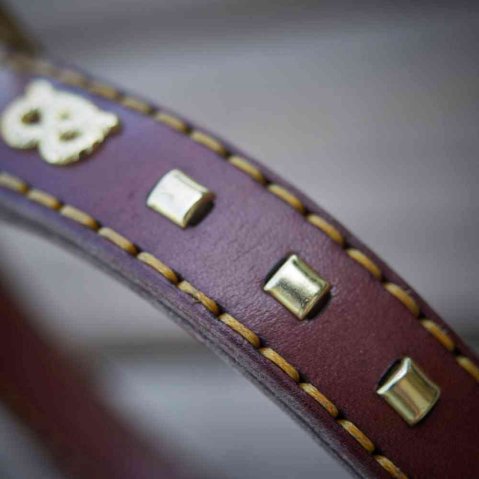
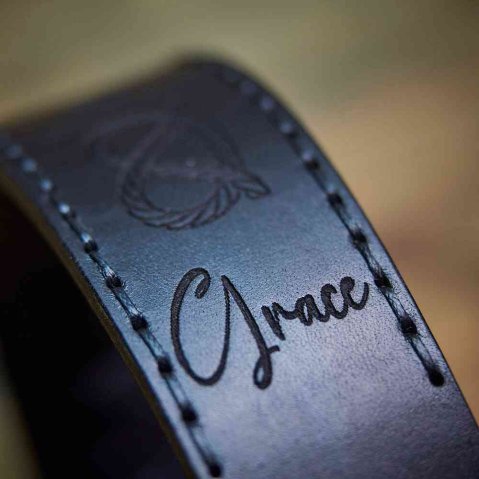
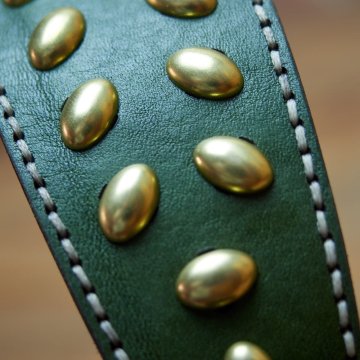
Strong stitching should run evenly from start to finish. No skipped sections. No loose threads. No obvious shortcuts.
One of the most common failures in cheap collars starts here.
The thread loosens.
The leather starts separating.
The collar slowly comes apart long before the leather itself wears out.
Hardware matters more than most people think
A heavy-duty leather collar is only as strong as its weakest metal component.
A powerful dog can generate a surprising amount of force through a leash. That force travels directly through the buckle, D-ring and rivets.
Look for:
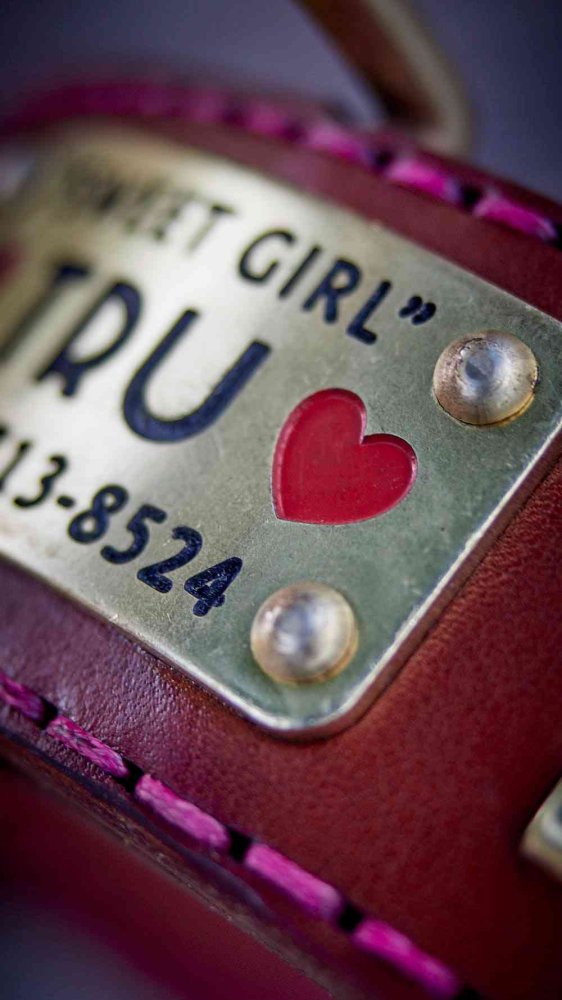
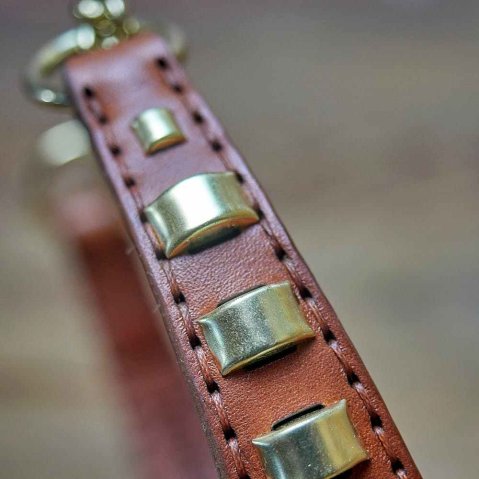
- solid brass hardware
- stainless steel components
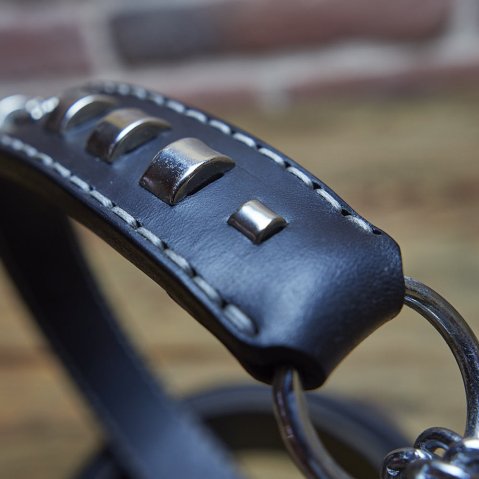
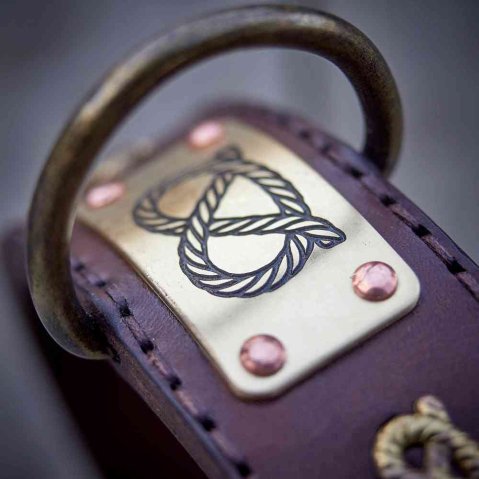
- welded D-rings
- thick buckles with no flex
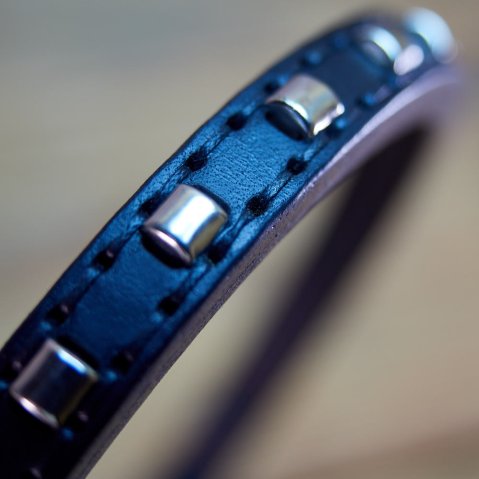
- securely fixed rivets
If the hardware feels light, thin or rattly, imagine what it will feel like after a thousand walks.
The 5-second test that reveals everything
Hold the collar in both hands.
Twist it gently.
Bend it slightly.
You don't need laboratory equipment.
A poorly made collar often reveals itself immediately.
The structure feels weak.
The layers move independently.
The whole thing feels uncertain.
A quality collar feels like one solid piece.
That's difficult to fake.
What failure actually looks like in real life
This is where experience matters.
Many owners don't realize a collar has problems until the dog exposes them.
Picture a strong Staffy hitting the leash at full commitment.
The collar rotates 90 degrees around the neck.
The force concentrates into one narrow section.
The buckle shifts.
The leather folds.
The dog keeps pulling.
That's not just a cosmetic issue.
That's a performance issue.
And it's usually the first warning sign that the collar wasn't built for real-world use.
Looks good versus works good
There's a huge difference.
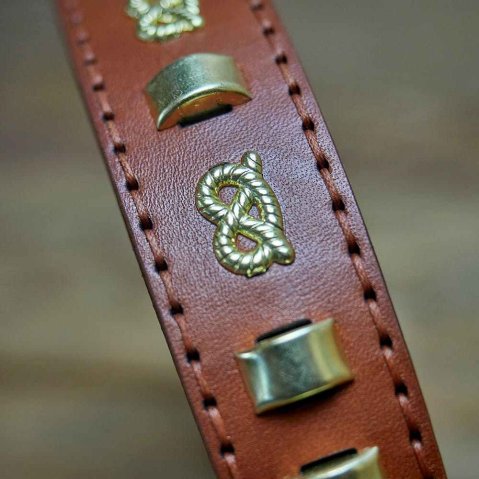
A collar covered in decorations may attract attention immediately.
Nothing wrong with that.
But appearance should never compensate for weak construction.
Some collars are designed to impress people.
Others are designed to control dogs.
The best collars do both.
That's the sweet spot.
Quick decision guide
- If your dog walks calmly most of the time → a standard leather collar may be all you need.
- If your dog occasionally lunges → prioritize stronger hardware and thicker leather.
- If your dog regularly pulls hard → collar width and construction become critical.
- If the collar keeps rotating around the neck → check sizing and width before blaming the collar style.
- If you're unsure → focus on construction quality first and decoration second.
Common mistakes
Buying only with your eyes
A beautiful collar that can't handle pressure is still a weak collar.
Ignoring hardware
Many failures start at the buckle or D-ring, not in the leather.
Choosing a collar that's too narrow
Narrow collars concentrate force into a smaller area and often become unstable on powerful dogs.
Assuming thick always means strong
Construction quality matters just as much as thickness.
Professional perspective
After years of building leather dog gear, one thing becomes obvious.
Dogs don't care about marketing.
They don't care about product descriptions.
They don't care about how many stars a collar received online.
They simply apply force.
The equipment either handles it or it doesn't.
The collars that survive years of real use usually share the same traits: quality leather, strong hardware, reliable stitching and balanced construction.
Everything else is secondary.
Who should pay close attention to collar quality?
- Owners of strong pullers
- Staffordshire Bull Terrier owners
- Bulldog owners
- Working-dog handlers
- Anyone tired of replacing collars every year
- People who value function as much as appearance
Final summary
A quality leather dog collar usually reveals itself within seconds.
Check the leather.
Check the stitching.
Check the hardware.
Then imagine your dog doing the exact thing you hope he won't do on tomorrow's walk.
If the collar still inspires confidence, you're probably holding the right piece of gear.
Because good dog gear isn't proven on the workbench. It's proven when your dog decides today's walk needs a little chaos.
Frequently Asked Questions
How can I tell if a leather dog collar is real leather?
Real leather feels dense, has natural texture variations and ages differently from synthetic materials.
What is the most important part of a dog collar?
The combination of leather quality, stitching and hardware strength. A failure in any one of these can compromise the collar.
Can a thick collar still be low quality?
Yes. Thickness alone does not guarantee durability if construction and hardware are poor.
Why does my collar rotate around my dog's neck?
The collar may be too narrow, incorrectly sized or unsuitable for your dog's build and pulling style.
How long should a quality leather dog collar last?
With proper care, a well-made leather collar can last for many years of daily use.
Real Dogs