The Hands Behind Slade Czech: Real Crafts, Real Leather, Real Work
Short answer:
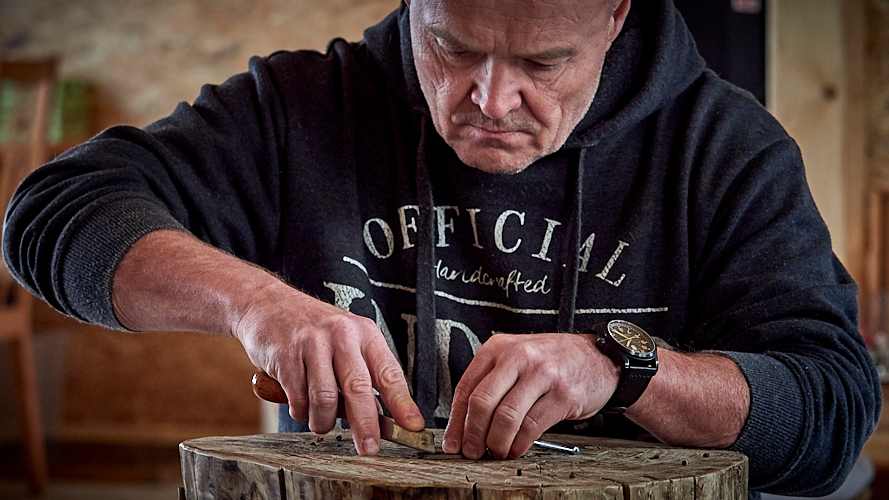
Slade Czech products come from real handcraft, not factory decoration. Saddle-making, leather goods work, carving, metal fittings, finishing and prototyping all meet in one place: a piece of leather that has to look sharp and behave properly when daily life starts pulling at it.
What kind of craftsmanship is behind Slade Czech products?
The craftsmanship behind Slade Czech includes saddle-making, leather goods construction, leather carving, metalwork, colouring, finishing and practical design. Each part has a purpose. The leather must hold shape, the stitch must stay calm under strain, the buckle must not panic and the finished piece must be useful after the first photo is long forgotten.
To see why this matters, begin with the twenty-year Slade Czech story. For the design side, continue with why handmade beauty and unique design still matter. This article is the workshop door left open: leather dust, metal shine, strong stitches and no room for lazy shortcuts.
Why does saddle-making matter so much?
Saddle-making brings structure. It teaches where leather needs strength, where it needs controlled movement and where a stitch has to do more than look neat.
You feel that difference during a normal walk that suddenly stops being normal. The dog spots something, drives forward, the leash snaps tight and the collar either stays organised or starts twisting like it has lost the argument. A narrow, weak or soft collar can rotate, pull pressure into one line and make handling messy within seconds. Proper construction keeps the gear readable in the hand. That is the quiet power of craft.
What does leather goods craftsmanship do?
Leather goods craftsmanship handles the practical side of daily carry. Bags, wallets, cases and pouches need balance, shape and smart space, not just a nice front panel.
A treat bag that opens too slowly fails during training. A wallet that bulges in the wrong place becomes annoying. A case with poor edges starts looking tired before it has earned any character. Good leather goods work means the object does its job without drama. It ages, it softens where it should, and it keeps enough backbone to stay useful.
Why are handmade details not just decoration?
Handmade details are only valuable when they belong to the product. Carving, logos, motifs, studs and stitching should strengthen the identity without weakening the build.
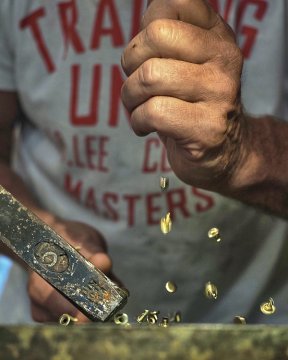
A detail that looks impressive but catches, bends, cracks or sits in the wrong place is not craft. It is trouble wearing a shiny jacket. The best details feel like they grew out of the piece. To go deeper into metal details and decorative character, read the Slade Czech article on brass, fittings and craft.
Why do buckles, rings and fittings deserve attention?
Fittings are working parts. Buckles, rings, chains, snap hooks and decorative metal pieces must suit the leather and the pressure they will meet.
Here is the 5-second check: the dog plants the chest forward, the collar turns 90 degrees, and the pull no longer sits where it should. If the hardware is too light, too sharp or badly matched, the whole piece feels wrong. Good metal does not need to shout. It just holds the line when the line gets serious.
What makes finishing more than a final touch?
Finishing decides how leather feels, ages and handles daily contact. Dye, oil, wax, polished edges and surface care all affect the final behaviour of the piece.
A fresh product can look clean on a white background. That is easy. The harder test is rain on the leash, fingers on the wallet, mud near the collar, dog hair everywhere and months of use. Weak finishing fades into fatigue. Strong finishing develops patina. Leather should not get old badly; it should get interesting.
Photo appeal versus real-life function
Some leather products are built for the picture. Others are built for the moment after the picture, when the dog pulls, the bag gets packed, the belt gets worn and the buckle has to do actual work. Thin leather can photograph beautifully and still collapse under use. Shiny hardware can look premium and still bend. Real Slade Czech craft is not about behaving nicely for the camera. It is about behaving properly when life grabs the leash.
Decision flow: what should you look for first?
- If the dog pulls or jerks: start with width, construction, stitching and metal strength. Pretty details come second.
- If you need daily carry: check shape, access, edge finishing and how the piece sits in the hand or on the body.
- If you want a decorative piece: make sure carving, studs or fittings support the build instead of fighting it.
- If you are unsure: choose the right leather weight, size and construction first. Style works best when the foundation is not wobbling.
If you want a more concrete look at one product type, the next step is how leather belts are made from hide to a strap that holds its shape. It shows the same principle in a simple form: cut right, build right, finish right.
Common mistakes
Judging leather only by the surface
A smooth surface can hide weak structure. Leather has to be judged by thickness, firmness, edge work, stitching and how it reacts under tension.
Treating hardware as a small detail
Hardware is not small when pressure arrives. A buckle or ring may be the part that decides whether the product feels secure or sloppy.
Thinking softness always means comfort
Too much softness can create twisting, folding and uneven pressure. Comfortable gear still needs structure, especially on strong dogs.
Forgetting the daily abuse
Real use includes sweat, rain, mud, keys, pockets, pulling, bending and grabbing the same piece every day. Craft has to survive that routine.
Expert view
From the workshop side, leather is never just flat material. It stretches, resists, remembers, darkens, softens and sometimes argues back. The maker has to know where to cut, where to reinforce, where to let it move and where to make it firm.
That is why different crafts meet in one Slade Czech piece. Saddle-making brings control under pressure. Leather goods work brings everyday logic. Finishing brings long-term character. Metalwork brings trust. Design and prototyping bring the uncomfortable question every product must answer: will this still make sense when someone actually uses it?
Who is this kind of work for?
- For dog owners who want control when the walk gets spicy.
- For people who prefer leather that gains character instead of looking tired too soon.
- For customers who notice the difference between decoration and construction.
- For anyone who wants a piece made with decisions, not shortcuts.
- For those who know that real craft is not old-fashioned. It is practical sense with a knife, needle and a stubborn eye for detail.
Final summary
The crafts behind Slade Czech are the reason a product can look distinctive and still work under pressure. Saddle-making, leather goods construction, carving, metalwork, finishing and design all carry part of the job.
From here, move to handmade beauty and the value of unique design, or explore how brass and fittings add character. Leather can be handsome. But if it cannot handle real life, it is just posing in a nice jacket.
Frequently asked questions
What crafts are used in Slade Czech products?
Slade Czech uses saddle-making, leather goods construction, leather carving, metalwork, finishing, design and prototyping.
Why is saddle-making useful for dog gear?
It helps create strong, structured products that handle pulling, pressure and sudden movement better than weak decorative gear.
Are handmade leather products always better?
Only when they are built with the right material, construction and hardware. Handmade without skill is just slow production.
Why is metal hardware so important?
Metal hardware carries pressure. If it bends, twists or mismatches the leather, the whole product becomes less reliable.
How can I spot real craft in leather goods?
Look at the edges, stitching, thickness, fittings, shape and how the piece behaves when handled or pulled.