Dog Chewing the Leash? Your Dog Is Not Being a Jerk
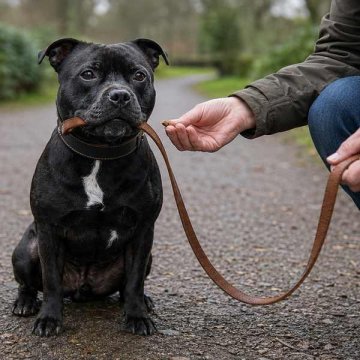
Quick answer: Dogs chew or grab the leash because of over-arousal, frustration, uncertainty, play, or teething. Do not yank back. Stop forward motion, keep the leash still, cue an easy known behavior, and reward the release. Fix the reason behind the bite, not just the piece of gear between the teeth.
From across the street, every case looks the same: dog on leash, teeth on leather, owner reconsidering every life choice. Inside the dog, though, several different engines can drive the behavior. Watch what happens during the five to ten seconds before the bite. That is where the useful answer lives.
Why does my dog bite the leash?
1. Over-arousal: all gas, no steering wheel
The door opens and the dog launches, spins, jumps, and grabs the leash. This is not a carefully planned coup. The nervous system has climbed past the point where the dog can think well.
Train before ignition: clip the leash, wait, reward calm, crack the door, wait again. If your dog fires out like a bottle rocket, reset. No shouting. Nobody has ever yelled a bottle rocket into making a better decision.
2. Frustration: the dog wants access and the leash says nope
Another dog, squirrel, person, or premium-grade smell appears. You block forward motion and the dog redirects onto the nearest barrier. The body is often tight, movement sharp, and attention keeps snapping back toward the original target.
Create distance, put some slack back into the leash, and ask for a tiny piece of thinking: eye contact, hand target, or several steps away. Reward the moment the brain comes back online. Waiting for perfect obedience while the dog is boiling is like asking for tax paperwork during a bar fight.
3. Accidental tug game
The dog grabs. The human pulls. The leash wiggles and fights back. Jackpot. A playful dog often stays loose, bounces, drops, re-grabs, and watches your hands for the next round.
Make the leash boring. Freeze your hands, stop walking, trade for food or a legal toy, then cue something easy. A dead-still leash has the entertainment value of a printer manual.
4. Puppy teething
Young puppies explore with their mouths, and incoming adult teeth can increase chewing. The leash is soft, mobile, and right there. Carry an appropriate chew or tug, offer it before the puppy grabs the leash, and keep sessions short. If the couch, shoes, and dog bed are also losing pieces, address the wider chewing need.
5. Stress, fear, or discomfort
Leash biting is not always goofy. Watch for a stiff or lowered body, avoidance, lip licking, frantic panting, freezing, or attempts to escape. Sudden behavior deserves a check of the mouth, teeth, neck, collar, and harness. Pain is information, not disobedience.
Bring in a veterinarian and a qualified reward-based trainer if the behavior starts suddenly, escalates, redirects toward hands, includes growling or panic, or cannot be interrupted safely.
What do I do when my dog already has the leash?
- Stop. Biting must not move the dog toward the target or launch tug.
- Kill the motion. No jerking, lifting, or waving the leash around like prey.
- Stabilize without turning it into a tightrope. Prevent spinning, but do not start a strength contest.
- Trade. Present food near the nose or use a trained “drop.” Mark and reward the release.
- Give a small job. Hand target, eye contact, treat scatter, or three calm steps.
- Lower the pressure. Increase distance, shorten the walk, or add a quiet sniff break.
Timing matters: do not turn food into a paycheck issued after every bite. Pay mostly before the mistake – for check-ins, a relaxed head, and a loose leash. Otherwise your dog may build a profitable little system: bite, release, collect snack. Staffies can master that business model before you reach the corner.
Train the skill before you need it
Teach “drop” indoors
Start with a toy in a quiet room. Offer valuable food; as the dog releases, say “drop,” reward, and often return the toy. Giving something up should not always mean permanent seizure by federal authorities.
Make loose leash movement pay
Keep the rule clean: tight leash stops movement, slack leash restarts it. Begin in a boring place and reward frequently. Add traffic, dogs, and squirrel politics later. The guide to training a dog to walk on leash builds the same foundation step by step.
End before the brain melts
Five successful minutes beat thirty minutes ending with a land shark attached to leather. Stop while your dog can still make good choices, not after both of you have lost the plot.
What leash works for a dog that bites it?
No leash cures leash biting. Construction can improve safety, protect a vulnerable section, and give you a better grip. Training still changes the behavior.
Your dog targets the section next to the snap
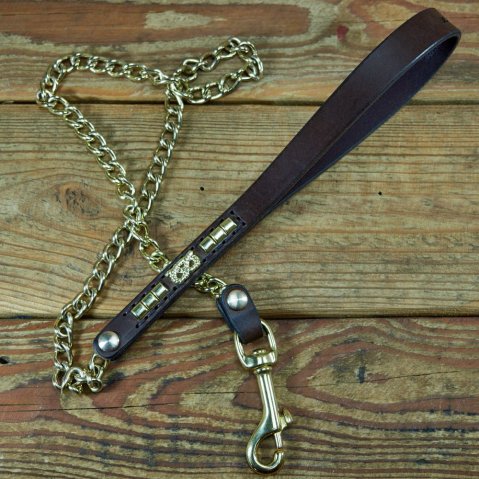
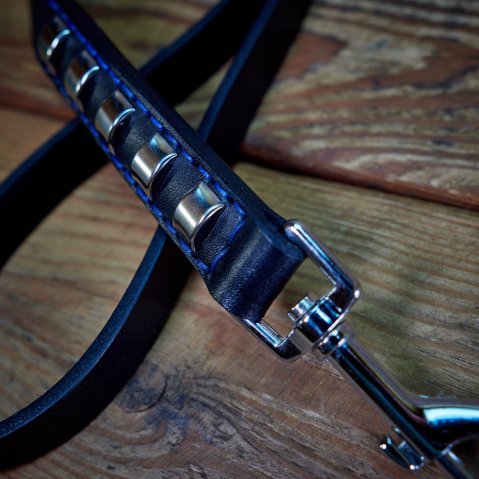
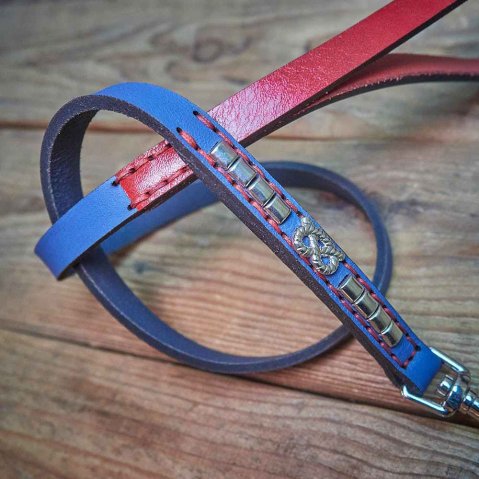
That area swings closest to the mouth when a dog turns. The One Way leather leash with a chain section can serve as temporary protection for repeat chewers. Chain is harder to bite through and usually less rewarding than leather. It is not a chew toy, and hard biting on metal can damage teeth. Protect the gear while you train the cause.

Your dog hits the leash with full body weight
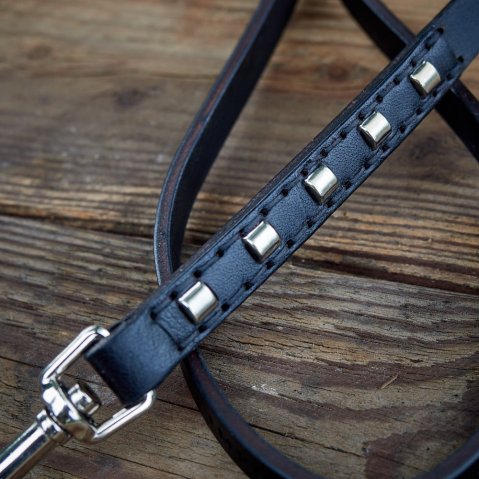
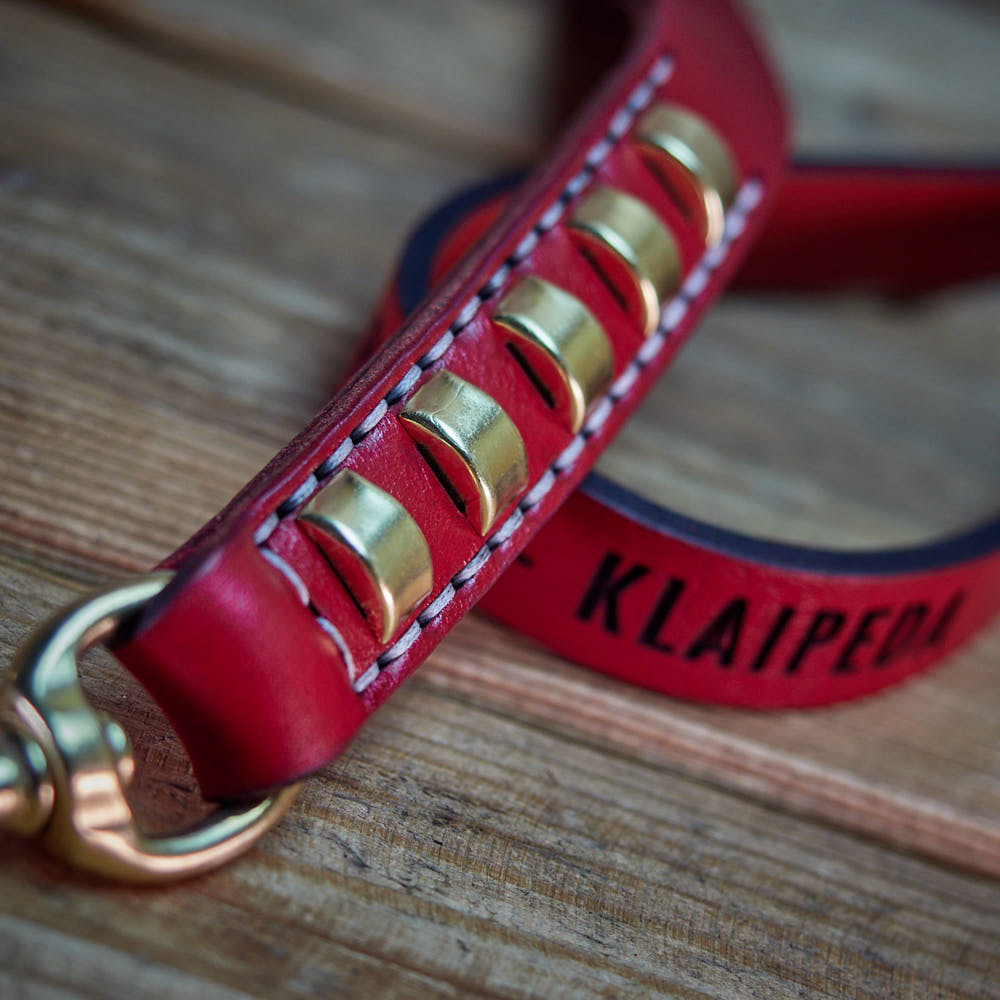
A strong bull breed needs a grip that feels planted. The heavy-duty Goliash leather leash is built for the moment your dog launches and a thin strip in your palm would be a bad joke. Goliash controls the hardware side of the problem. You still train the brain attached to it.
You need more room here and close control there
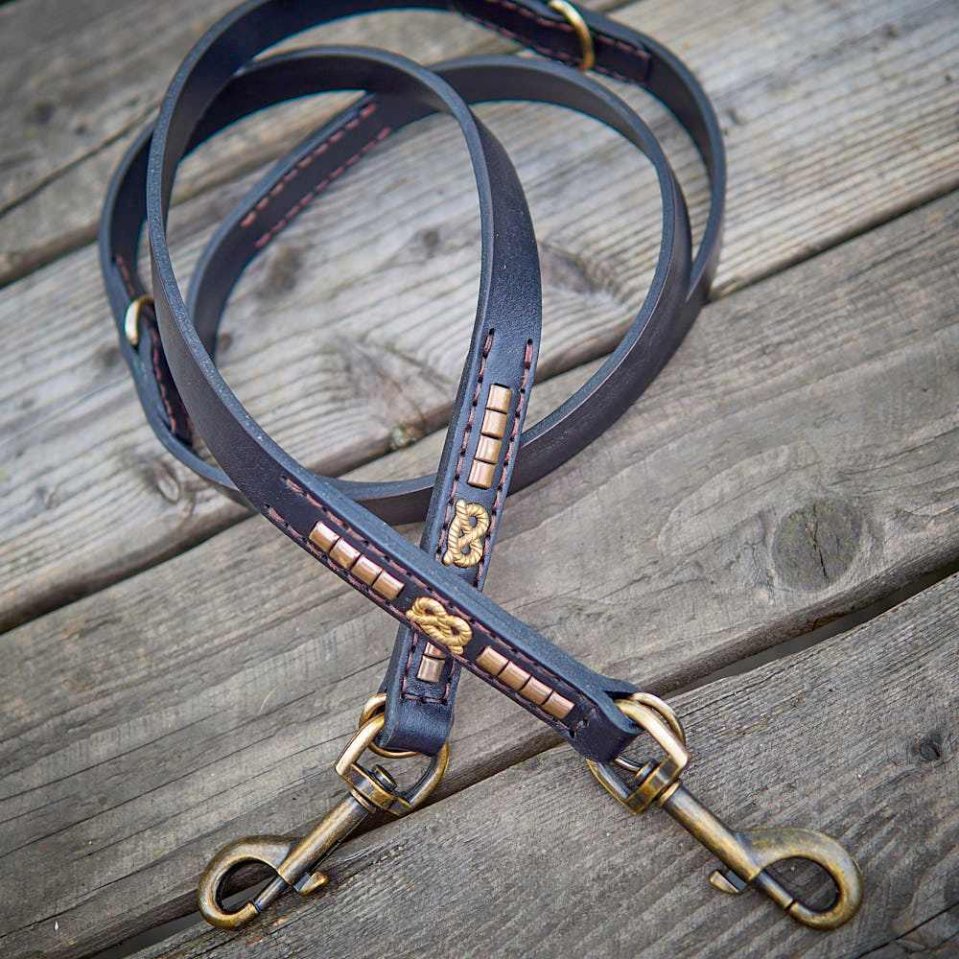
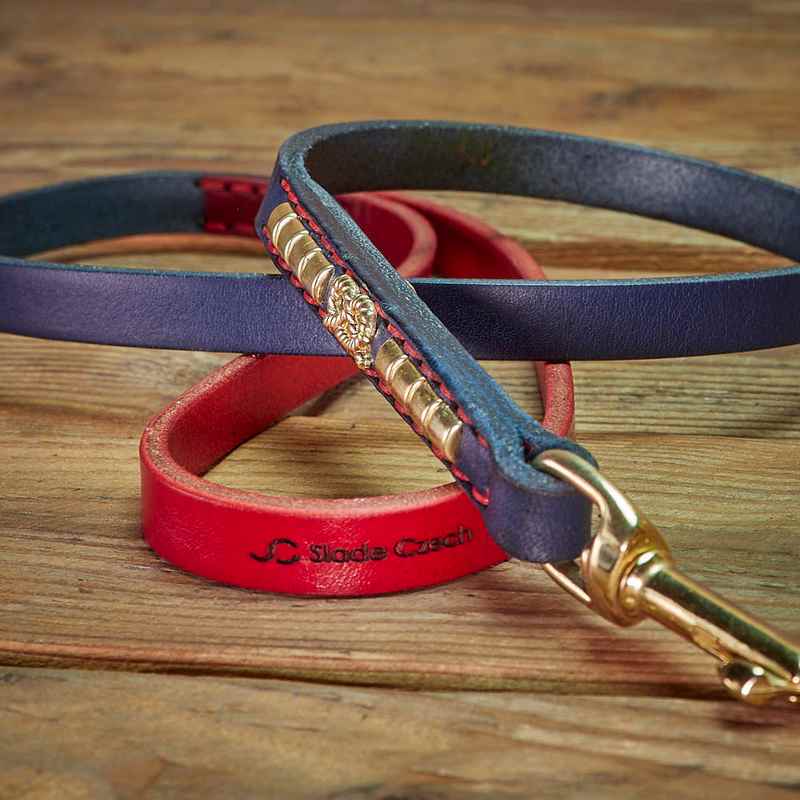
A quiet trail allows space; a sidewalk, traffic, or dog pass needs closer handling. The adjustable Manyway leather leash changes working length without a pile of separate leashes. Do not adjust snaps during an active biting episode or wrap leather around your hand. Control first. Leash origami later.
Fast decision guide
- Puppy chews everything: manage teething, legal chews, and session length.
- Dog bites after being blocked: work on frustration, distance, and attention.
- Dog bites at the front door: lower arousal before the walk starts.
- Dog waits for you to pull: end tug and teach a trade.
- Dog repeatedly bites beside the snap: consider One Way as temporary protection.
- Powerful dog lunges while biting: prioritize safety, distance, professional guidance, and a planted grip such as Goliash.
Do not do this – even when your patience has left the building
- Do not yank back. Resistance feeds the game.
- Do not machine-gun commands. An over-threshold dog mostly hears noise.
- Do not wrench the leash from the mouth. Teeth, gums, and fingers can lose.
- Do not switch to chain and declare the dog fixed. Unbroken gear is not changed behavior.
- Do not punish warnings. Freezing, avoidance, and growling are data.
Frequently asked questions
Will my puppy outgrow leash biting?
Teething pressure usually fades, but a practiced tug game may remain. Provide appropriate chewing and teach “drop” and loose-leash walking early.
Will a chain leash stop the behavior?
It can protect the section beside the snap, but it does not resolve arousal, frustration, or learned play. It is backup during training, not the cure.
Should I use bitter spray?
It may reduce chewing temporarily but often misses the emotional trigger. Use only products confirmed safe for dogs and the material.
Why does my dog bite the leash near home?
Fatigue, accumulated stimulation, and frustration at the walk ending may combine. Try shorter walks and calm sniff breaks.
Is a short or long leash better?
A controlled shorter length works well in busy areas; more length may reduce constant tension in quiet places. Match length to the environment and safe handling.
Can the collar or harness cause leash biting?
Yes. Pressure, restricted movement, or pain can increase stress. Check fit, construction, and health if biting begins when equipment is attached or tightened.
Bottom line: read the dog before blaming the leash
A dog hanging from the leash does not need a tougher argument. It needs you to identify excitement, frustration, teething, discomfort, or a tug game you never meant to sign up for.
Make biting boring, teach a replacement, and reward calm before teeth hit leather. A leash should connect you and your dog – not become the center rope in a heavyweight match between two stubborn mammals.
Real Dogs