Staffordshire Bull Terrier Then and Now: What Changed Between 1990 and 2026?
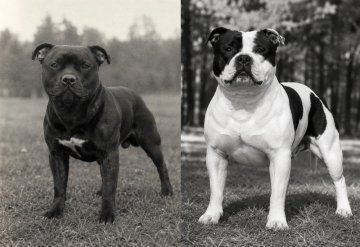
The Staffordshire Bull Terrier of 2026 is not the exact same dog people knew in 1990. Older bloodlines were often lighter, leaner and built with function at the center of everything. Modern Staffies are usually broader, more muscular and shaped by decades of show breeding and health-focused selection. What hasn't changed is the reason people fall for the breed in the first place: courage, loyalty and a personality far bigger than its size.
Staffordshire Bull Terrier 1990 vs 2026: What Changed and What Stayed the Same?
If you dropped a well-bred Staffy from 1990 next to a modern Staffordshire Bull Terrier from 2026, most people would notice the difference immediately.
Today's dogs often look wider, heavier and more powerful. Older dogs frequently appeared leaner, faster and more athletic.
That doesn't mean one version is better than the other.
It simply shows how breeding goals have changed over the last three decades.
The Staffordshire Bull Terrier didn't change overnight. The breed evolved through breeder decisions, health testing, show-ring trends, changing lifestyles and increasing popularity around the world.
The Staffy of 1990: Built for Real Life
In the early 1990s, the Staffordshire Bull Terrier was still closely connected to its historical roots.
The breed wasn't yet a social media star.
Many owners valued the dog because it was tough, dependable and capable.
Dogs from that era were often:
- Lighter in build
- Narrower through the chest
- Longer in body
- More athletic in movement
- Less exaggerated in appearance
Many Staffies spent most of their day doing things rather than posing for photos.
They walked. They trained. They ran. They lived active lives.
The goal wasn't to create a dog that looked powerful for five seconds on Instagram.
The goal was a dog that could perform all day.
Old Bloodlines: Function First, Fashion Later
Breeders from older generations often focused heavily on:
- Endurance
- Movement
- Mental stability
- Physical capability
- Working usefulness
Many dogs from older bloodlines carried less bulk and more athletic efficiency.
They were frequently:
- Faster
- More agile
- More flexible in movement
- Less extreme physically
This creates an important contrast.
Some modern dogs look spectacular standing still.
Many older Staffies looked less dramatic but came alive the moment they started moving.
Good-looking and functional are not always the same thing.
A dog can have a huge head and massive shoulders. That doesn't automatically make it a better Staffordshire Bull Terrier.
2026: The Era of the Modern Staffy
The modern Staffordshire Bull Terrier is the product of decades of selective breeding.
Today's dogs are often:
- Broader
- Heavier in bone
- More muscular
- More compact
- More visually powerful
Many successful modern dogs display:
- Broad skulls
- Strong necks
- Deep chests
- Powerful muscle tone
- Excellent overall balance
They immediately create an impression of strength.
That visual impact has become an important part of modern breeding goals.
Again, different does not mean better.
It simply reflects changing preferences within the breed.
Show Lines: When Every Detail Matters
Dog shows have influenced almost every breed, and the Staffordshire Bull Terrier is no exception.
Modern show dogs are often selected for:
- Head shape
- Overall balance
- Bone structure
- Movement
- Breed expression
Sometimes the difference between winning and losing comes down to details measured in millimeters.
One dog may have a slightly cleaner front assembly.
Another may carry a stronger topline.
A third may move more efficiently.
Over decades, these small preferences gradually shape the breed.
Working and Functional Lines: Strength Without the Spotlight
Even though the Staffordshire Bull Terrier is rarely considered a traditional working breed today, some breeders still prioritize function over ribbons.
These dogs are often:
- Lighter
- More agile
- More athletic
- Less exaggerated
- Built for activity
They may not dominate social media feeds.
They may not have the broadest heads.
But they often excel when the leash goes on and the real world starts.
Where show lines emphasize appearance, functional lines emphasize ability.
Neither approach is automatically superior.
They simply serve different goals.
Decision Guide: Which Type of Staffy Fits Your Lifestyle?
- If you want a show dog: Focus on proven show bloodlines and breed type.
- If you want an active sports companion: Look for athletic, functional bloodlines.
- If you want a family dog: Prioritize temperament and health above appearance.
- If you're unsure: Start with health, temperament and breeder reputation before worrying about head size or muscle mass.
Temperament: The Best Part Never Changed
The biggest surprise is how little the Staffordshire Bull Terrier's character has changed.
A good Staffy remains:
- People-oriented
- Confident
- Courageous
- Intelligent
- Deeply loyal
This is the trait that made the breed famous around the world.
Modern Staffies may look different from older generations, but they still build incredibly strong bonds with their families.
The famous British nickname "The Nanny Dog" remains controversial and often oversimplified, but it reflects the breed's long history of strong human attachment.
No responsible owner should leave any dog unsupervised with children.
However, the Staffy's people-focused personality remains one of its defining characteristics.
What About Other Dogs?
Yes and no.
The breed's historical roots remain part of its DNA.
Confidence around other dogs has always been part of the Staffordshire Bull Terrier's heritage.
Modern responsible breeding increasingly focuses on:
- Stable temperaments
- Better social adaptability
- Improved control
- Suitability for modern family life
A well-bred Staffy today is often better prepared for modern society than many dogs were decades ago.
That said, genetics alone never tell the whole story.
Socialization, training and responsible ownership remain critical.
A Staffy without guidance will happily create its own rules.
And Staffies are often very creative when left to do so.
Health: The Biggest Improvement Since 1990
The greatest progress within the breed has likely occurred in health management.
Back in the early 1990s, DNA testing was uncommon.
Today, responsible breeders have access to sophisticated health screening programs.
Commonly monitored conditions include:
- L-2-HGA
- Hereditary Cataracts (HC)
- Orthopedic issues
- Skin conditions
- Allergies
Modern testing allows breeders to dramatically reduce the risk of passing certain inherited diseases to future generations.
This alone represents one of the most important advances in the breed's history.
Longer Lives and Better Quality of Life
Many Staffordshire Bull Terriers today live between 12 and 14 years.
Some live even longer.
Several factors contribute to this improvement:
- Better nutrition
- Improved veterinary medicine
- Health-focused breeding
- Better owner education
Many modern Staffies remain active well into their senior years.
Strong muscles matter.
Healthy joints matter more.
Social Media Changed Everything
Thirty years ago, most people encountered Staffies through breeders, shows or local communities.
Today they appear everywhere.
Instagram.
Facebook.
TikTok.
The increased visibility created major benefits:
- Greater breed awareness
- Easier access to information
- Stronger breeder communication worldwide
It also created problems:
- Trend-based breeding
- Appearance-first decisions
- Inexperienced breeders chasing demand
A dog is not a profile picture.
A dog has to move, breathe, think and function every day.
That reality matters far more than online popularity.
Expert Perspective
The most important change is not the shape of the head or the width of the chest.
The most important change is knowledge.
Modern breeders understand genetics, health and long-term breed management better than ever before.
At the same time, one principle should never disappear:
A Staffordshire Bull Terrier should never become a decorative version of itself.
The breed should remain capable, balanced and functional.
Strength without function is just decoration.
Who Is the Staffordshire Bull Terrier Suitable For?
- Active families
- Owners who want a close companion
- People willing to invest time in training
- Bull breed enthusiasts
- Those who value character as much as appearance
Final Thoughts
The Staffordshire Bull Terrier of 1990 and the Staffordshire Bull Terrier of 2026 are not identical dogs.
Older bloodlines remind us of a time when function came first.
Modern bloodlines demonstrate what decades of selective breeding and health testing can achieve.
The appearance changed.
The tools changed.
The knowledge changed.
The heart of the breed did not.
Whether sleeping across the sofa, running through a field or winning in a show ring, the Staffordshire Bull Terrier remains the same stubborn, courageous and unforgettable companion that has earned a place among the world's most beloved bull breeds.
Frequently Asked Questions
Has the Staffordshire Bull Terrier changed a lot since 1990?
Yes. Modern Staffies are generally broader, more muscular and more influenced by show breeding, while older bloodlines were often lighter and more athletic.
Were Staffies from the 1990s better?
Not necessarily. Older dogs were often more athletic, but modern breeding benefits from advanced health testing and a better understanding of genetics.
Why do modern Staffies look more powerful?
Breeding preferences have gradually favored broader heads, stronger bone structure, deeper chests and more compact bodies.
Has the Staffordshire Bull Terrier's temperament changed?
Very little. The breed remains known for courage, confidence, loyalty and a strong connection with people.
Are working-line Staffies still available?
Yes. Some breeders still prioritize athletic ability, endurance and practical functionality over show-ring success.
What is the biggest improvement since 1990?
The greatest progress has been made in health testing. Responsible breeders now use DNA testing and screening programs that help reduce the risk of inherited diseases.